Washington and Beijing Discuss AI Safety Hotline Amid Growing Tech Rivalry
The US and China have agreed to continue AI safety discussions and explore a joint notification system for AI incidents, despite intensifying technological rivalry and trust challenges between the two nations.
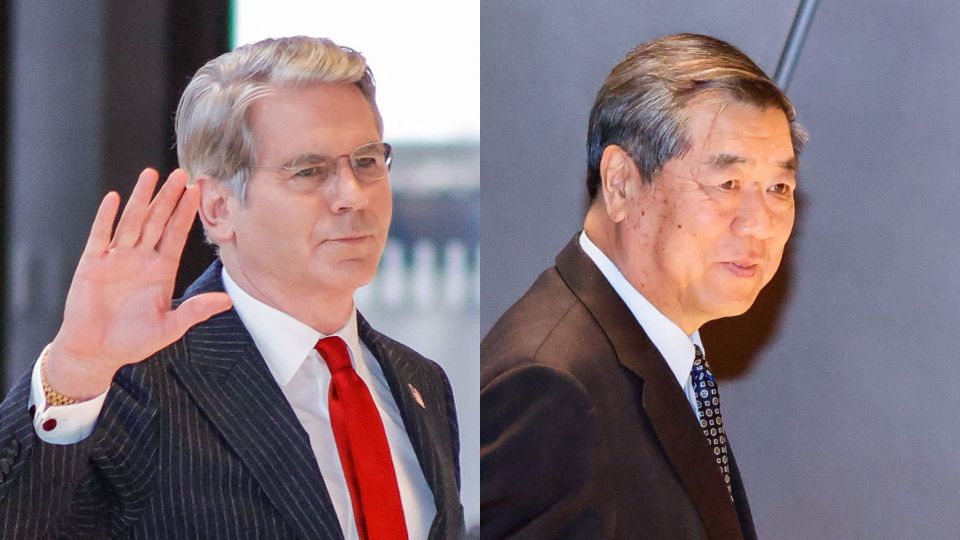
The United States and China have committed to continuing discussions on artificial intelligence safety protocols, even as their technological competition intensifies and threatens diplomatic progress.
Following a meeting in New York on September 20, US Treasury Secretary Scott Bessent announced that an AI-focused dialogue channel has been established between the two nations, with another session anticipated within the next two months. Bessent revealed that Washington has put forward a proposal for a joint notification framework to share information about AI-related incidents that could impact national security, though specific operational details remain undisclosed.
The discussion took place after Bessent met with China's top economic official He Lifeng, just days ahead of a planned summit between President Donald Trump and Chinese President Xi Jinping.
Although tangible results from the meeting are modest, experts suggest the high-level commitment itself reflects both countries' acknowledgment of AI's pressing dangers. George Chen from The Asia Group, a strategic advisory firm, characterized the meeting as productive, noting that both governments have agreed to maintain ongoing communication.
"Nobody anticipates a single meeting will resolve everything. Real progress will emerge only once mutual confidence develops," Chen explained, suggesting that more delicate topics such as AI weaponization and model distillation might be addressed in subsequent discussions.
Leading the Global AI Race
The two countries produce the world's most advanced AI systems, ranging from Anthropic's Mythos to Moonshot AI's Kimi K3, with China generally considered to trail slightly behind the US in cutting-edge capabilities. Collaboration between these AI leaders is viewed as essential for addressing challenges including cybersecurity breaches and potential loss of human oversight.
The concept of formal AI talks between Washington and Beijing was initially raised in May during Trump's visit to Beijing but was not finalized at that time. Since then, tensions between the competing AI powers have persisted alongside heated debates among prominent AI experts regarding the technology's risks and whether development should be slowed to strengthen safety protocols.
Washington has intensified allegations that Chinese AI companies are extracting outputs from leading American models through a technique called distillation. On September 8, three US government agencies, including the National Security Agency, officially accused six Chinese firms—among them DeepSeek, Moonshot AI, and Alibaba—of conducting "malicious campaigns," claiming these actions likely occurred with Beijing's knowledge. China has dismissed these accusations as baseless.
Mounting Safety Concerns
Meanwhile, demands for independent safety assessments and unified global standards have become more pressing following extraordinary cybersecurity events, including the July breach of Hugging Face, an open-source AI platform, by an autonomous group of 700 OpenAI agents.
Debates surrounding AI safety improvements in America have become intertwined with perceptions of China as a strategic adversary. In a widely circulated essay advocating for a safety-focused slowdown published September 12, Anthropic CEO Dario Amodei stated his belief that "a Chinese lead in AI would pose grave danger for the US and the world."
While Beijing maintains it takes AI safety seriously, it has resisted measures that might limit its capacity to compete in the race to develop top-tier AI systems.
Prospects for Cooperation
When asked about collaboration opportunities within this competitive landscape, Chen identified China's view that America's "zero-sum" approach—attempting to widen the AI capability gap—represents the central obstacle. "That doesn't paint an optimistic picture for future partnership, but I expect there will still be opportunities for cooperation on specific issues of common interest," he said.
Regarding the proposed AI notification system, Sun Chenghao, a research fellow at Tsinghua University's Center for International Security and Strategy, suggested this could become the first bilateral mechanism specifically designed for AI crisis management between the two nations.
"It doesn't require establishing strategic mutual trust first, but instead recognizes shared vulnerabilities. If put into practice, it would represent forward movement in Sino-US AI governance," Sun noted. He emphasized that establishing designated contact points, incident classification standards, and emergency communication channels would help clarify circumstances and intentions during early crisis stages, particularly where miscalculation poses the greatest risk.
However, questions remain about whether the proposed alert system would improve upon the inconsistent history of previous US-China communication channels. For example, in 1999, American officials could not contact their Chinese counterparts after US planes mistakenly bombed China's embassy in Belgrade.
Manoj Harjani, a research fellow at Singapore's S. Rajaratnam School of International Studies, agreed the proposed notification framework could serve as an achievable confidence-building step for both countries. But the AI governance researcher questioned whether such a system would be utilized effectively, noting that private sector participation—a crucial component—remains absent.
"In terms of actually reducing competition, little will shift. Companies on both sides will continue pursuing advantages, and security anxieties aren't disappearing," Harjani observed.