 Mekong Monitor
AI Shoppers Get the First Word in South Korea's Retail Race
South Korean retailers are testing products on AI-generated “synthetic consumers” to predict buying behavior, refine pricing, and find friction in the shopping journey before launch. The approach is spreading from e-commerce and convenience stores to food and consumer goods makers.
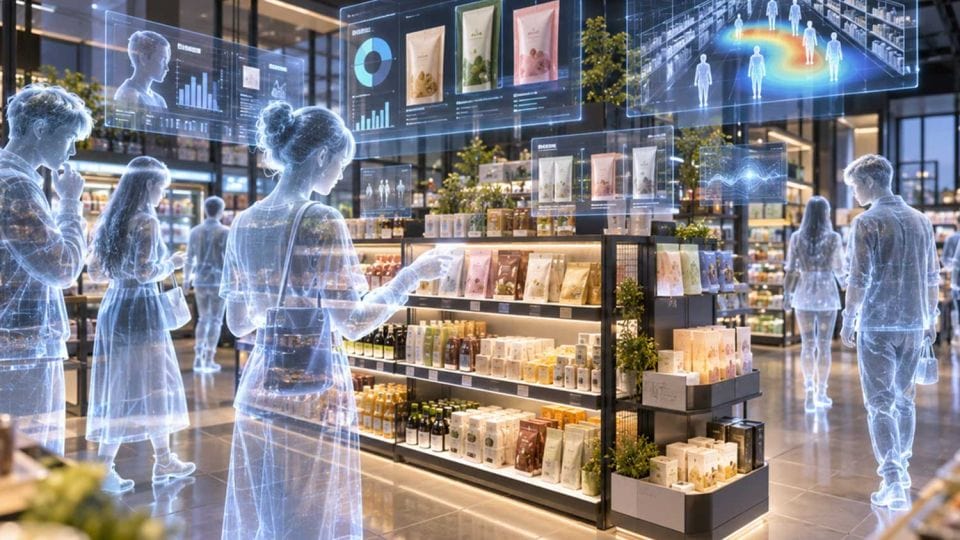
South Korean retailers are putting their products in front of artificial intelligence-generated shoppers before they reach real customers. These virtual consumers help companies forecast buying decisions, adjust prices, and spot weak points in the shopping experience.
Known as “synthetic consumers,” these AI-driven shoppers are built on large language models and consumer data to imitate how people actually buy. Companies can use them to test products, ad campaigns, and store layouts without the time and cost of traditional consumer surveys.
Lotte Members is pushing the idea toward a more individualized model. Since July, the company has been developing an “AI Twin Consumer” with local AI firms Vibe Co. and Zero to One Partners. The project combines purchase records from roughly 45 million users of Lotte's L.Point membership program with social media data, aiming to reveal not only what customers buy but why they buy it and in what context.
The goal is to move past standard personas, such as “a woman in her 30s” or “a man in his 60s.” An AI twin can draw on a far broader set of traits, including buying habits and preferences, so companies can converse with a virtual customer and test products or marketing ideas before a real launch.
E-commerce platforms are taking a slightly different route by using virtual shoppers to study the online shopping journey itself. Coupang and Naver have been experimenting with synthetic consumers for market research and user experience testing. The tools can simulate how someone moves through an online store, how they respond to product information, and where they run into friction.
Retailers are also going a step further than asking whether a shopper would buy an item. They have the AI move through a simulated purchase to pinpoint where shoppers might hesitate, lose interest, or abandon the transaction altogether.
Convenience store operator CU, run by BGF Retail, is bringing the approach into physical stores. After using synthetic consumers to evaluate new product concepts, the company is developing virtual store simulations that can test shelf displays, foot traffic, and product mix before any changes reach actual locations.
The technology is spreading across consumer goods makers. Food companies including CJ Group, Daesang, Maeil Dairies, Pulmuone, and Sangmidang Holdings have joined proof-of-concept projects with synthetic consumer provider Intellicia, which says it has completed 120 such projects with 50 companies.
According to Intellicia, its synthetic consumers are built from real interviews, surveys, commerce reviews, and social media activity rather than simply being assigned demographic labels. In its benchmark testing, the company reports a 91.2 percent correlation with a real-world survey of 500 consumers.
One retail company official explained the appeal: in a market where trends can surge and vanish within weeks, AI-generated synthetic consumers can deliver insights without recruiting live consumer panels, running surveys, and analyzing responses every time a product idea changes.
Another official expects retailers to rely even more on AI to weed out weaker concepts, refine products, and simulate customer experiences before spending on production, advertising, or changes to physical stores. Over the longer term, they suggested, companies may be able to make larger decisions more quickly by drawing on a large group of virtual customers.