 Mekong Monitor
BeReal’s Japan boom pushes companies to rethink digital privacy
BeReal remains a major Gen Z habit in Japan, but workplace posts have exposed confidential data and pushed companies to tighten smartphone and social media rules.
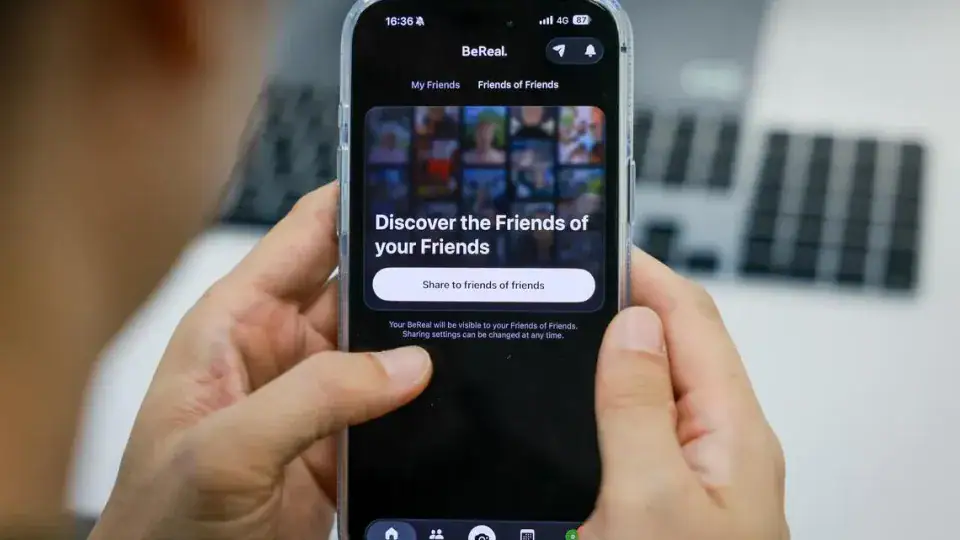
At an unpredictable moment each day during waking hours, BeReal sends a simultaneous push notification to more than six million smartphones in Japan, prompting users to post a photo of themselves “now”.
Millions of young users respond almost automatically, whether they are at home, in a classroom or seated at an office desk. Although the app’s global buzz has faded in many countries, it remains highly popular among Japan’s Gen Z users.
What looks like a playful social media ritual has raised serious concern in Japan after a series of accidental workplace data leaks and privacy breaches. The problem often begins when employees post from the office without noticing confidential information in the background.
The trend has prompted companies to revisit workplace rules and tighten restrictions on social media use during working hours.
An “anti-Instagram” hit in Japan
Launched in France in 2020 and popular worldwide from 2022, BeReal gained stronger momentum in Japan around 2023 as a rawer alternative to highly curated platforms such as Instagram.
The app’s format is strict. Once the daily alert arrives, users have two minutes to take a photo using both front and rear cameras, capturing their face and surroundings. They may also include a short behind-the-scenes video clip.
Users who post on time unlock extra uploads for the day. Those who miss the deadline have their post labelled “late”, and they cannot view friends’ feeds until they upload. BeReal does not allow filters, editing or camera-roll uploads.
By June 2026, BeReal had exceeded 6.5 million monthly active users in Japan, up from five million a year earlier. About 92 per cent of users were aged between 13 and 27.
The app was nominated for Japan’s Buzzword of the Year in 2024 and has been used in campaigns by brands including Uniqlo, Shiseido and Netflix, as well as for major film promotions such as Spider-Man: Brand New Day in 2026.
For many young Japanese users, part of the appeal lies in the rejection of heavily polished online identities. In a culture where social pressure often rewards a flawless public image, BeReal’s casual, unedited posts can feel more honest and less performative.
Because posts are usually shared with close friends and disappear after 24 hours, many users see the app as a relatively safe space to show ordinary moments from daily life.
A new workplace risk
Japanese youth also use TikTok, Instagram, X, LINE and newer platforms such as Setlog, a South Korean app that turns hourly clips from small peer groups into a shared vlog. But BeReal’s countdown format creates a particular risk for workplaces.
An investigation by public broadcaster NHK found at least 40 cases of institutional data leaks linked directly to BeReal during a 45-day period from April to May.
Teachers have complained that students rush to post even during class, but the larger impact has been in offices, where the app has forced companies to reassess security practices.
Many employees appear to trust the app’s friends-only settings and take photos at their desks without checking what is visible around them. Once posted, however, images can be screenshotted and shared elsewhere, often spreading quickly on other platforms.
Bank leak draws national attention
The most prominent case involved Nishi-Nippon City Bank, a regional lender based in Fukuoka. An employee took a BeReal photo inside a branch office that later circulated on X on April 29 and drew more than 10 million views overnight.
Visible on a whiteboard in the background were the names of eight private banking clients, a customer’s home address, information on 19 corporate accounts and internal sales targets.
The bank’s president, Hideyuki Murakami, issued a public apology. Shares in parent company Nishi-Nippon Financial Holdings fell nearly 3 per cent, and Japan’s Financial Services Agency opened an inquiry.
Other incidents have emerged across Japan since April.
- In Sendai, an elementary school teacher posted a desk photo that showed a monitor displaying the city’s internal school management system.
- In Tokyo, a part-time worker at Pizza-La uploaded an image containing customer information.
- A staff member at Nikujiru Gyoza no Dandadan photographed an applicant’s resume.
- In Ishikawa, a machinery manufacturer leaked internal pricing models.
- In Hokkaido, a hospital reception-desk photo exposed patients’ names and ages.
The teacher in Sendai was quoted by domestic media as saying she received the notification and photographed the computer in front of her without thinking carefully.
It remains unclear whether any workers were disciplined over the leaks. Reports of such incidents appear to have declined, likely due to wider awareness after negative media coverage in 2026 and tougher corporate social media policies.
Japan Inc tightens its rules
Experts note that these incidents differ from earlier social media scandals such as “sushi terrorism”, where users deliberately misbehaved for attention. In most BeReal cases, employees do not appear to intend harm; they fail to remember that online posts are never fully private.
The episodes have reinforced a basic digital-age warning: any upload can be copied, shared and preserved indefinitely, becoming a permanent “digital tattoo”.
The fallout has pushed Japanese companies to treat everyday smartphone use as a cybersecurity issue. Some firms are introducing social media bans during work hours, while others require employees to store personal phones in lockers.
Nishi-Nippon City Bank acknowledged that it already had a rule against personal smartphone use in the office, but said it had not been consistently enforced until the leak.
The challenge now is cultural as well as technical. Younger workers need stronger digital literacy, while employers must update older workplace practices to reflect how quickly new consumer apps can affect real-world security.