 Mekong Monitor
The social media app forcing Japan to take digital privacy more seriously
BeReal's daily photo prompts have triggered a wave of accidental corporate data leaks in Japan, forcing companies to overhaul workplace privacy protocols and social media rules.
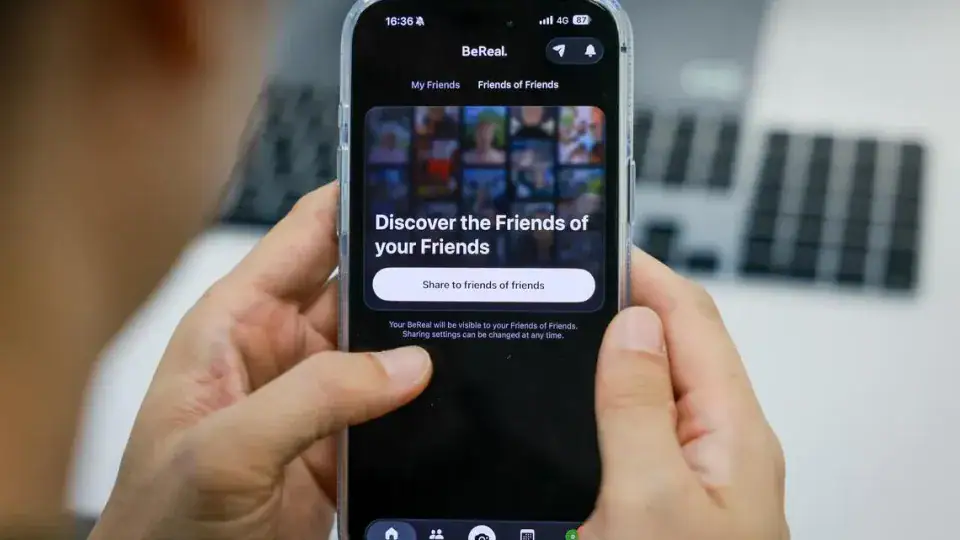
At unpredictable moments throughout the day, BeReal sends push notifications to over six million Japanese smartphones, prompting users to take and upload a photo right now.
Millions of young Japanese respond instantly—whether they're lounging at home, in class, or at their desks. While global interest has faded in many markets, BeReal remains wildly popular among Gen Z in Japan.
What seems like a simple game of digital tagging has raised concerns about accidental corporate data leaks and privacy violations, particularly when users post photos from their workplaces without thinking.
This has pushed companies to reevaluate workplace protocols and tighten controls on social media use during office hours.
BeReal, created in France in 2020 and viral around 2022, gained traction in Japan slightly later, becoming an unfiltered alternative to Instagram. Its rules are strict: users have two minutes to take a dual-camera photo showing both their face and surroundings, with an optional short video. Miss the deadline and the post is marked late; access to friends' feeds locks until an upload. No filters, no edits, no uploads from the camera roll.
In Japan, the app has over 6.5 million monthly active users as of June 2026, with 92% between 13 and 27—a jump from five million the previous year. It was nominated for Japan's Buzzword of the Year 2024 and has run campaigns for brands like Uniqlo, Shiseido, Netflix, and the film Spider-Man: Brand New Day (2026).
Young users in Japan, burdened by 'kira-kira' culture—the pressure to present a polished, perfect public image—find relief in BeReal's demand for candid, unedited moments. Posts are typically shared with close friends and disappear after 24 hours, offering a way to show one's 'true self' safely.
Japanese youth also use TikTok, Instagram, X, LINE, and Setlog, a viral South Korean app stitching hourly video snippets from peers into vlogs. But BeReal's countdown timer creates a unique corporate risk.
An NHK investigation found over 45 days in April-May 2026, at least 40 cases of institutional data leaks traced to the app. Teachers reported students frantically posting during class. Beyond schools, BeReal is reshaping security practices across Japanese companies.
Wearing 'friends-only' privacy settings, young employees snap photos at their desks without considering risks. Once posted, these images spread as screenshots on other platforms, going viral quickly.
The most high-profile case involved Nishi-Nippon City Bank in Fukuoka, where an employee posted a photo inside a branch showing client names, addresses, corporate account details, and sales targets. The image garnered over 10 million views on X within hours. Bank president Hideyuki Murakami issued a public apology as shares in parent company Nishi-Nippon Financial Holdings dropped nearly 3%, prompting an FSA inquiry.
Similar incidents occurred nationwide: a Sendai teacher accidentally revealed a school management system via a desk photo; a Tokyo Pizza-La worker exposed customer details; a Nikujiru Gyoza employee shared an applicant's resume; an Ishikawa machinery firm leaked pricing models; a Hokkaido hospital exposed patient names and ages through a reception desk snap.
It's unclear if disciplinary action was taken. Media coverage of these incidents appears to have reduced further leaks, as companies tighten policies and user awareness grows.
While ignorance isn't an excuse, experts distinguish BeReal's accidental disclosures from deliberate scandals like 'sushi terrorism.' BeReal users have no malicious intent—they simply forget the fundamental rule of digital life: no online space is truly private, and every upload becomes a permanent 'digital tattoo' that can spread forever.
The fallout has pushed Japan Inc to address cybersecurity with renewed urgency, as companies implement stricter workplace protocols—from social media bans during work hours to requiring lockers for personal phones.
Nishi-Nippon City Bank admitted its existing smartphone ban had gone unenforced until now. Both employers and employees must practice patience and pragmatism as Japan's workforce adapts to digital realities, reminding companies that outdated workplace practices must evolve with new technologies shaping daily life.