 Mekong Monitor
Cambodia Explores Turning Verify.gov.kh into a Digital Identity and Wallet Platform
Cambodia is weighing whether its Verify.gov.kh document platform could expand into digital identity, digital wallet and secure data-sharing services. The plan was outlined by the minister responsible for telecommunications and digital government.
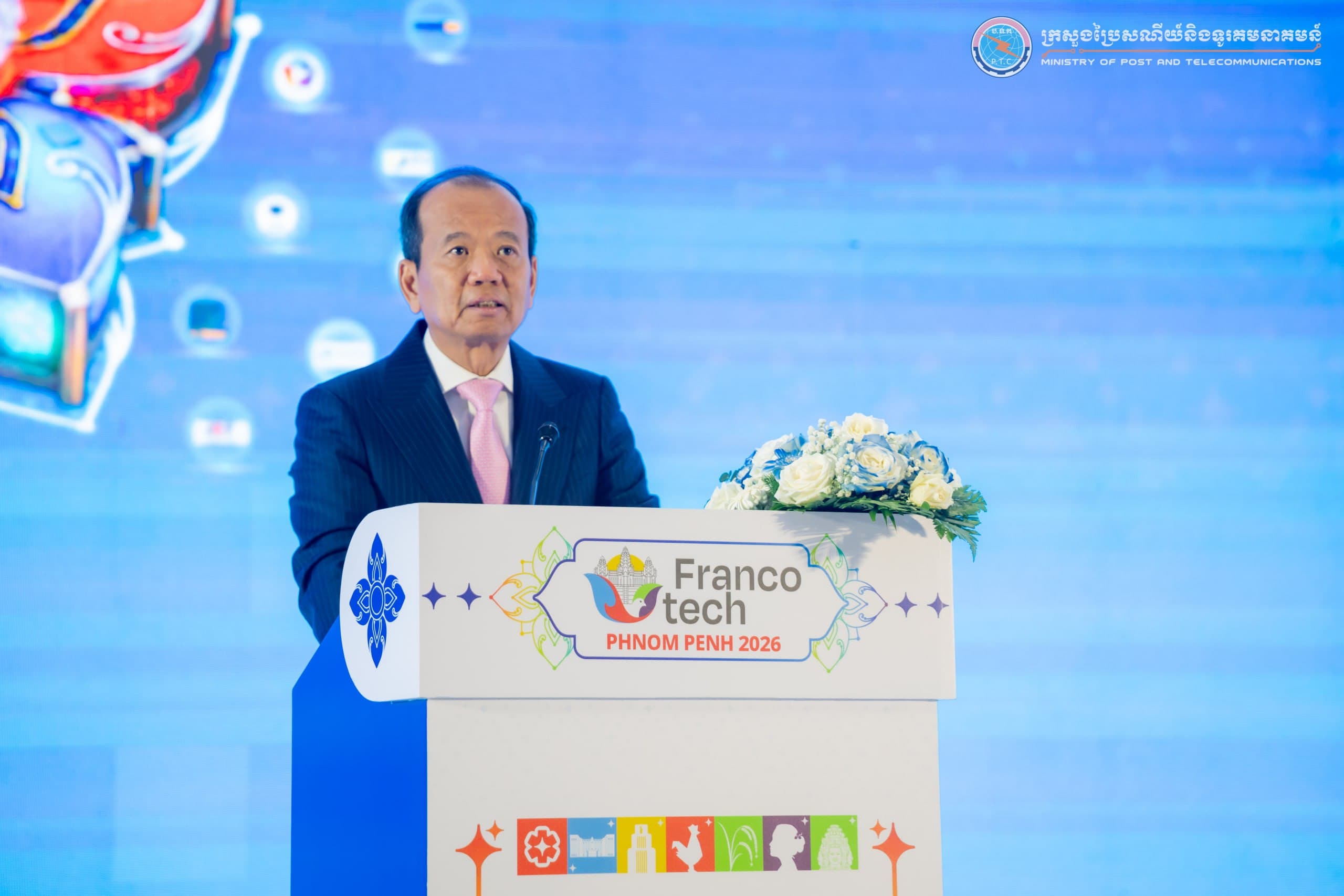
Cambodia is considering expanding Verify.gov.kh, its national document verification platform, into a wider system that could support digital identities, digital wallets and secure data sharing. Minister of Post and Telecommunications Chea Vandeth outlined the plan on November 15 at a FrancoTech 2026 forum in Phnom Penh, speaking at the Ministerial Forum on Digital Government.
Vandeth said the platform could eventually give people easier access to both public and private services, and let businesses confirm customers’ identities electronically.
The expansion would build on a system that dozens of Cambodian institutions already use, and that has been adapted for government services in other countries, including Timor-Leste and the Philippines.
“Our vision is to develop Verify.gov.kh into a multipurpose digital public infrastructure platform that supports trusted digital transactions, secure information sharing and smooth access to public and private services,” said Vandeth, who chairs Cambodia’s Digital Government Committee.
As of October, 38 ministries and public institutions and 77 educational institutions had adopted Verify.gov.kh. The platform has supported about 12 million verified documents, and it received a UN Public Service Award in 2026.
Vandeth explained that documents can be checked without ongoing access to the database of the institution that issued them. He said this can speed up verification and help prevent document fraud. The same technology, he added, could be used for identity checks by businesses and for secure information exchange between institutions.
He cited two examples of Cambodian technology being used abroad. Timor-Leste adopted it for its driver’s licensing system through bilateral cooperation, while the Philippines built a national digital identity program based on the Verify.gov.kh design.
Vandeth called on more governments to create a shared repository of digital tools, where countries could contribute software and systems they have already put into use. He argued that this would give other governments a head start when designing their own services.
“By sharing proven solutions, we can reduce duplication, lower development costs, speed up implementation and help more countries benefit from digital transformation,” he said.
Domestically, Cambodia has launched the DG SuperApp as a single entry point to digital government services. It sits alongside separate platforms for official documents, digital forms and government communications.
Vandeth said the goal is to link services across ministries and simplify procedures for businesses and the public.
“In the future, citizens should not need to understand how government ministries are organized in order to access public services,” he said.
He also stressed the need to bring digital services to remote communities. Vandeth said the 4G network covers 95.1 percent of the population, while 5G coverage has reached 34.5 percent since its launch last January. A new submarine fiber-optic cable is expected to be operational by mid-2027, adding to the country’s international connections.
Vandeth also said Cambodia has set up a Security Operations Center to help protect government systems. A draft Cybersecurity Law is under review and is expected to be adopted in 2027.
The forum focused on how government systems can share information, how digital public services can operate across borders and how public agencies can use artificial intelligence responsibly.
Vandeth said governments should measure their progress by whether services become easier to use and whether they earn public trust.