 Mekong Monitor
CADT Lines Up Three AI Partnerships at FrancoTech
CADT will sign three AI-related cooperation deals with French and Romanian partners at FrancoTech in Phnom Penh, covering research training, computing access and open-source tools.
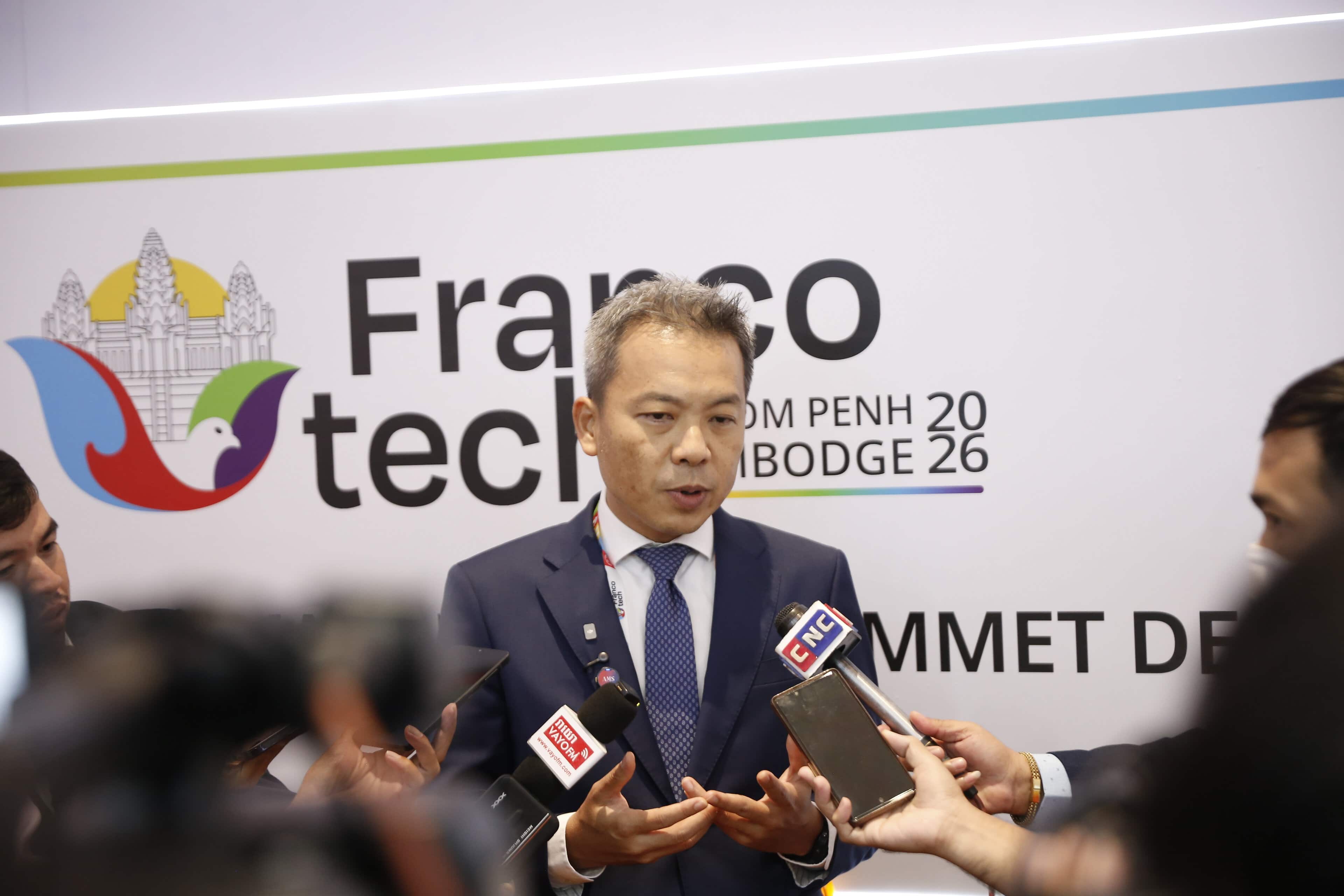
The Cambodia Academy of Digital Technology (CADT) plans to sign three cooperation deals with partners from France and Romania on November 15 at FrancoTech in Phnom Penh. One is a research collaboration that aims to train 60 artificial intelligence (AI) specialists over four years.
CADT President Seng Sopheap laid out the plans in a November 14 interview, held shortly after the forum’s opening roundtable. He said the agreements would also give Cambodian researchers access to high-performance computing in Romania and set up a partnership with a French firm focused on open-source AI.
The training goal is part of a proposed research partnership with a university in Grenoble, France. A second deal, with a university in Bucharest, would let Cambodian researchers tap into a Romanian computing network built to supply universities with the processing power needed to develop AI models.
“Building AI models demands serious computing power. This partnership would give us access to a large network of that kind,” Sopheap said.
The third agreement would link CADT with a French company developing open-source AI. According to Sopheap, the collaboration would help researchers build tools they can run and manage themselves.
Taken together, the three partnerships target different gaps in Cambodia’s AI development: skilled researchers, access to computing power, and the ability to adapt technology to local needs.
The announcements followed a roundtable on how French-speaking countries could build AI that works across languages and cultures. Sopheap said participants talked about joint research centres and training programmes that would help countries create their own tools and weigh the risks of deploying them.
“How can the Francophonie work together so this technology serves all of its languages and respects the cultures and histories of its member countries?” he asked.
For Cambodia, that question has a concrete side in Khmer. Research partnerships and computing access could give local teams more room to build and test models for Khmer speakers.
Sopheap added that the roundtable also explored how Francophone nations could form a shared position on linguistic and cultural diversity in global AI policy debates.
Separately, the French Development Agency (AFD) and the Ministry of Posts and Telecommunications are developing a proposed National AI Centre. Huy Siveu, who heads energy and digital projects at AFD, said the facility would support AI skills development and host graphics processing units (GPUs), the chips used to train and run AI models.
A model of the proposed building on display at FrancoTech came out of a student architecture competition run by AFD, the ministry and CADT. Huy said the contest gave young Cambodians a chance to contribute design ideas.
The opening roundtable was the first of eight planned during FrancoTech, which runs until November 16 alongside the 20th Francophonie Summit. Upcoming sessions will cover digital government, financial technology, agriculture, tourism and the use of technology to preserve cultural heritage.