 Mekong Monitor
Thai Traders Stand to Lose More From Prolonged Border Closure, Informal Economy Leader Says
Vorn Pao of the Independent Democracy of Informal Economy Association says Thai businesses that supplied Cambodia will lose more from the prolonged border closure than Cambodian workers, though both sides are suffering. Cambodian producers, meanwhile, are trying to win back the home market.
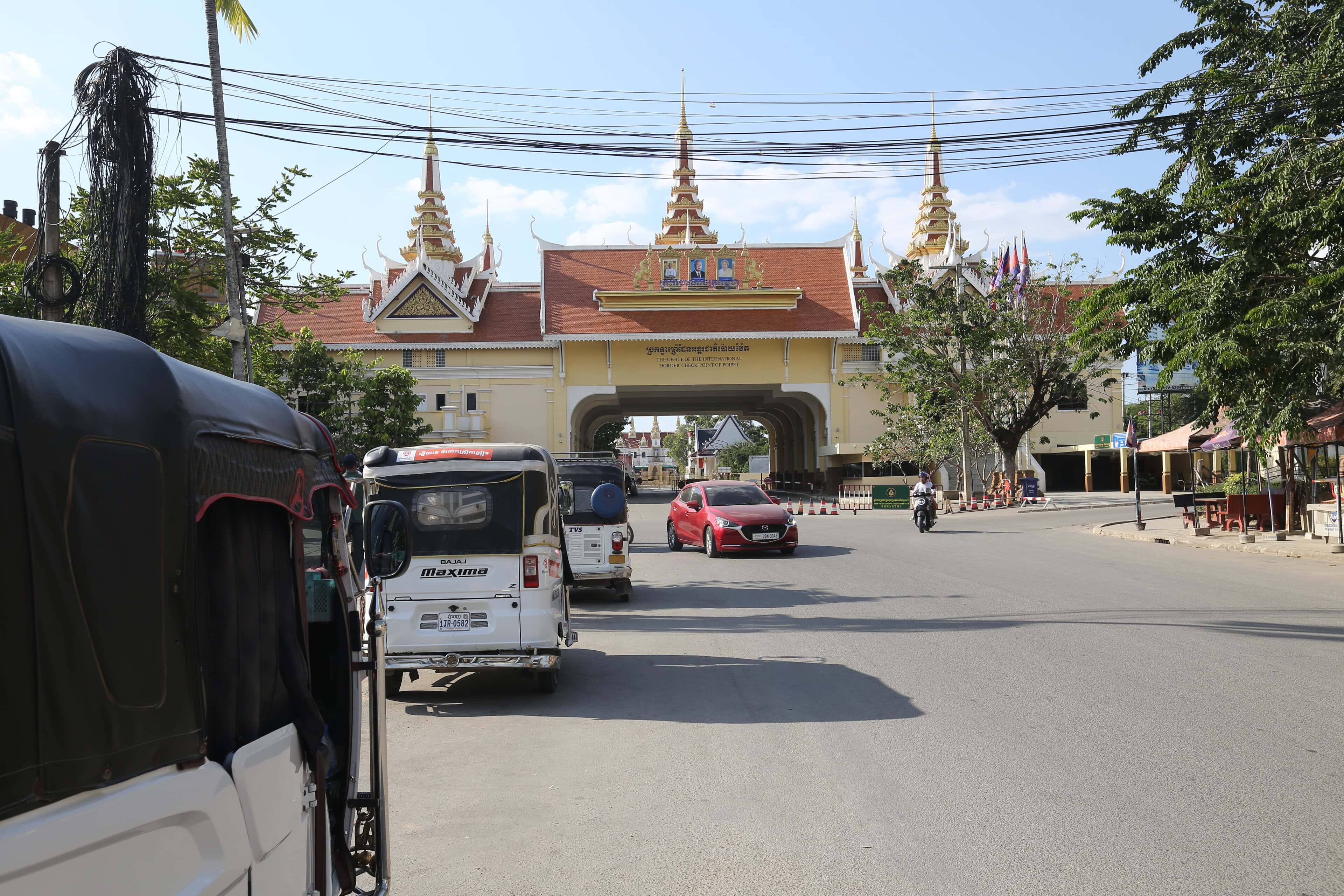
More than a year of border closures has hurt livelihoods on both sides of the Cambodia-Thailand frontier. Vorn Pao, president of the Independent Democracy of Informal Economy Association (IDEA), argues that Thai businesses supplying the Cambodian market will bear the heavier losses. His view runs counter to claims by Thai Prime Minister Anutin Charnvirakul that economic conditions are improving.
Losses on both sides
Pao acknowledged that Cambodian traders, transport workers and farmers have suffered from the disruption to cross-border commerce. Still, he said Thailand's larger companies and their extensive supply chains, which served Cambodian consumers, face the steeper commercial setback.
"Both Cambodians and Thais are losing out," he said. "But for people living along the border, Thais are losing more, because many of their big companies used to sell goods into Cambodia and depend on Cambodian customers."
The government's position
Anutin has suggested the crossings will stay shut for the foreseeable future. According to a November 2 report in Thai media, he said during an October 31 broadcast that reopening hinges on resolving Thailand's concerns about territorial disputes, transnational crime and national security. He gave no timeline for reopening the crossings or for restoring relations to their earlier level.
"Ever since the border crossings closed, all economic indicators have improved and people are satisfied," Anutin was quoted as saying.
Pain for border communities
Pao countered that losing Cambodian customers has damaged Thai firms that once sold farm produce and a broad range of consumer goods across the border. Because those businesses are large, he argued, their exposure is greater than that of many Cambodian informal workers, whose individual incomes are smaller.
He added that a Cambodian consumer boycott of Thai products has compounded the trade disruption, further weakening demand for Thai businesses that serve the Cambodian market.
Pao also acknowledged that Cambodian households who depend on daily cross-border activity have lost vital income. Cambodian vendors who used to trade at the Rong Kluea market in Thailand can no longer operate as they once did, he said. Informal logistics workers who moved goods across the border by hand cart have lost their work as well.
"Cambodians along the border who used to trade across in Thailand, such as at Rong Kluea market, can't sell the way they did," he said. "The people pushing carts have lost their businesses and their livelihoods too."
The farm sector has also been hit. Pao named cassava, cashew nuts and other Cambodian crops whose movement through the crossings has been disrupted. He further pointed to job pressures caused by Cambodian migrant workers returning home from Thailand, which has increased the number of people looking for work in Cambodia.
Cambodian producers seize the opening
While border workers struggle, Cambodia's domestic producers are trying to turn the disruption into an opportunity to strengthen their position in the home market. Te Taing Por, chairman of the Federation of Associations of Small and Medium Enterprises of Cambodia (FASMEC), has pointed to growing consumer support for Cambodian-made goods. At an October 31, 2025, press conference, he described the border tensions as a turning point in public attitudes toward local production, encouraging consumers and businesses to rethink their reliance on imports.
Getting lasting access to shelves remains difficult, however. Te Taing Por said trade fairs alone cannot give local products enough outlets. High electricity costs, small production volumes and pricing pressures still make it hard for manufacturers to compete with imports.
He urged producers to raise their standards, keep prices reasonable and build the capacity to export. He stressed that the federation is not calling for a government ban on foreign goods. In October, the Ministry of Commerce is offering 160 places across two training rounds to help small and medium enterprises run online shops and export through CambodiaTrade.com, with lessons on digital marketing, pricing, payments and international shipping. Te Taing Por also said that cutting red tape would lower costs and improve competitiveness, and urged businesses to strengthen quality, safety and packaging and to pursue overseas markets.
For border workers, these opportunities have not yet replaced the trade and transport jobs Pao describes. The same closure is opening doors for some businesses while cutting the daily income of others.
Phnom Penh's stance
Government spokesman Pen Bona said Cambodia's position on reopening has not changed. In his view, Thailand closed the border unilaterally and must therefore announce its reopening first. "Cambodia will consider it afterwards," he said. "That is still our position."