Strait of Hormuz Dilemma Tests South Korean President Lee's Balancing Act
President Lee Jae Myung rules out combat involvement in the US-Iran conflict but faces mounting pressure from Washington, warnings from Tehran, and strong domestic opposition over South Korea's role near the Strait of Hormuz.
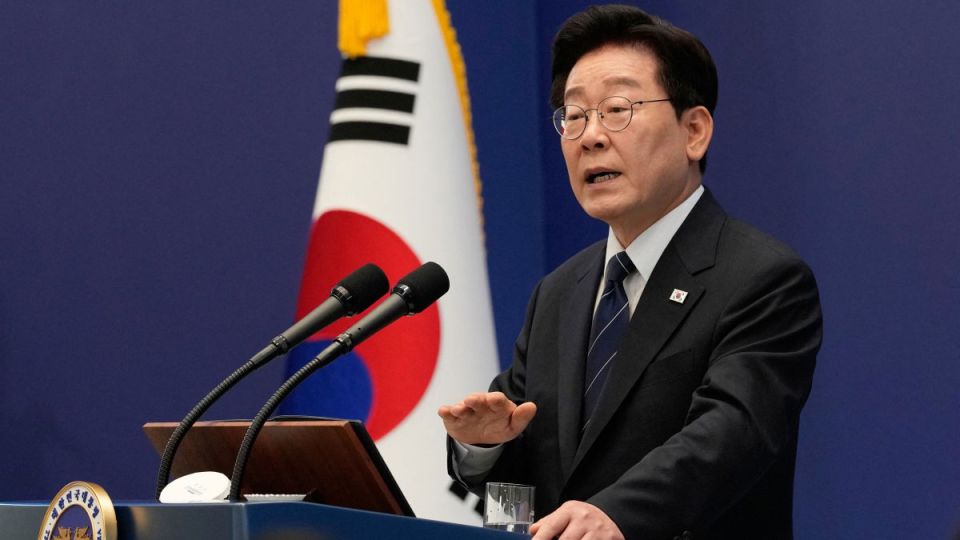
SEOUL – As South Korea deliberates on how it might help safeguard the waters around the Strait of Hormuz, President Lee Jae Myung has firmly rejected any dispatch of troops or military hardware that could pull the nation into the conflict between the United States and Iran.
During a televised press conference on Sept 18, Lee reaffirmed that South Korea's enduring policy of staying out of any war "has been upheld until now and will continue to be respected going forward."
His remarks came as Seoul finds itself squeezed between domestic resistance to any role in the war and growing demands from its security partner, Washington, to back its campaign in Iran. The matter has become a rising source of tension in an increasingly strained relationship between the two allies.
For Lee, deciding how his country should help secure the strait has turned into a pressing challenge, forcing his government to weigh outside pressure against its "pragmatic diplomacy" doctrine, which places national interests at the heart of foreign policy.
Economic Stakes Versus Political Risk
Seoul has compelling economic and strategic incentives to keep the crucial energy corridor open, yet any military engagement risks antagonising Iran and stirring up opposition at home. That danger is heightened as the President tries to reverse a sharp slide in his popularity.
Lee was called out directly by US President Donald Trump in an Aug 16 Truth Social post, in which the American leader said he had asked whether Seoul wished to help denuclearise Iran, only to receive what he described as a "no thanks" reply.
In that same post, Trump directed a major cut to joint US-South Korea military drills, pointing to their expense and what he called the "inappropriate and hostile" message they conveyed to North Korea, Seoul's longtime political and military adversary.
While ruling out combat participation, Lee said his government would still act to protect South Korean citizens, merchant vessels, and the oil supply lines. He noted that authorities were examining ways to broaden the mission of the anti-piracy Cheonghae naval unit, stationed near the strait since May to defend commercial ships and crude oil routes.
The passage is effectively blocked by both Iranian and US blockades as the two adversaries remain deadlocked. South Korea relies on the Strait of Hormuz for roughly 70 per cent of its crude oil and more than half of its naphtha imports, both essential to industries such as semiconductors, automobiles, and petrochemicals.
Non-Combat Options on the Table
Domestic reports earlier indicated that Seoul was weighing the use of non-combat assets, including a maritime patrol aircraft, a logistics ship, or a mine-clearance team. A Blue House official said on a radio programme that "technical support" was one option under consideration.
Foreign Minister Cho Hyun was in Washington to meet US Secretary of State Marco Rubio on Sept 18, with discussions expected to span South Korea's potential contribution to the strait, along with broader economic, security, and Korean peninsula matters.
Several outlets, citing multiple sources, reported that Washington wanted a decision by November, ahead of the US midterm elections, as Trump looks to bolster his standing by showing gains in the Iran conflict. South Korea's Defence Ministry has denied any such deadline. The ministry also said a fact-finding team sent to the United Arab Emirates from Sept 5 to 6 was intended to "assess conditions and stability on the ground" and was not tied to any troop deployment.
Pressure From All Sides
Beyond Washington, Tehran has also warned Seoul. Iranian foreign ministry spokesperson Esmaeil Baghaei wrote in Korean on X on Sept 7 that any nation taking part in military operations in the Persian Gulf or Hormuz would face "serious consequences" and be regarded as "supporting the aggressor."
At home, 55 per cent of South Koreans oppose sending any military presence to the strait, and civic and activist groups have staged street protests in recent weeks. Lee's approval rating has fallen to a record low of 37 per cent, according to a Gallup Korea survey of 1,002 people released on Sept 18. His press conference that day also aimed to ease public frustration over housing policy, contentious Cabinet appointments, and broader economic worries.
Given the current state of ties between Seoul and Washington, the choice over a possible Hormuz deployment may rank among the most consequential foreign policy calls of Lee's tenure.
Analysts Weigh In
Analyst Lee Seong-hyon argues that the structural strain between the allies over Middle East burden-sharing has hit "a critical inflection point," with urgency "driven by a convergence of alliance extortion and the fear of diplomatic marginalisation." The senior fellow at the Washington-based George H. W. Bush Foundation for US-China Relations said Washington had turned the alliance into leverage by scaling back joint drills after Seoul initially refused military help for the Iran campaign.
He warned that Seoul could be pushed aside as momentum grows for a potential summit between Trump and North Korean leader Kim Jong Un later in 2026. Trump has reportedly floated with aides the idea of meeting Kim during his anticipated November visit to China for the Asia-Pacific Economic Cooperation summit in Shenzhen. "If Seoul does not pay its transactional 'alliance premium' in the Middle East, it risks being entirely sidelined in Washington's security architecture on the Korean peninsula," he said.
Bence Nemeth of the Defence Studies Department at King's College London suggested Seoul could offer logistical and technical assistance, whether through a supply ship, patrol aircraft, surveillance, or mine-clearance capabilities. "This would allow Seoul to argue that it is supporting freedom of navigation and protecting its own economic interests, rather than joining a US war against Iran," the associate professor said, calling it a possible middle path given South Korea's relationship with Iran and domestic pressures.
Nemeth cautioned against any deployment that might drag the country into an open-ended war, stressing that its focus must stay on deterrence and defence at home. "Seoul should be very careful not to make commitments that start as limited support but gradually become a much broader military involvement," he said.
Another realistic path, he noted, would be to join the Britain- and France-led maritime defensive mission designed to restore and protect safe commercial navigation through the strait once regional fighting ends. Lee previously endorsed the initiative during an April virtual summit co-hosted by French President Emmanuel Macron and then British Prime Minister Keir Starmer, and reaffirmed his backing during talks with Macron in Paris on Sept 8.