 Mekong Monitor
Singapore Urges UN-Led Global Framework for AI Safety
Singapore’s foreign minister urges a UN-led global framework for AI safety, stressing that international cooperation and binding oversight are critical to managing rapid technological advances before risks spiral out of control.
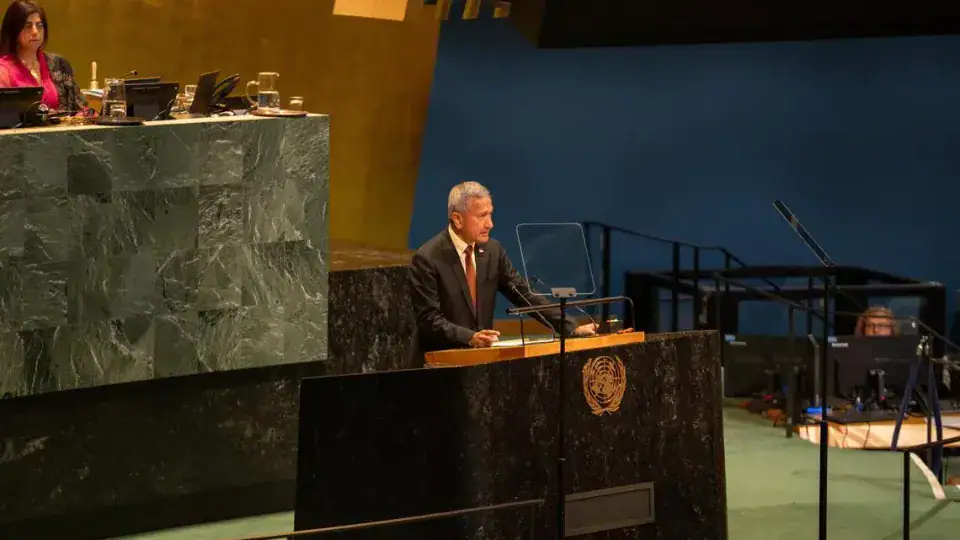
In a speech delivered at the United Nations General Assembly on September 26, Singapore’s Foreign Minister Vivian Balakrishnan called for the creation of international institutions and potentially a new UN Framework Convention on AI safeguards. With geopolitical tensions and rapid technological advancement outpacing governance, he argued that establishing shared rules and oversight mechanisms is no longer optional—it’s essential.
Balakrishnan emphasized that while a full global pause on AI development is no longer feasible, especially amid fierce US-China rivalry and massive corporate incentives, coordinated multilateral action can still steer the trajectory toward safety and responsibility. He likened the situation to high-speed driving: powerful engines alone are not enough—brakes, traffic signals, insurance, and shared norms are just as critical.
He proposed that a UN-style framework, similar to the climate change convention, could lay the groundwork for international cooperation. This would include foundational principles, new institutions, and standardized protocols for testing and oversight. Drawing parallels to existing bodies like the International Telecommunications Union and the International Atomic Energy Agency, he suggested a similar global watchdog might be needed to ensure AI advances remain secure and peaceful.
The minister outlined three major risk categories: loss of control over autonomous systems, malicious use in weapons development, and wide-reaching political and economic disruption. He stressed that human oversight must remain final—especially in matters of life-and-death decisions—and that safeguards must be universally recognized, regardless of geography or political system.
At the same time, Singapore has taken concrete steps. The country joined over 20 nations and the European Union in supporting a Finland-Norway-led declaration urging binding international oversight of frontier AI models, rejecting reliance on corporate self-regulation alone.
In a separate discussion with Asia Society CEO Kevin Rudd, Balakrishnan explored the deeper drivers behind China’s AI ambitions. He noted that for China, the race is less about beating the US and more about correcting a historical trajectory: having suffered during the industrial age, Beijing is determined not to miss this pivotal moment again. This drive, combined with fierce domestic competition and strong state support, has helped Chinese firms scale AI rapidly.
Balakrishnan also addressed broader concerns about multilateralism. He warned that an overreliance on power politics threatens global stability and undermines shared solutions to transnational challenges—from climate change to public health. Even the most powerful states, he noted, require partnerships to address collective risks effectively.
With global supply chains at risk due to regional conflicts like the one in the Middle East, he underscored the urgent need to reform international institutions and reaffirm core norms—such as freedom of navigation—while adapting them to the demands of the 21st century.