 Mekong Monitor
Anutin Says Thailand Favors Bilateral Talks, Yet Border Survey Team Remains Idle
Thai Prime Minister Anutin Charnvirakul says Thailand prefers bilateral mechanisms to resolve its border dispute with Cambodia, but the Joint Boundary Commission remains stalled and about 20,000 Cambodians still cannot return home.
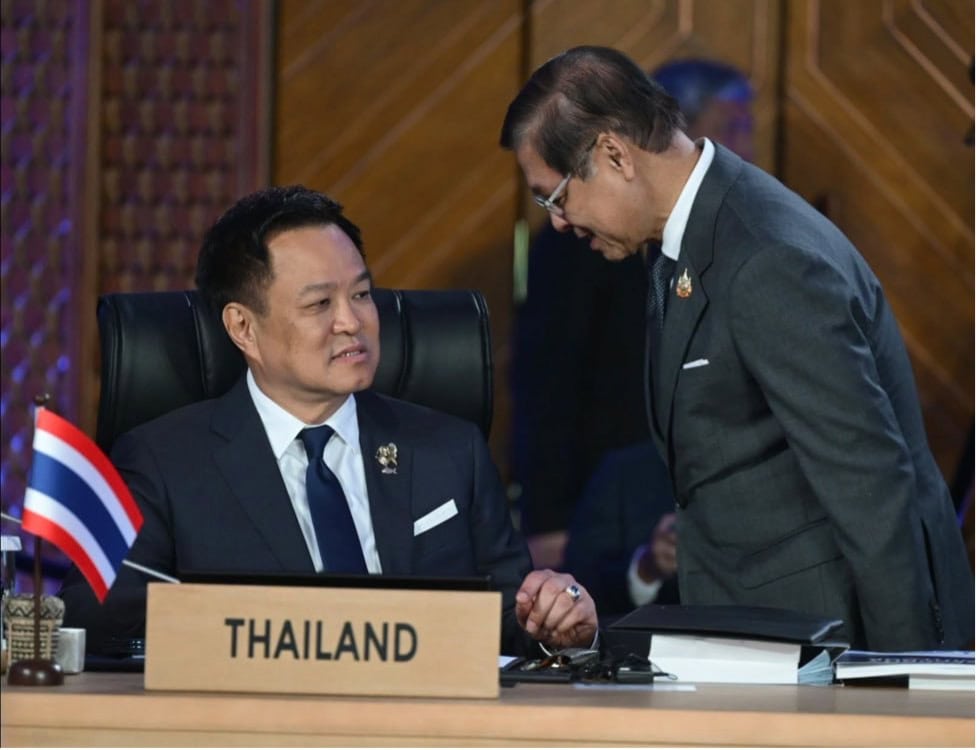
Thai Prime Minister Anutin Charnvirakul has again said that Thailand prefers to settle its border dispute with Cambodia through bilateral channels. Yet Bangkok still has not named officials to the Joint Boundary Commission (JBC), the body set up to survey and demarcate the border.
In a statement issued on November 15, Anutin responded to remarks by Cambodian Prime Minister Hun Manet at the 20th Francophonie Summit in Phnom Penh that morning, as well as a Cambodian statement delivered at the ASEAN Leaders' Meeting in Manila. He maintained that Thailand has always honored its agreements with Cambodia and will continue to abide by international law.
Anutin argued that Thailand's actions have been aimed solely at protecting its sovereignty, territorial integrity and, above all, the safety and welfare of its people. He stressed that Bangkok remains committed to peaceful negotiation and to international law.
He also said Thailand would not take bilateral disputes, especially those involving territory or humanitarian issues, to countries that are not party to the conflict. He urged both sides to avoid internationalizing their disagreements and to take confidence-building steps to repair relations.
Despite these assurances, the JBC has made no progress since the December 27, 2025 ceasefire, and no Thai team is yet ready to resume fieldwork.
The stall carries serious humanitarian consequences. Roughly 20,000 Cambodians are still unable to return home after last year's border fighting.
Speaking at the Francophonie Summit on November 15, Hun Manet urged Thailand to honor existing agreements and restart joint surveying and demarcation of the land border. He said the safe and dignified return of displaced people remains Cambodia's top priority.
Since the ceasefire, he said, the situation has remained complex and fragile. Soldiers continue to face tensions, Thai troops still occupy several areas of Cambodian territory, and about 20,000 people across the country cannot yet go back to their homes.
Hun Manet also said Cambodia wants to resolve the dispute peacefully through existing agreements and joint mechanisms. He described the frontier as an internationally recognized boundary that was clearly demarcated more than a century ago, not a new line. He warned that borders cannot be altered by force or by faits accomplis, and that respect for international law underpins the security of all states, large and small.
Cambodia has repeatedly called for JBC meetings and joint surveying to resume under the December 27 ceasefire agreement. It argues that progress in this process is essential both to resolving the border situation and to allowing displaced families to return home.