 Mekong Monitor
Pursat Dam Nears Completion, Set to Power Up and Help Control Floods by Year-End
The 80MW Stung Pursat 1 dam in Pursat province is nearly complete and expected to begin generating power in December. Its developer says the reservoir will also help reduce downstream flooding and provide irrigation water during the dry season.
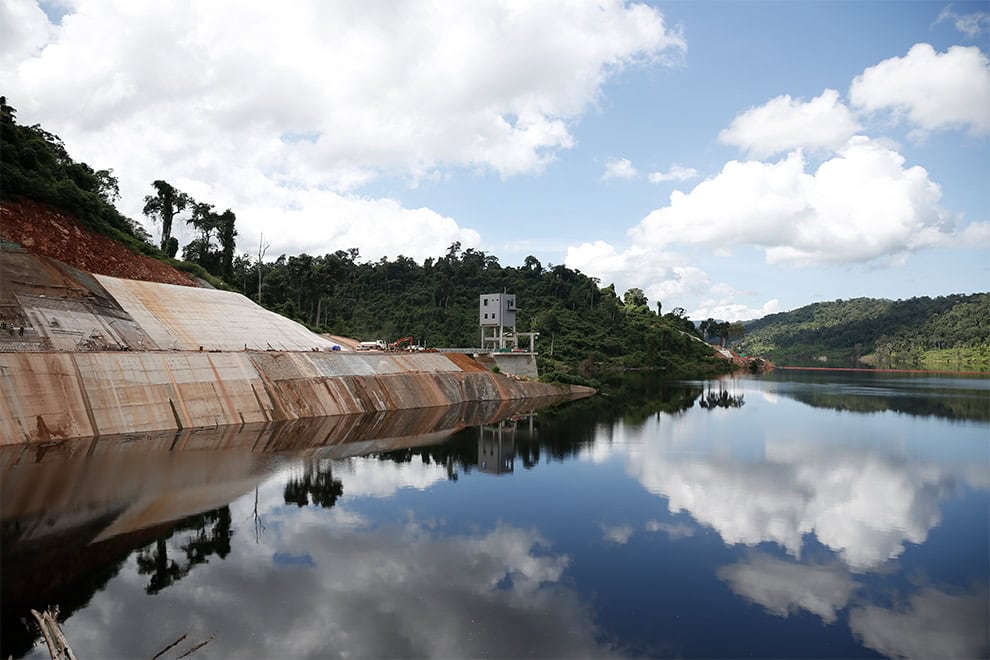
The 80-megawatt Stung Pursat 1 hydropower project in Veal Veng district, Pursat province, is nearly finished and is scheduled to start producing electricity in December. Its developer says the dam will also help ease downstream flooding and supply water to farms during the dry season.
The plant sits in Stung Thmei village, Pramaoy commune, about 75 kilometres from Pursat town. South Korean firm SPHP (Cambodia) Co., Ltd. is developing it, and construction started in 2021.
On October 23, the project's managing director, Hong Soo Young, led journalists on a tour of the site. He said the main structures were in their final phase and that the dam gates had been closed, allowing the reservoir to begin filling.
Timeline and capacity
Construction is now more than 90 per cent complete. The company expects to start generating power in December 2026 and to reach the full 80MW output in 2027. Full capacity will take longer because the reservoir has not yet collected enough water to run at full scale.
Hong explained that river flows vary between the wet and dry seasons, so the dam was designed with large storage capacity to allow electricity generation all year rather than relying only on the river's natural flow.
- Total installed capacity: 80MW, split across two identical generating units
- Reservoir storage: roughly 1.2265 billion cubic metres, including about 999 million cubic metres for regulating flow
- Main infrastructure: a spillway, water conveyance structures, a powerhouse, a switchyard, and a 230-kilovolt transmission line
- Dam size: about 100 metres high and 680 metres wide, with a seven-metre-wide road along its crest for future site access
Flood control and farming benefits
Beyond power, Hong said the reservoir can hold back large volumes of water during heavy rain, reducing the surge that would otherwise reach Pursat town at once. He did not give an estimate of how much flooding would be reduced or which areas would benefit most.
During the dry season, the stored water can be released through the turbines to generate electricity, and that discharge can also serve farmland downstream. Hong said the turbines could release up to about 3.5 million cubic metres of water per day under ideal conditions.
Costs, ownership and challenges
Hong said the location was chosen largely for its geography. He acknowledged that rainy seasons had slowed work over the past several years, since heavy rain and muddy ground made building harder, while the dry season was easier.
He put the project's cost at about $250 million, although earlier figures given to the press had listed about $231 million. The company is financing construction under a 35-year investment agreement, after which the entire facility will be handed over to the Cambodian government.
Hong also credited the government with helping on investment conditions, land arrangements, and paperwork. He said the company had compensated residents whose land or property was affected, with government coordination, though he did not say how many households were involved or how much was paid.
According to the company's schedule, construction is due to finish by December 31, 2026, with power generation starting that same month. The project will add another domestic source to Cambodia's electricity network. How well the dam manages floods and supplies farms will depend on how the reservoir is operated, local hydrological conditions, and the water distribution systems serving downstream communities.