 Mekong Monitor
PM Gives Former Opposition Figure Until End of October to Settle Border Talks Plan
Prime Minister Hun Manet has given former opposition lawmaker Um Sam An until the end of October to decide whether to send representatives to border talks, on four set conditions. Sam An had not responded to the offer at the time of publication.
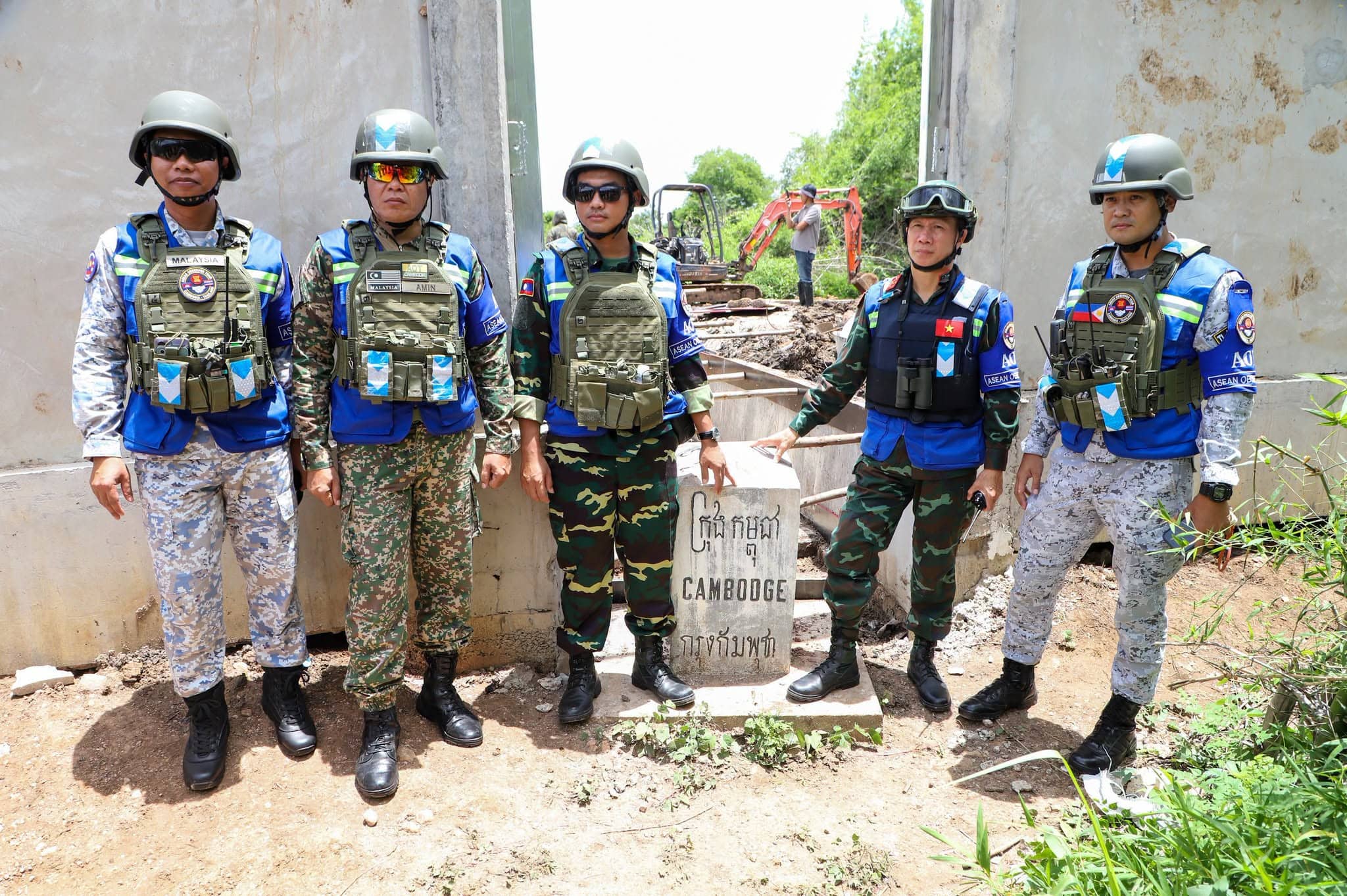
Prime Minister Hun Manet has suggested that former opposition lawmaker Um Sam An could send representatives to a planned meeting on the border rather than attend in person.
The offer follows a series of exchanges between the prime minister and Sam An, who has accused the government of letting Cambodia lose territory in the disputed border area.
Manet has repeatedly invited the exiled politician to come to the Kingdom to discuss the boundary between border markers 52 and 59. Sam An, however, has tried to widen the talks and has even sought the dropping of past legal charges against him.
Political analysts say the border dispute is too important to be used for political points. They have called instead for constructive dialogue based on documentary evidence and the national interest.
In a social media post, Manet said that during the past week he had been on official visits to Azerbaijan, Türkiye and Kazakhstan, and had attended the seventh summit of the Conference on Interaction and Confidence Building Measures in Asia (CICA). Over that same period, Sam An kept issuing statements about the invitation to discuss the border.
The prime minister criticised Sam An for not presenting clear evidence to back his accusations. He also noted that Sam An had attached a number of conditions, covering his personal safety and a pardon, before agreeing to take part in any discussions.
Even so, Manet said the government remained willing to facilitate talks and verify evidence in order to address public concern about the border area.
He explained that if Sam An did not want to travel to Cambodia, he could appoint representatives from overseas or choose people already living in the country to meet the government's border team. That option, however, would come with four conditions:
- Sam An must give his representatives full authority to hold the discussions.
- He must provide them with all relevant documents, evidence and witnesses supporting his claims about the area between markers 52 and 59.
- He must acknowledge all the statements and arguments his representatives put forward during the talks.
- He must accept the outcome of the verification carried out by his appointed representatives.
Manet reiterated that the personal safety guarantees he had already offered Sam An and his team still stood, and that they would also cover any representatives he appointed.
“I am giving you until the end of October to make a decision, organise a working team or appoint representatives, and prepare the documents for discussions and verification in early November, as you requested,” he said.
The prime minister stressed that accusations claiming the government and its border officials had ceded Cambodian territory to Thailand are serious and must be backed by credible evidence. He also urged Cambodians of all political affiliations to let the government keep handling border issues with Thailand, noting that the situation is complicated and remains unresolved.
Earlier, Sam An had proposed public talks with a government working group in Phnom Penh between November 1 and 7. However, he wanted security guarantees, the dropping of charges and a pardon before he would attend.
Political analyst Meas Nee wrote in a recent social media post that direct discussions among Cambodian politicians are especially important at this time. Such talks could help reduce divisions and rebuild mutual trust.
He warned that using the border dispute for political advantage could deepen divisions at home and create openings that neighbouring countries might exploit. “Simply using the border issue for political gain at this time is a repetition of history. It is a weakness that could make it easier for our neighbours to further divide Cambodia,” he said.
Nee suggested that if politicians were genuinely committed to discussing border matters or resolving national problems, a meeting in a third country could be a practical way to overcome mistrust. “If politicians genuinely intend to meet and discuss border issues or resolve national matters, a meeting in a third country would be a good option,” he said.
He added that clinging to individual positions without meaningful dialogue would only make matters more complicated. He also warned against psychological warfare and against politicians trading accusations to discredit one another, arguing that such divisions could serve outside interests.
Separately, political analyst Yang Peou told The Post that sovereignty and territorial integrity are concerns for every citizen, and that taking an interest in border issues is a legitimate expression of national consciousness. He cautioned, however, that any political involvement should be judged by whether it genuinely benefits the country or risks deepening internal divisions.
“On matters of sovereignty, territory and borders, every citizen, not just politicians, has the right to be concerned, to seek information, to participate and to help,” he said.
Peou argued that with Cambodia facing a border conflict with Thailand, all politicians should share a common position on defending national sovereignty and interests, regardless of ideological or policy differences. He pointed out that Thai forces had damaged Cambodian temples, infrastructure and civilian homes, and that more than 20,000 Cambodian civilians still cannot return to their residences because of the ongoing occupation of sovereign Cambodian land.
Against this backdrop, he warned that continuing to trade accusations without verified, documented evidence could give outside parties an opening to exploit political disagreements within Cambodia. He likened such behaviour to handing an enemy the handle of a sword, and urged politicians to consider the consequences of confronting one another over sovereignty.
“Politicians may oppose one another over political views or policies, but they cannot oppose the national interest,” Peou said.
Cambodia and Thailand are continuing to pursue their border disputes through existing mechanisms, while disagreements among Cambodian political figures over border demarcation and territorial integrity persist.
Manet's latest proposal opens the door to talks that do not require Sam An to attend in person. Whether a meeting takes place in early November will depend on the former lawmaker. At the time of publication, Sam An had not responded to the latest offer.