 Mekong Monitor
Nepal's Growth Forecast Cut to 3.7% After Devastating August Flood
The World Bank expects Nepal's growth to slow to 3.7 percent after the August 26 flood, which damaged hydropower, trade routes and tourism. Reconstruction could lift growth to 5.2 percent next year.
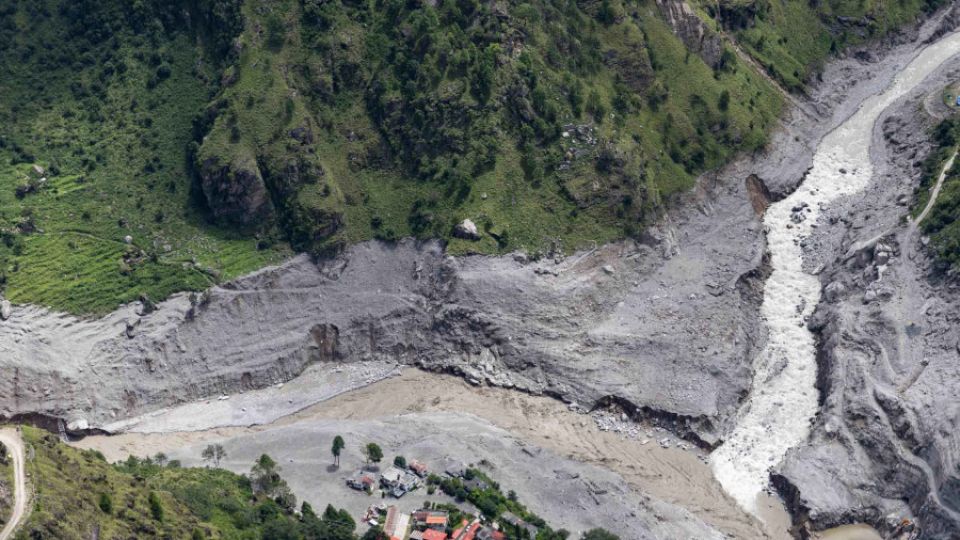
Nepal's economy is expected to slow to 3.7 percent growth in the fiscal year ending mid-July 2027, according to the World Bank. The main cause is the disruption to industry and services after the flood of August 26.
The World Bank says the flood will hit the economy through four main channels: energy, transport, trade and tourism.
The Scale of the Damage
The World Bank's rapid post-disaster estimate puts direct damage to physical assets at $1.66 billion. Infrastructure accounts for 83 percent of that loss, residential buildings for 11 percent and non-residential buildings for 6 percent. The worst effects were concentrated in Rasuwa, Nuwakot and Dhading districts.
The government's preliminary assessment is higher. It puts physical damage at $1.81 billion and total disaster effects, including lost production, livelihoods and essential services, at about $2.7 billion. Nepal estimates recovery and reconstruction needs at roughly $4.8 billion, nearly all of it (98.8 percent) for the longer term. Infrastructure makes up 65.5 percent of those needs.
Energy Takes the Heaviest Hit
Energy was the most affected infrastructure sector, and that is why industry is expected to be the biggest drag on growth. The flood damaged 12 hydropower projects. Seven of them are operating, with a combined capacity of 256 MW, and five are under construction, with 395 MW combined. A 25 MW solar plant was also hit. Damage to transmission lines cut off another 149.6 MW, bringing the total affected generation and transmission capacity to about 430.7 MW. That equals 10.6 percent of Nepal's installed hydropower and solar capacity.
Trade Routes and Border Crossings
More than 55 km of the 82-km Galchhi–Rasuwagadhi trade corridor was damaged, and 40 km of it was completely washed away. The flood also destroyed 37 motorable bridges and 68 suspension bridges.
The Rasuwagadhi crossing is Nepal's main port for trade with China. It handles 2.2 percent of Nepal's total merchandise imports, 10.8 percent of imports from China and 47.3 percent of exports to China.
Damage to the Prithvi Highway at Krishnabhir also disrupted a key route linking Kathmandu, southern Nepal and the Indian border. Authorities built a new track there, and two-way traffic resumed on September 17. However, the route remains at high risk of closure during heavy rain, and the new track and other damaged sections are still exposed to landslides and other climate-related hazards.
Tourism Faces a Longer Downturn
The World Bank expects tourism to suffer for a longer period, due both to physical damage and to travelers' concerns about safety. More than 200 hotels and restaurants were damaged in the affected districts. Access to popular trekking and pilgrimage sites, including Langtang, Gosaikunda and the Kailash Mansarovar route, has also been cut.
The timing makes things worse. The disruption came just before the autumn season from September to November, when tourist arrivals and trekking usually peak. The United Kingdom, Australia, Canada and the United States have since updated their travel advisories for Nepal.
Inflation and the Balance of Payments
The World Bank expects inflation to stay mostly under control and within the central bank's medium-term target of around 5 percent. Still, crop losses and transport problems could push up prices this fiscal year, and poorer households would feel that most. Higher paddy output, lower global commodity prices and easing inflation in India could help keep inflation in check next year.
The current account surplus is forecast to shrink this year and again next year. Merchandise imports will outpace exports, and services exports will weaken in the short term. Lost hydropower capacity of around 60 MW will reduce electricity exports, and fewer travelers will cut tourism income. Some of that will be offset by insurance payments from foreign reinsurers and continued growth in IT exports.
Next year, reconstruction is expected to drive up imports of building materials, machinery and equipment. Hydropower and tourism exports could recover as damaged infrastructure is repaired, new generation capacity comes online and foreign visitor numbers rebound. Foreign exchange reserves should remain well above the regulatory minimum for import cover, supported by steady remittances from migrant workers.
Rebuilding Differently
The World Bank argues that the recovery is a chance to shift from “Build Back Better” to “Build Differently.” In some places, it says, rebuilding the same infrastructure on the same site, even to a higher engineering standard, will not solve the underlying risk.
Future projects should draw on updated hazard data and take more care with where they are built, how risks add up and how structures are designed. The report also calls for more backup capacity in critical networks and better monitoring and early warning systems at regional and local levels. It stresses that Nepal does not necessarily need entirely new institutions. The priority is to find which existing arrangements worked, where gaps appeared and where targeted fixes would build resilience.
The aim, the report says, is to build systems that keep working even when individual assets fail, so that future disasters have less impact.
With reconstruction underway, growth could rebound to 5.2 percent in the next fiscal year.
Human Toll
The human cost has been severe. As of September 26, the National Disaster Risk Reduction and Management Authority reported 1,453 deaths, 5,285 people still missing and 13,795 people rescued.