 Mekong Monitor
Indonesia Enacts Asset Forfeiture Law Despite Transparency Doubts
Indonesia's parliament has passed a long-delayed asset forfeiture law that lets authorities seize suspected criminal assets without a conviction. Supporters call it a major anticorruption tool, but watchdogs warn that its secretive drafting and presidentially appointed oversight body could invite abuse.
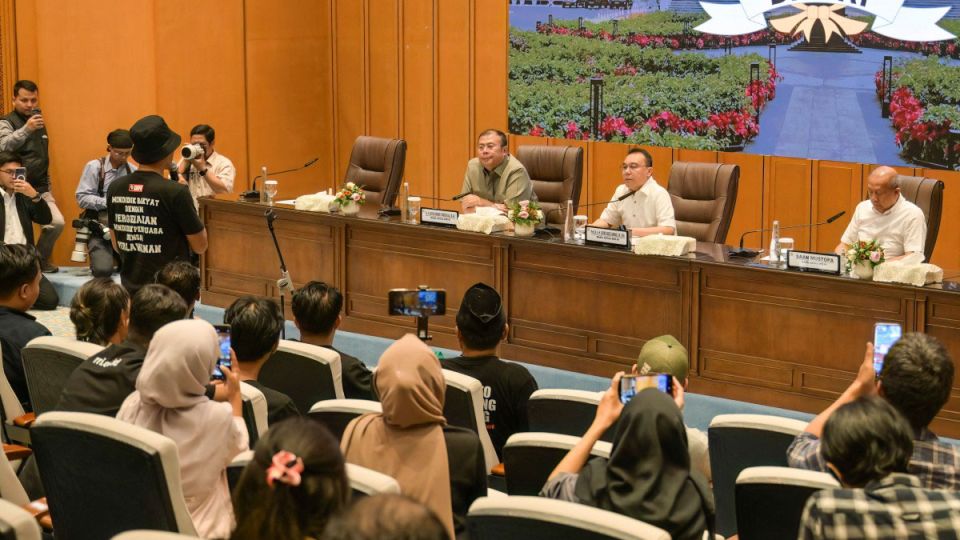
First proposed in 2008, the new law lets authorities seize assets suspected of coming from criminal activity, including through mechanisms that do not require a criminal conviction. The goal is to recover state losses and go after illicit wealth.
Indonesia's House of Representatives on Thursday passed the long-awaited Asset Forfeiture Law. Many supporters see it as a powerful anticorruption tool, though critics have raised concerns about a secretive drafting process and weak protections against misuse.
All eight party factions voted for the bill during a plenary session led by House Speaker Puan Maharani of the Indonesian Democratic Party of Struggle (PDI-P). Her party is the only major one that sits outside the ruling coalition of President Prabowo Subianto.
Administrative and Bureaucratic Reforms Minister Rini Widyantini represented the government at the session. Deputy Law Minister Edward Omar Sharif Hiariej attended in place of Law Minister Supratman Andi Agtas.
Habiburokhman, who chairs House Commission III, which oversees legal affairs, described the law as "urgently needed." He said it introduces a different approach to justice, one that puts asset recovery first by compensating state losses and victims in ways that conventional proceedings may not allow.
"There is a shift in the paradigm of justice and recovery that makes the immediate passage of this law necessary," he said.
The bill had stalled for nearly two decades. Calls for it to move forward grew in 2025, following a series of high-profile corruption cases involving government officials. The House revived the bill this year and promised to pass it before December 15.
The original draft covered 13 categories of offenses. Lawmakers later narrowed it to the following:
- Corruption
- Drug-related crimes
- Terrorism
- Arms smuggling
- Human trafficking
- Fraud and embezzlement carried out through electronic transactions
Throughout the deliberations, anticorruption watchdogs and civil society groups criticized the House for a lack of transparency. Their main complaint was that the draft was never made publicly available, which they said undercut meaningful public participation.
On Thursday, Habiburokhman defended the process, saying the House had held at least 87 public consultations with academics and legal experts. He also said lawmakers had strengthened oversight to make the law hard to abuse, including against political opponents.
Under the revised provisions, an independent supervisory body would be appointed by the president with the approval of the House. Habiburokhman, a member of Prabowo's Gerindra Party, presented this as a key safeguard.
Indonesia Corruption Watch (ICW) was not convinced. In a critical note on the limited November 16 draft it obtained, the group warned that a watchdog body picked by the president could still weaken the law's protections. It also flagged the risk that enforcement could be applied selectively or for political reasons.