 Mekong Monitor
Hun Manet Outlines Two Tracks for Settling Cambodia's Boundary Disputes with Thailand
Prime Minister Hun Manet says Cambodia will pursue land boundary talks with Thailand through the Joint Boundary Commission and maritime issues through UNCLOS conciliation, as delegations meet in The Hague.
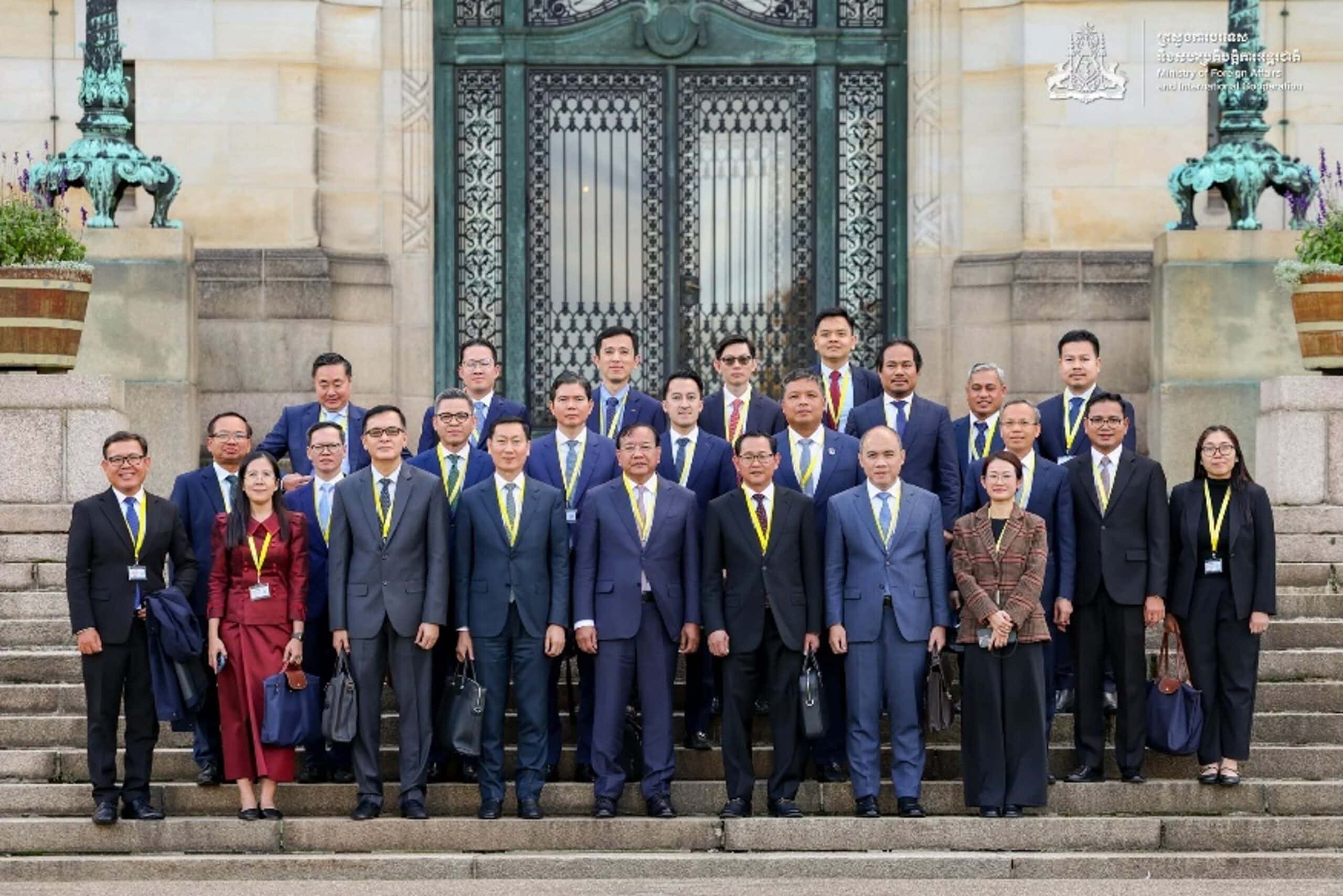
Prime Minister Hun Manet has restated Cambodia's position: land boundary issues with Thailand should be settled through bilateral talks in the Joint Boundary Commission (JBC), while the maritime boundary should go through compulsory conciliation under the UN Convention on the Law of the Sea (UNCLOS).
He said the mechanism chosen must match the realities on the ground and rest on sound, documented legal grounds.
In a social media post on October 16, Hun Manet made these remarks as a Cambodian delegation, led by Foreign Minister Prak Sokhonn, attended the second meeting with the Conciliation Commission and Thai representatives at the Peace Palace in The Hague, Netherlands. The talks run from October 14 to 18.
“Whatever approach we take, it has to fit the circumstances and the facts on the ground,” he wrote.
He described two kinds of approaches. The first is bilateral, which Cambodia wants to advance through the JBC for land boundaries. The second is international, namely compulsory conciliation under UNCLOS for the maritime boundary.
Hun Manet called border negotiations a major responsibility to the nation and its people, one that demands careful work and patience to protect national sovereignty. He warned that talks cannot move forward without a firm foundation, and that they should not rely on material from unreliable sources such as television, social media, hearsay or “gut feeling.”
He also sent his best wishes to the delegation and its legal team.
Maritime Conciliation Continues
The Hague meeting is chaired by Katrina Cooper, president of the Conciliation Commission, with the Permanent Court of Arbitration serving as registry. Thailand's delegation is headed by Foreign Minister Sihasak Phuangketkeow. The session follows an initial meeting in Singapore in September, and both sides aim to make further progress and identify areas of agreement on delimiting the maritime boundary. The commission was established under Annex V of UNCLOS.
On October 15, Cambodia's Foreign Ministry reminded both parties not to make public statements about the outcomes of the proceedings until the commission releases an official press statement, as required by the Rules of Procedure they agreed to.
Cambodia has proposed either a treaty setting out a single, comprehensive maritime boundary, or an agreement for joint development and fair sharing of resources while a final boundary is being negotiated. If neither is possible, Cambodia has asked the commission to draft recommendations to guide future negotiations.
Before the meeting, Thailand's Foreign Ministry said it was ready to cooperate with and support the commission's work. It also said it would provide relevant technical information aimed at a fair solution based on international law.
Displaced Civilians Remain a Sticking Point
While the maritime process moves ahead, land boundary questions and the return of displaced people remain points of dispute between the two countries.
Speaking in Geneva on October 13 at the 77th session of the Executive Committee of the UN High Commissioner for Refugees' Programme, Cambodia's ambassador and permanent representative to the UN in Geneva, Ke Sovann, said that at its peak in December, last year's border conflict displaced around 650,000 Cambodian civilians. He added that more than 20,000 people still cannot return home. He blamed this on Thai forces occupying parts of Cambodian territory, restricting access to homes and communities, and destroying houses and infrastructure.
On October 15, Royal Thai Army spokesperson Maj Gen Winthai Suvaree responded, according to Thai media reports. He argued that Cambodia's figures could give a misleading picture of the current situation. He said nearly 500,000 Thai civilians were evacuated during the fighting and that Thai military measures in the affected areas were meant to protect sovereignty, soldiers and civilians. Thailand also rejected accusations that it is occupying Cambodian territory.