 Mekong Monitor
Hun Manet Outlines Aid for Displaced Residents, Says State Cannot Fully Compensate Losses
Prime Minister Hun Manet has outlined the government's spending on civilians displaced by last year's border fighting, including housing, mine clearance, cash aid and financial relief. He maintained that the state cannot afford full compensation for all property losses.
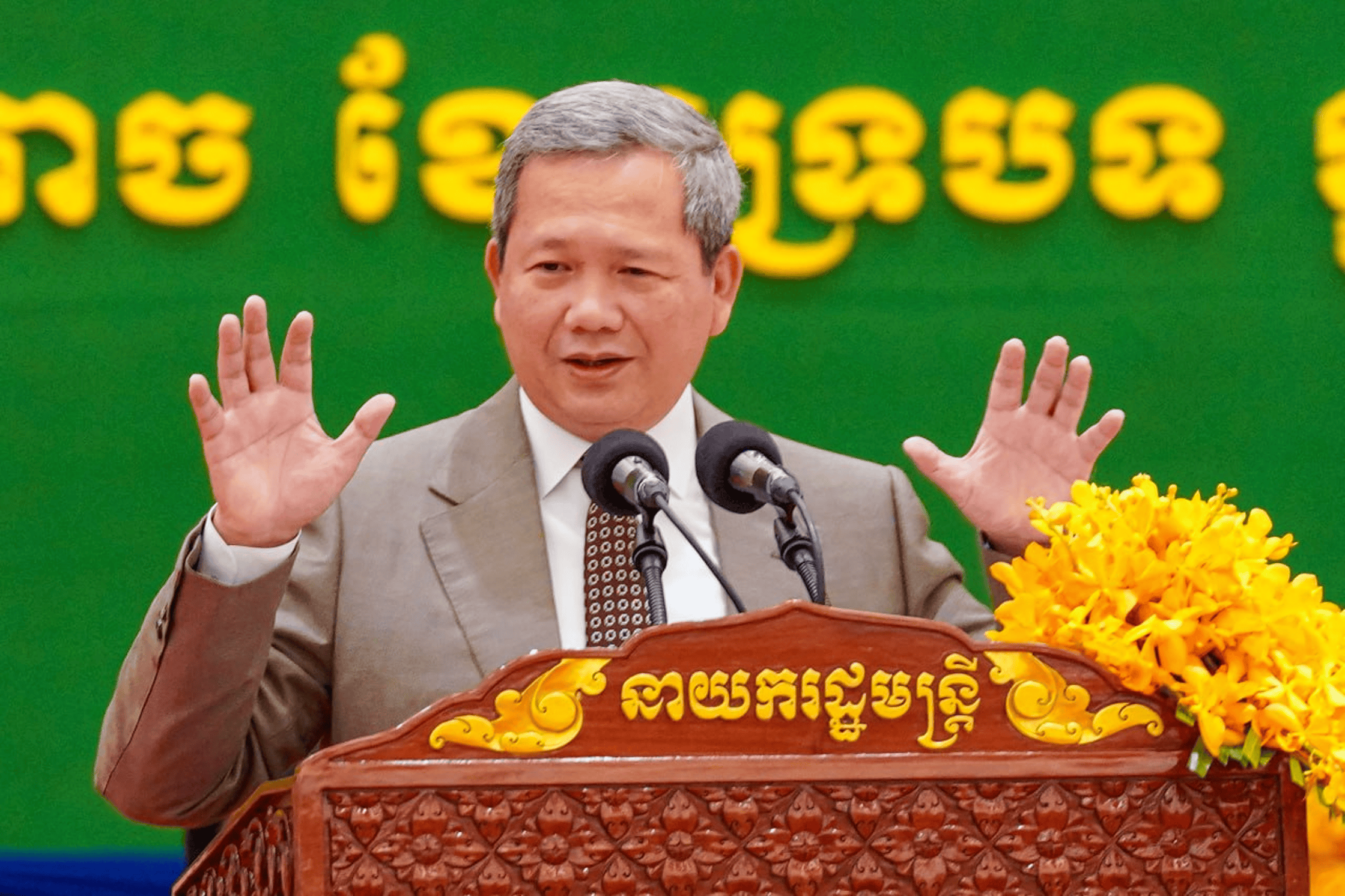
Prime Minister Hun Manet has laid out how the government is spending to support civilians displaced by last year's border fighting. The aid covers people who have since returned home as well as those still living in temporary shelters, known as “waiting villages.”
Responding to criticism from opposition groups abroad, Manet said the government cannot afford to compensate residents for all the property destroyed by Thai shelling and airstrikes. He stressed, however, that the government and donors have taken a number of steps to address the damage.
Speaking today, he said the government had set aside $1.6 million for the Cambodian Mine Action Centre (CMAC) to clear unexploded ordnance before displaced families are allowed back to areas that are not under Thai control.
Beyond demining, the government has given financial aid to 1,606 families whose homes were damaged in Thai attacks. Households with severe damage received 20 million riel ($5,000) each, while those with moderate damage received 12 million riel ($3,000). Families whose homes had only minor harm, such as broken roof tiles or windows, received 2 million riel ($500).
The Cambodian Veterans Association has also built 39 new houses for poor families whose homes were destroyed by Thai shelling.
On top of housing help, the government is paying monthly allowances of 400,000 riel ($100) through equity cards to affected residents, regardless of their income level. It has also handed out seeds to more than 9,000 families in the affected areas so they can get back to farming.
For residents who cannot return home, the government has built nearly 5,000 temporary homes at a cost of $59 million, and development partners have put up another 100 temporary shelters. Roads, schools, hospitals, clean water and electricity are being built for these communities.
The government is also making social protection payments of 100,000 riel per family each month, plus an extra 28,000 riel for every family member for one year. Families who cannot resume farming get an additional 200,000 riel a month on top of these other benefits.
Manet said the money for these measures has been reallocated from non-essential spending across various ministries.
He also noted that 61 banks and financial institutions have deferred monthly principal and interest payments totaling $200 million as their contribution to relief, and have waived more than $2 million in penalties.
For soldiers on the front lines, 77 financial institutions deferred principal and interest payments worth $48 million and waived $520,000 in penalties. For disabled soldiers, 14 institutions deferred payments worth $320,000 and waived penalties. In addition, 23 financial institutions fully wrote off the debts of fallen soldiers.
“Every bit of this help came in response to the government's appeal, and I am very thankful,” Manet said.
“This doesn't even count the support from donors, who have also stepped up,” he added.
He further noted that families of fallen soldiers who had no homes have been given housing, and that many of their children have since joined the military.
Manet acknowledged that, despite the extensive support, the government cannot pay full compensation for every loss residents may have suffered.
“I need to be clear: the state does not have the capacity to pay compensation,” he said.
“Take Boeung Trakuon, for example. One person owned property worth $3 million, while a woman spent $500,000 building her house. Compensating just those two would cost $3.5 million. If we add up everyone's losses, we simply cannot afford to pay, and we have no such obligation,” he said.
He reiterated that the state's role is to provide care and protection, prevent loss of life, and help people cope with the ongoing effects of the conflict.