 Mekong Monitor
Healthier Snacks Move Into Cambodian Schools Ahead of 2028 Meals Handover
Some snack vendors in Cambodia are swapping sugary treats and energy drinks for fresh, locally sourced food as the country prepares to take over its school meal programme by 2028. Backed by iDE and local authorities, the shift is also giving small local producers a chance to grow.
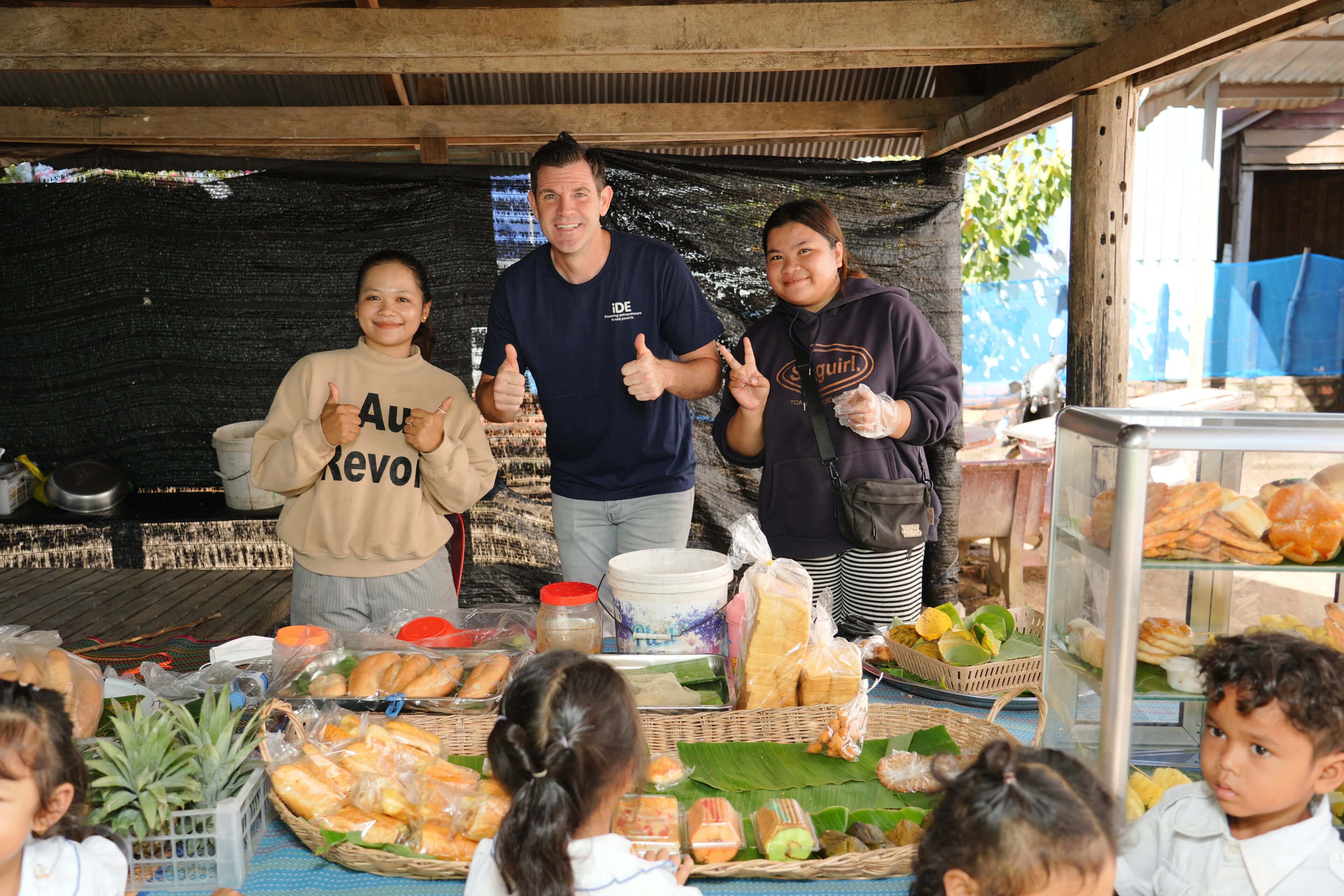
As Cambodia prepares to run its school meal programme on its own by 2028, some snack vendors are replacing sugary treats and energy drinks with fresh food grown or made locally. District education offices, provincial health authorities and the development organisation iDE are supporting the shift.
Vendors have a direct say in what pupils can buy during the school day, while local farmers and food processors shape what reaches schools and families. That makes the change to school snacks an important lever for better nutrition.
In a statement on November 12, iDE said it is working with local authorities to encourage vendors to move away from snacks of unknown origin, sweets and energy drinks, and toward fresh, locally made options.
A preschool cook grows her own ingredients
At a community preschool in Siem Reap province, Thong Bas cooks breakfast five days a week for roughly 25 children aged three to five. Her vegetables, herbs and fruit come from a home garden, where she builds up the soil with compost and relies on natural methods to control pests and disease. The modest income she earns helps keep the garden going and covers part of her family's basic costs, according to iDE.
The nutrition challenge
Cambodia's 2021–22 Demographic and Health Survey found that 42 per cent of children aged six to 23 months received a minimum acceptable diet. That measure considers how often young children are fed and how varied their meals are. In rural areas, the figure fell to 35 per cent. Around one in five children under five is stunted, and about one in ten is wasted, meaning they are too thin for their height.
Building a wider food system
During a recent trip to Cambodia, iDE chief executive Reed Peterson met with food producers and business owners working in agriculture, food processing, school food and sanitation. He noted that whether families can access nutritious food depends partly on whether local companies can deliver their products to the shops and places where people buy food and where children eat.
Peterson stressed the need for a broader system that links farmers, food businesses, schools and communities, so that healthy choices are easy to find in everyday life.
From a home kitchen to a growing business
In Battambang province, Man Hayat started making fish powder in 2016 for her own children, using small freshwater fish that are full of tiny bones. Her company, Hayat Fish Powder Enterprise, now employs eight people and has widened its range to include vegetable fish crackers and vegetable powders.
Hayat received business training and mentoring through iDE's SHE Incubator and Accelerator programmes, along with a grant of more than $4,000 to expand production. The funding came through the Transforming Lives Through Nutrition project, which is backed by The Church of Jesus Christ of Latter-day Saints.
She is now preparing to sell through grocery stores, village shops, public schools and factory communities. For Hayat, reaching these outlets would open up a much bigger market for a product that began in her own kitchen.
She said her original aim was simply to give her children nutritious food. Today, she hopes to put these products within reach of more families and create work opportunities for others through her business.