 Mekong Monitor
From Unsold Harvests to Farm-Gate Buyers: How Cambodia’s Tallest Bridge Is Reshaping Rural Life
A new road and the Russey Chrum Bridge are helping farmers in Pursat’s O’Soam commune reach markets, with buyers now coming straight to their fields. The improved access is also opening doors to tourism, though recent border clashes have slowed visitor numbers.
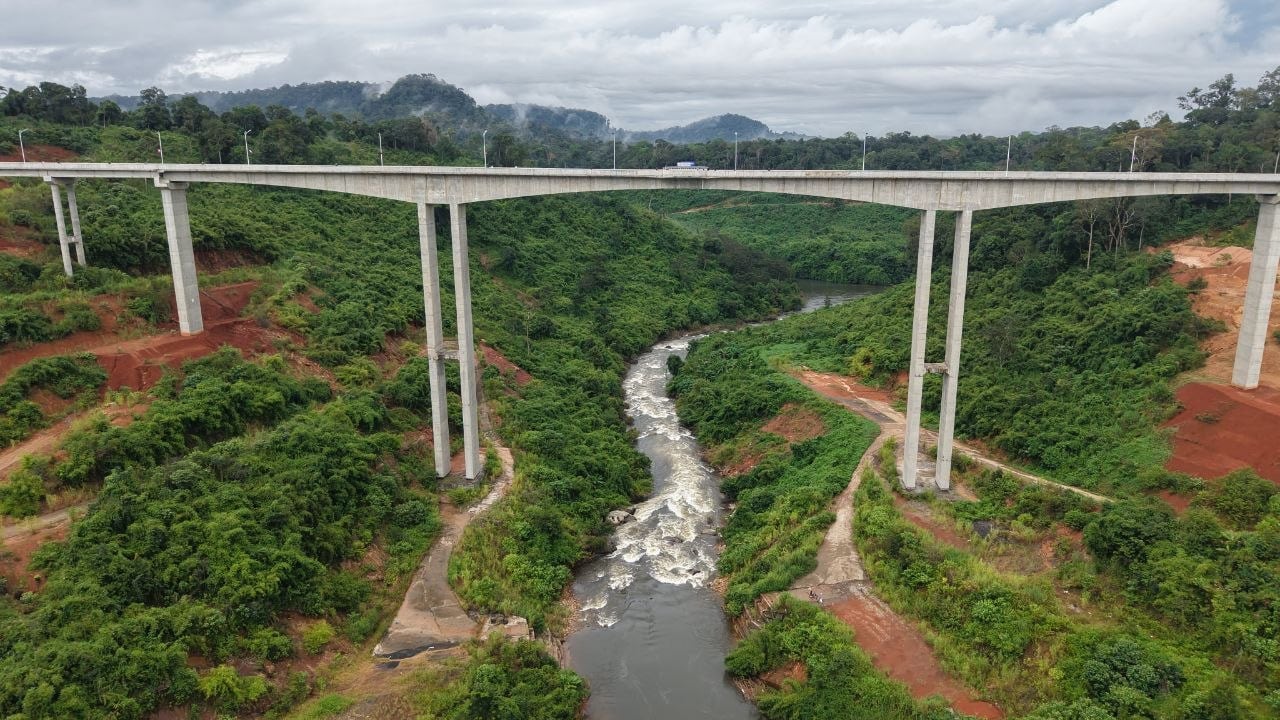
Once cut off from the rest of the country, O’Soam commune in Pursat province is seeing its economy change. New road and bridge links, including National Road 10 and the Russey Chrum Bridge, which is Cambodia’s tallest, now let farmers in this mountainous area send their produce to market. Buyers are also driving out to the farms themselves.
Veal Veng district governor Theang Leng took reporters on a tour of the district on October 23. He said the new connections had become a major force behind the local economy.
“Moving farm produce out of O’Soam used to be almost impossible. Farmers could grow crops, but the roads were so poor that the harvest never reached a market,” he said.
“Now that we have the bridge and the road, production has grown and markets are easier to reach. Farmers get better prices, and daily life in the commune has improved,” he added.
Two routes to market
According to Leng, goods from O’Soam can now travel by two main routes. One runs to the provincial town of Pursat and on to Phnom Penh. The other heads toward Koh Kong province. Having both options gives producers more ways to transport their goods and find buyers.
Local authorities are also working to organise farming households into groups, so they can boost output together and look for new markets as a unit.
Farmers working together
Leang Pich, who helped set up agricultural, forestry and tourism groups in O’Soam, said the first goal was to build up the local economy before looking for markets beyond the commune.
“A community has to become strong before development can reach beyond it. O’Soam has huge potential for fruit growing. Almost anything can be grown here,” he said.
Pich said better roads and stronger community groups had given residents more chances to grow produce and sell it to tourists and buyers from outside the area. He stressed that visitors should be able to find local food when they arrive.
“We want visitors to see what O’Soam has to offer, especially our fruit, and we want to draw in tourists. No one should come here and find nothing local to eat,” he said.
He added that these community initiatives are meant to give farmers steadier incomes.
Noun Lim, a representative of the local tourism group, agreed. He said that in the past, farmers worked their land on their own, with no organised network and no dependable link to buyers.
“Farmers with large plantations can now sell through our community to buyers in Sihanoukville, Phnom Penh and Battambang. The buyers come to us directly, so we no longer have to haul everything ourselves,” he said.
Lim explained that farmers used to grow very little because there was no one to buy their crops. Many relied on the forest and other natural resources instead. With no clear place to sell, few had any reason to expand their fields.
He said residents are now paying more attention to farming. Rather than leaving land idle, they rotate crops through the seasons.
Bananas are among O’Soam’s best-selling crops. The area also produces taro, pepper, ginger, turmeric and coffee.
Selling straight from the farm
Lim, who also runs a homestay, said travellers passing through could stop at roadside homes or walk into plantations to buy produce. Some tourists want fresh coffee beans to roast themselves, while others buy young coffee plants to grow at home.
He said visitors are drawn to the local produce because they can see where it grows and judge its freshness for themselves.
A new tourism draw
Leng said National Road 10 and the bridge have opened up tourism. An area once visited mostly by adventure travellers is now reachable for ordinary holidaymakers.
He said foreign visitors had been few before, and most were adventurers riding motorbikes or tackling rough mountain tracks. Before fighting broke out along the Cambodia-Thailand border in late 2025, large numbers of domestic tourists came on weekends, and some parking areas could not fit all the vehicles.
Leng said visitors came from across Cambodia, especially Banteay Meanchey, Siem Reap and Battambang. Some drove along National Road 10 to the coast of Koh Kong province without passing through Phnom Penh.
“They can take National Road 10, enjoy the scenery along the way, and then reach the sea. This road and bridge have given tourism and the economy of Veal Veng a tremendous boost,” he said.
Lim said the area still draws adventure-seekers who come for mountain biking, motorcycling and forest trekking. The community also offers guide services.
However, he admitted that tourism has slowed since the armed clashes along the Cambodia-Thailand border, which have reduced visitor numbers.
“Since the shooting started, tourist numbers have dropped everywhere,” he said.
The slowdown shows that, although the new roads and bridge have created economic opportunities, tourism still depends on security and on whether travellers feel safe.
Looking ahead
Leng hopes the infrastructure will pave the way for growth in farming, industry and tourism services.
“I believe this infrastructure will contribute greatly to Veal Veng’s development. It can attract major investors, because they will be able to move their products more easily by road and bridge,” he said.
Still, whether the roads and bridge will lastingly improve farmers’ livelihoods will depend on stable markets, fair crop prices, strong community organisation, and residents’ ability to grow more in response to demand.
O’Soam was once a place where farmers struggled to move and sell their harvests. Today, it is gaining new opportunities as buyers travel directly to its plantations and its produce reaches larger markets more easily.