 Mekong Monitor
EuroCham Urges Government to Ease Tax Hurdles on Textile Waste Recycling
Cambodia is weighing a mechanism that would let garment factories send textile offcuts to recyclers without paying VAT and import duties. The idea was discussed at a recent Cambodia-Europe public-private dialogue.
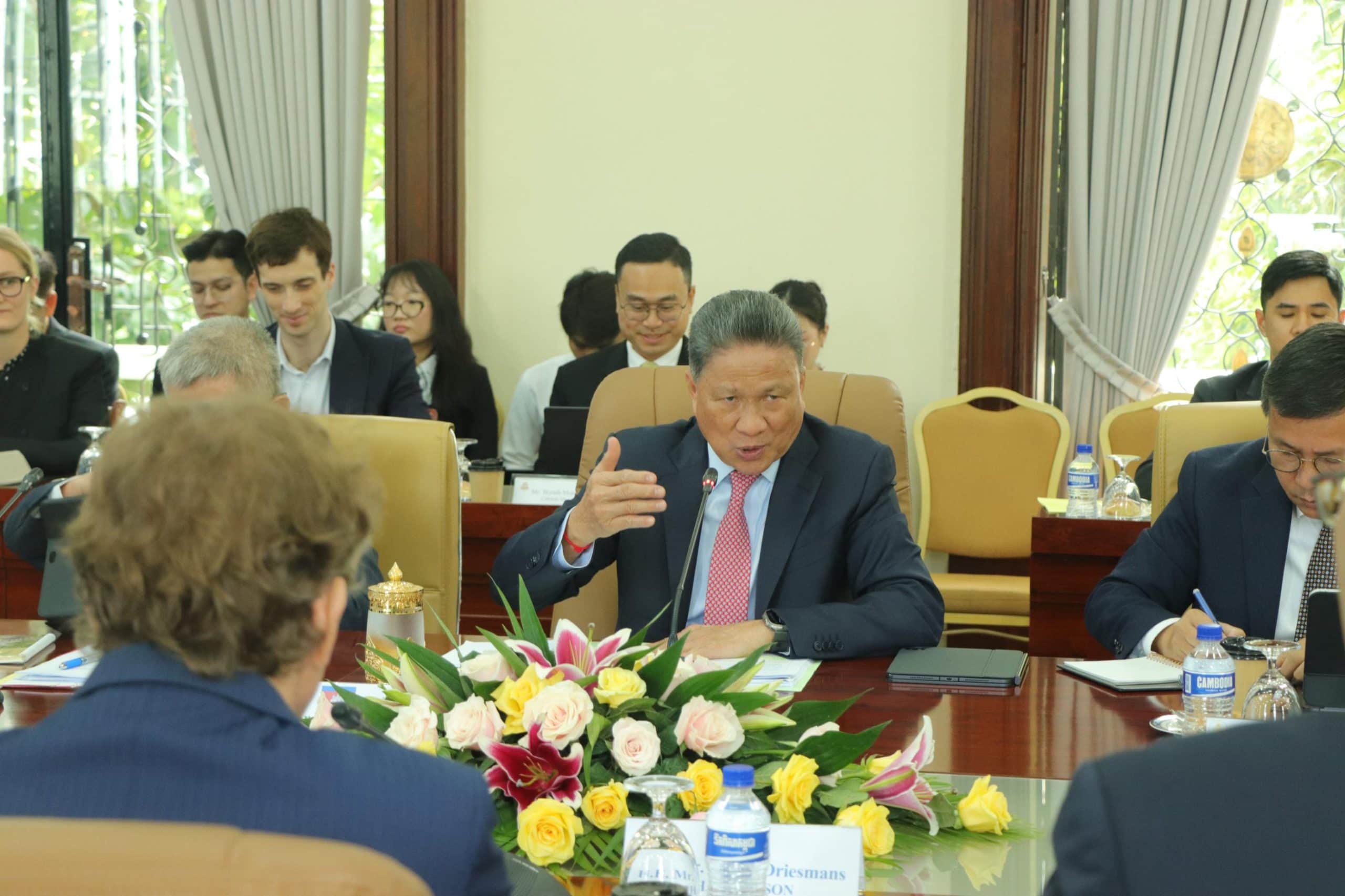
Cambodia is considering a mechanism that would let garment factories transfer textile waste to recycling facilities without facing extra tax costs. The proposal responds to industry requests to lower expenses and to help manufacturers meet sustainability rules in major export markets, including the European Union.
Progress was reported at the fifth Cambodia-Europe Public-Private Sector Dialogue, held in Phnom Penh on November 4 and organised by the Council for the Development of Cambodia (CDC) and EuroCham Cambodia.
Why recycling is costly now
Under current rules, moving textile cuttings from factories to recyclers is subject to value-added tax and import duties. EuroCham says these charges create a financial barrier to recycling the waste the garment sector produces.
Progress on a possible solution
After earlier discussions, the CDC confirmed that a transfer-of-material mechanism could be used to move textile cuttings from factories to recyclers. The CDC also said the issue had been passed to Prime Minister Hun Manet for consideration.
EuroCham, working with the German development agency GIZ and the Textile, Apparel, Footwear and Travel Goods Association in Cambodia (TAFTAC), has drafted a pilot programme and recommendations for digital reporting. These are meant to support a formal adoption of the procedure.
Massimileano Tropeano, chair of EuroCham's Garment and Textile Committee, said collaboration between businesses, development partners and the government is helping move solutions forward.
"Together with TAFTAC and GIZ, we are working with the Government on clear and practical solutions for textile waste, so that Cambodia's garment industry is ready for the sustainability requirements of its key export markets, including the EU," he said.
The mechanism is still under consideration. The dialogue recorded progress toward a possible procedure but did not announce that it has been put into effect.
A wider reform agenda
The textile discussion was one part of a broader agenda that also covered investment, trade facilitation and regulatory reform. Senior officials, EU representatives in Cambodia, EuroCham members and the chamber's board took part.
Deputy Prime Minister Sun Chantol, who serves as first vice-chair of the CDC, said the dialogue should bring practical improvements to the business climate. He welcomed EuroCham's recommendations and pledged to keep working with relevant ministries to tackle regulatory problems, improve coordination and make it simpler to do business in Cambodia.
Other topics included customs costs, medicine registration, vehicle tariffs, environmental assessments and ways to cut repeated administrative requirements.
- Customs: EuroCham found that official public fees make up only part of what businesses pay. Charges set by private customs brokers add significantly, bringing total costs to about twice the regional average. The General Department of Customs and Excise is encouraging firms to use an online portal that gives them better oversight of export paperwork.
- Environmental impact assessments: The Ministry of Environment is developing a three-tier system that rates projects as low, medium or high risk. Processing would take 30, 60 and 90 days, respectively. Investments in special economic zones are expected to fall into the low-risk category.
- Business administration: The CDC has agreed to bring relevant institutions together to review proposals. These include digitising company constitutional documents, aligning photo ID requirements, linking government portals, creating a single list of business codes and reducing repeated requests for the same documents.
Business calls for faster reform
EuroCham chair Tassilo Brinzer warned that heavy and complex regulation can weigh on investment decisions in Cambodia's relatively small market. Investors, he said, need less regulation, more efficient procedures and lower compliance costs.
Brinzer also called for stronger legal certainty for businesses and quicker reform. He added that more flexible visa options for tourists, long-term residents, experts and investors would help. He said he was optimistic the government recognises the need to act quickly.