 Mekong Monitor
Could Pursat Become the Next Mondulkiri? A Coffee Plantation Plans Major Growth
A local investor is expanding coffee cultivation in O’Soam, Pursat, aiming for 600 hectares this year to serve domestic demand before targeting export markets. Limited output and farmer hesitancy over market access remain key hurdles.
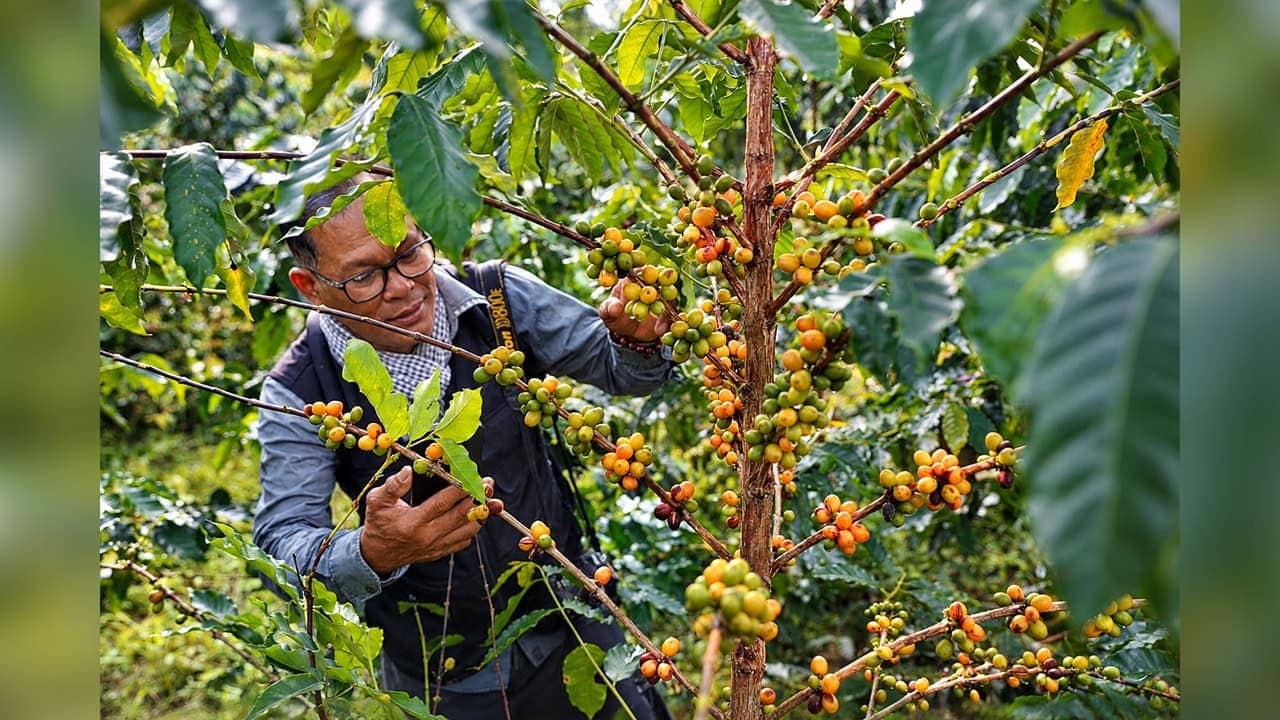
The cool, forested highlands of O’Soam in Veal Veng district, Pursat province, are starting to look like a promising new area for coffee. A local investor has already planted more than 140 hectares and plans to reach 600 hectares this year. The goal is to first meet domestic demand, then eventually sell to overseas markets.
The push faces obstacles. Output is still limited, and many local farmers are reluctant to invest in coffee because they worry about whether they can reach buyers and whether they could lose money.
A grower with big plans
Leang Pech, who farms in Chhay Louk village in O’Soam commune, started growing coffee three years ago out of personal interest. He soon saw its commercial potential. About 80 of his more than 140 hectares are now producing beans.
“We have planted more than 140 hectares of coffee so far, and our plan is to expand cultivation to 600 hectares this year,” he said.
He has also set a longer target of 1,000 hectares over the next three years. Alongside that, he intends to build local processing facilities and, eventually, begin exporting.
Robusta, Arabica and the local climate
The plantation grows both Robusta and Arabica. Pech believes the cool temperatures, abundant forest cover and high humidity in O’Soam suit both varieties. Robusta usually yields more, while Arabica fetches higher prices and is prized for its flavour. Some Arabica trees have started bearing cherries at around 18 months. Pech says coffee can thrive at an elevation of only 300 metres, and he believes O’Soam beans could eventually compete with those from Mondulkiri, one of Cambodia’s best-known coffee regions.
He also points out that Cambodia still imports coffee because domestic production falls short, which creates room for local growers.
Sales and business links
For now, the plantation supplies selected businesses in Phnom Penh and resorts linked to Pech’s other ventures in Preah Sihanouk and Kep provinces. Kiri Coffee is one of his local partners. Overseas buyers have shown interest, but the farm has not yet exported any beans or signed international supply contracts. Pech says the real bottleneck is production, not demand. “At present, what we lack is enough coffee to supply the market,” he said.
Costs, yields and prices
Pech estimates that fresh coffee cherries could fetch around $1 per kilogram. Young trees may produce two to five tonnes per hectare, with yields rising to five to 10 tonnes as they mature. He puts the cost of establishing one hectare, including irrigation and upkeep until it starts producing, at up to $4,500. He stresses that actual figures vary.
To add value locally, drying equipment has already been brought to O’Soam, and roasting facilities are under development. His long-term aim is a processing factory that would keep more of the work inside the community.
Jobs and wider impact
The plantation employs 26 people. Pech’s broader farming and business operations support more than 130 jobs. He is also encouraging neighbours to plant coffee, and he estimates that close to 200 hectares have now been planted across O’Soam, including his own land.
Many residents are still hesitant, however. Past attempts to grow crops with no reliable market have left some families with losses. “Some residents are not yet confident because they are unsure whether coffee will have a market. In the past, people have planted crops simply because others were doing so, only to find there was no market,” he said.
Pech believes that proven harvests, working processing facilities and secured buyers will convince more farmers to take part.
Provincial backing
The project fits into wider efforts by Pursat authorities to draw farm investment and grow local processing industries. Governor Khoy Rida said investors look for security, stability and sustainable returns. “Investors bring their money because they want their investments to be secure and to generate returns. If they know they will lose money, they will not invest in our province,” Rida said.
Pech also sees potential in agricultural tourism, where visitors could tour plantations and learn how coffee is produced.
Any expansion will depend on managing land and water responsibly, finding dependable markets and persuading local farmers to invest. If the 600-hectare target is met, it could mark a significant step toward a new coffee-producing hub in O’Soam. Processing and exports, however, still depend on raising output and locking in long-term buyers.