 Mekong Monitor
“China Haul”: Visitors Leave the Canton Fair With Suitcases Full of Chinese Products
Foreign visitors to China’s Canton Fair are doing more than sightseeing, with many placing orders for AI toys, robots and other Chinese tech and returning home with suitcases full of domestic brands. Official data and retailer reports show the trend is lifting visa-free entries, tourism spending and foreign shopping.
A British woman who had lost much of her mobility after a stroke was able to put away her wheelchair and walk again with the help of a Chinese-made exoskeleton robot at the China Import and Export Fair this week. She could barely hold back her tears. Her son was just as moved by what the technology could do, and he immediately ordered the device. “I have never seen anything like this in the United Kingdom, or even in Europe,” he said.
The moment was filmed and spread widely on social media. Rafael Saavedra, a Venezuelan vlogger attending the fair, described it as a preview of the future. “Here you can see, touch and test tomorrow’s consumer technology, from robots that run errands to massage chairs,” he said.
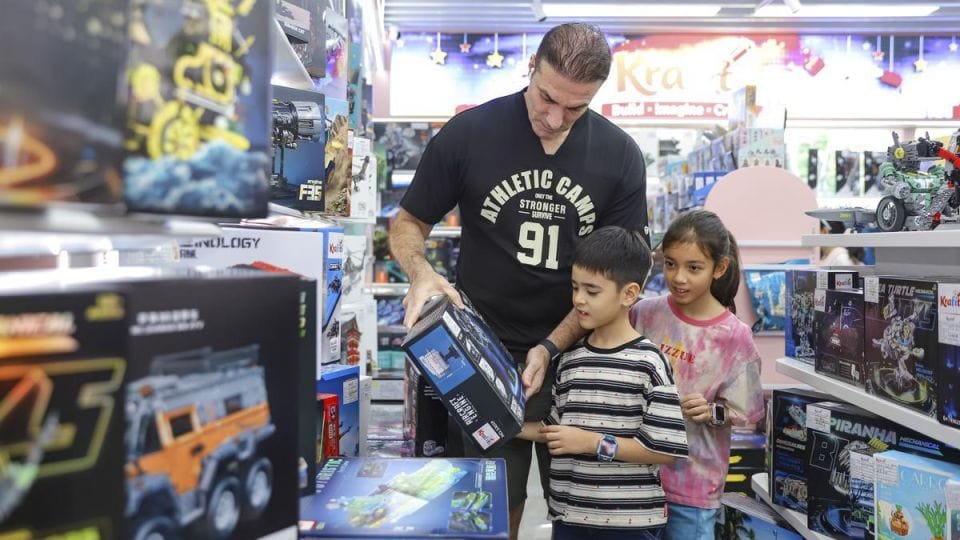
It was far from an isolated scene. The “China Haul” trend has taken over the ongoing Canton Fair, the popular name for the China Import and Export Fair, which opened in Guangzhou, Guangdong province, on Oct 14 and runs until Nov 4. Influencers may have made the hashtag famous, but the people walking the halls are serious buyers looking for China’s next wave of products. Across the exhibition halls, overseas visitors were drawn to AI-powered toys, humanoid robots and other smart devices, and some placed orders on the spot.
Their shopping lists point to a bigger shift. Last year’s “China Travel” boom brought millions of foreign visitors to the country, and many are now going home with more than memories. They are packing Chinese brands, from drones and foldable smartphones to sports shoes and AI-powered toys.
In short, China’s draw is moving beyond low prices and toward innovation, and official figures reflect that momentum. The National Immigration Administration recorded 23.72 million visa-free entries by foreign nationals from January to August, a jump of 26.8 percent from a year earlier.
Ministry of Commerce data shows that overseas visitors spent 263.6 billion yuan ($39.5 billion) in the first seven months, up 27.8 percent from the same period a year earlier. The numbers suggest that inbound tourism and consumer spending are steadily recovering.
At a news conference in Beijing on Friday, Foreign Ministry spokeswoman Mao Ning said China will keep opening its doors wider so that more foreign visitors can understand and appreciate the country through two-way exchanges.
Retailers are benefiting as well. Inditex, the global fashion group behind Zara and Massimo Dutti, said the share of sales from overseas shoppers rose by more than 10 percent year on year at the Zara flagship on Nanjing East Road and the Massimo Dutti store on Nanjing West Road, both in Shanghai. The company credited the stores’ central locations, their distinctive shopping experience, their product range and China’s increasingly convenient departure tax refund policy.
Taikoo Li, a well-known retail district in Beijing’s Sanlitun area, has seen a similar trend. The complex said the city’s ongoing efforts to improve visitor services, simplify tax refunds and enrich cultural and tourism experiences are drawing more foreigners.
“The number of overseas visitors to our complex has seen a clear upward trend,” said CT Ma, general manager of Taikoo Li Sanlitun.
Ma added that shoppers are no longer satisfied with global luxury labels alone. “Chinese brands that blend local cultural elements with contemporary design are drawing a lot of interest. Sportswear, lifestyle products and brands with a distinctly Chinese identity have become especially popular,” he said.
“They’re not just coming to look at China anymore. They want to find out what China manufactures, what it designs and, more and more, what it creates,” Ma said.