 Mekong Monitor
Cambodia Raises Plight of Displaced Civilians in Talks With Rights Advocate
Around 20,000 displaced Cambodians still cannot return home despite a ceasefire guarantee. Senior Minister Keo Remy and rights advocate Phil Robertson discussed the issue, migrant worker abuses and broader rights reforms.
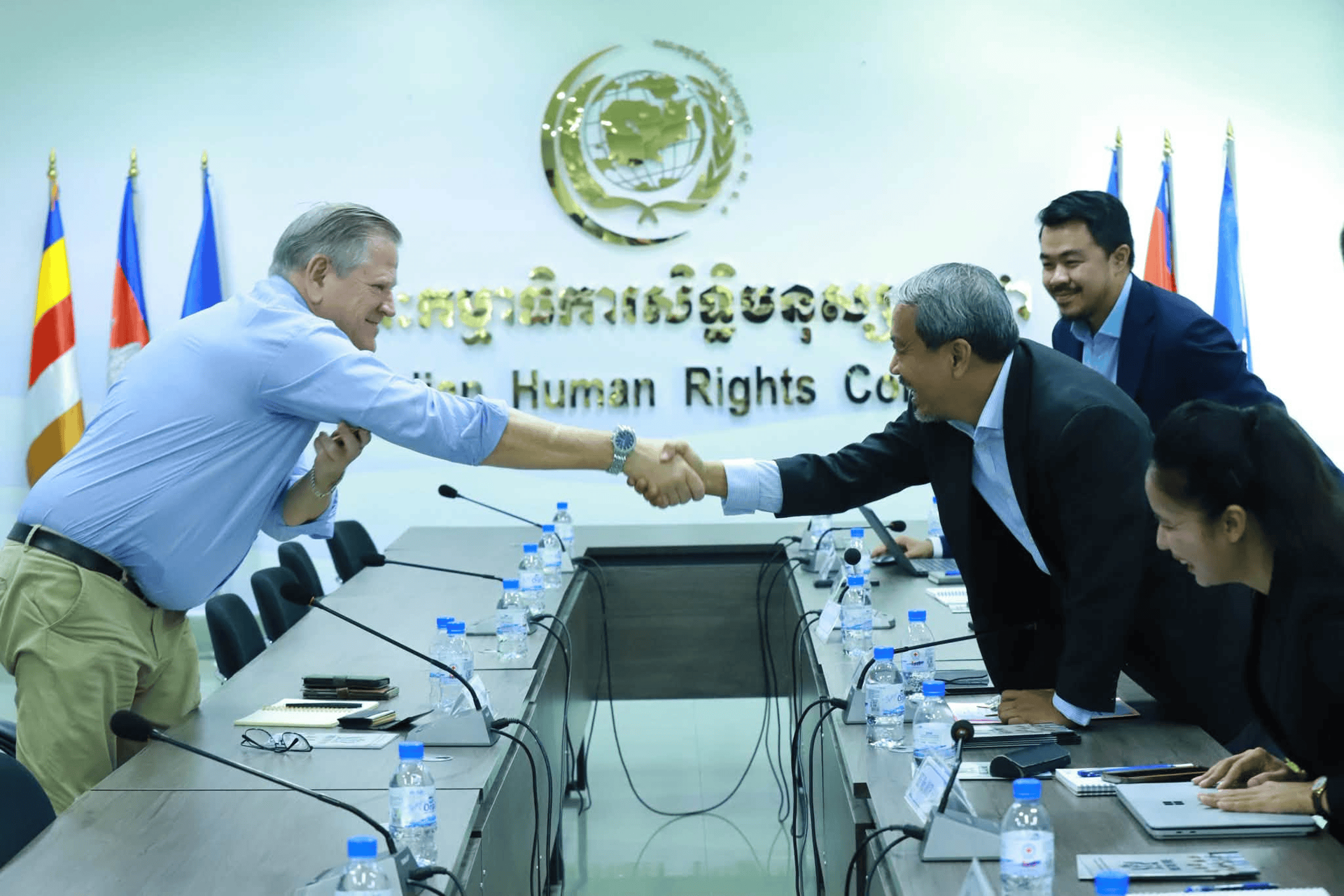
Around 20,000 displaced Cambodians are still unable to return home, even though their safe return was guaranteed under the December 27 ceasefire agreed last year.
The issue came up at an October 22 meeting at the headquarters of the Cambodian Human Rights Committee (CHRC) in Phnom Penh. Senior Minister Keo Remy, who heads the CHRC, met with Phil Robertson, director of the Bangkok-based Asia Human Rights and Labour Advocates (AHRLA). Remy called the situation a serious human rights violation and said the prolonged displacement caused by the Cambodia-Thailand border conflict amounted to an attempt to create a fait accompli, an established reality on the ground.
Remy thanked Robertson for calling for the release of Cambodian soldiers previously detained by the Thai military, according to a CHRC press release. Robertson expressed regret over the human rights abuses that occurred during the border fighting and backed statements by Thomas Andrews, the UN Special Rapporteur on the situation of human rights in Cambodia, concerning displaced Cambodian civilians.
Concerns Over Migrant Workers
Remy also raised concerns about discrimination, threats and various forms of violence faced by Cambodian migrant workers in Thailand. He cited an alleged case in which a Cambodian migrant worker was raped by Thai military personnel while returning home from Thailand. Robertson said he had been following developments and had received information about discrimination against Cambodian workers and the alleged abuse.
Rights Reforms and Social Progress
Robertson stressed the need to establish a national human rights institution in Cambodia. He also offered recommendations for strengthening fundamental rights and freedoms, including the rights of LGBTQ+ people.
In response, Remy outlined Cambodia’s efforts to promote LGBTQ+ rights and its cooperation with France on a draft resolution titled “Towards Universal Decriminalisation of Homosexuality.” He also pointed to social progress: the number of people covered by health care services rose from about 4.7 million in 2023 to 8.5 million in 2026. Vocational and technical training, he said, had been provided to roughly 490,000 young people from poor and vulnerable families, as well as 8,149 prisoners, and the country’s poverty rate had declined.