 Mekong Monitor
Cambodia Eyes Singapore Market With Proposed Trial Food Exports
Cambodia has proposed a joint working group with Singapore to test a few farm products, such as vegetables and chicken, for trial shipments. The plan asks farmers to grow to order rather than searching for buyers after harvest.
Cambodia has proposed forming a joint working group with Singapore to choose a few farm products and move toward trial shipments. The approach would have farmers plan their output around what buyers actually want, instead of looking for buyers once the harvest is in.
Prak David, secretary of state at the Ministry of Agriculture, Forestry and Fisheries, presented the proposal on November 5 at a seminar in Phnom Penh on Singapore's food import rules and food safety standards.
Starting small
David suggested beginning with one or two products, such as vegetables and chicken meat. The aim would be to test production requirements, safety standards, delivery arrangements and whether the business makes economic sense before any trial shipment goes ahead.
The proposed working group would bring together the Singapore Food Agency (SFA) and Singaporean importers with Cambodian bodies responsible for agriculture, commerce, industry and customs. David said the goal was to trace each product from start to finish and identify any problems with quality, standards or cost. The group would then have evidence to work from rather than assumptions.
He added that Cambodia's farm potential fits well with Singapore's push to diversify its food sources, but output alone does not make a dependable trading partner. Farmers would need to be organised, their practices improved, and buyers' standards met.
Building on producer groups
The plan puts demand first. Buyers' specifications would be taken back to farmer groups, which would then decide whether they can build a workable business and production plan.
David pointed to Cambodia's modern agricultural communities as the main way to organise production. There are currently 42 across 16 provinces, growing crops including vegetables, cashews and fruit, and the government is also promoting poultry farming. Although farming cooperatives are not new, these communities put extra weight on sound business plans and disciplined production and marketing.
Traditionally, farmers grew crops first and searched for buyers as harvest approached. The ministry wants to reverse that order. “We contract the order first, then help them plan production to meet the agreement,” David said.
Organised groups would also give overseas buyers a clear point of contact to discuss specifications, food safety and delivery terms. Buyers could negotiate with a group that coordinates production rather than dealing with large numbers of individual farmers.
Technical support on the ground
The second part of the approach is a network of more than 1,600 commune agricultural officers. Depending on a commune's size, it has either one or two officers. They advise farmers on choosing suitable varieties, using pesticides correctly and timing harvests to meet agreed requirements. Working alongside the producer groups, they can help more farmers meet market standards.
David also announced that the ministry is developing a traceability system to follow produce from the farm to supermarket shelves, with a pilot scheduled for this month. He welcomed the chance for buyers to test it.
Trade and transport
Samheng Bora, secretary of state at the Ministry of Commerce, said his ministry aims to turn market opportunities into lasting commercial deals. Its Export Service Center helps businesses prepare for export, meet compliance rules, connect with buyers, and resolve issues after orders are placed, such as shipping and customs clearance.
Bora said Singapore could serve both as a destination for Cambodian goods and as a hub for distributing them to other markets. He noted, however, that financing, processing costs and logistics remain hurdles for Cambodian exporters, even when their products are good and buyers are interested.
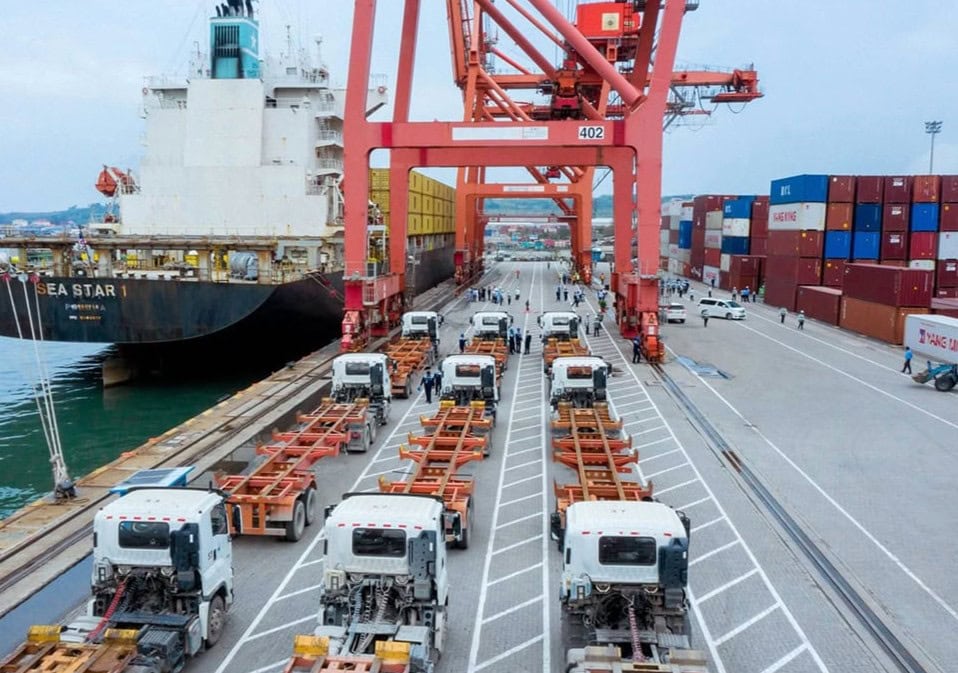
Chan Sokha, deputy director of Sihanoukville Autonomous Port, outlined the shipping links. The port has a direct service to Singapore with three sailings a week, taking 38 hours. It can handle temperature-controlled containers and has 282 refrigerated container plugs.
Next steps
David invited Singaporean authorities and importers to work with Cambodian counterparts to define requirements and design the proposed product trials. “We want to work out together how Cambodian farmers can grow what Singaporean buyers really need,” he said.