 Mekong Monitor
Cambodia and ILO/Korea Partnership Programme Review Labour Projects and Set Goals for 2027–2030
Cambodian ministries and the ILO reviewed two joint labour projects on construction safety and labour relations at a Phnom Penh workshop and set priorities for 2027–2030. The initiatives, backed by the ILO/Korea Partnership Programme, have already trained inspectors, dispute conciliators and workplace representatives.
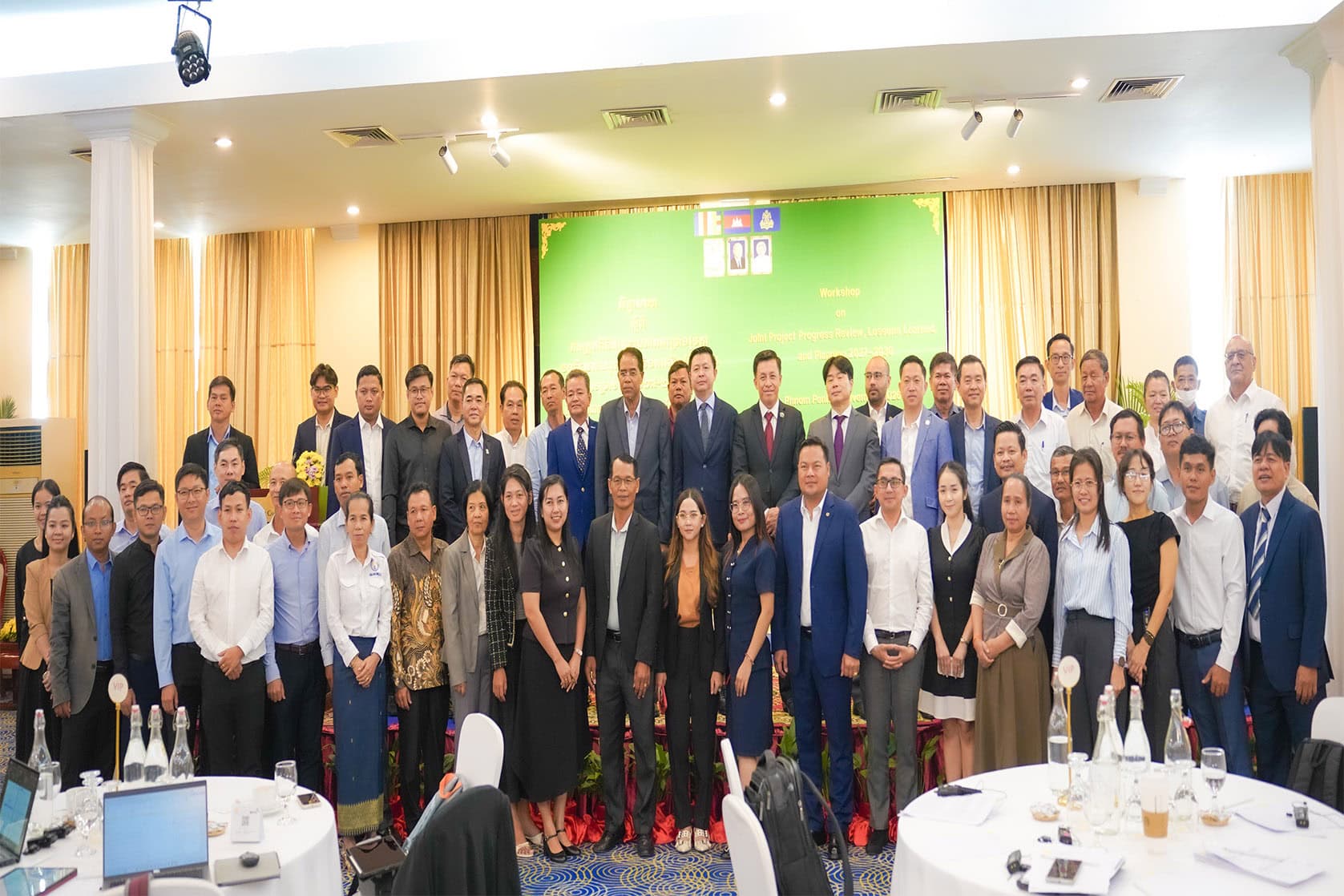
Cambodia’s Ministry of Labour and Vocational Training, the Ministry of Land Management, Urban Planning and Construction, and the International Labour Organization (ILO) have taken stock of two joint initiatives on construction-sector safety and labour relations. The partners want to tackle the obstacles that slowed implementation and agree on priorities for the next phase, running from 2027 to 2030.
The review took place in Phnom Penh on November 2 at a session called the Joint Project Progress Review, Lessons Learned and Planning Workshop. Officials from both ministries attended alongside representatives of employers’ organisations, trade unions and other partners.
The event was opened by Shin Hochul, Chief Technical Advisor of the ILO/Korea Partnership Programme (I-KORP), together with Secretary of State Huot Synead of the Ministry of Labour and Vocational Training and Secretary of State Leang Monirith of the Ministry of Land Management, Urban Planning and Construction.
Both projects fall under two themes: just transition and social dialogue. Their aim is to support a fair shift toward more sustainable working practices in construction, and to strengthen dialogue between employers and workers so that labour disputes can be prevented and settled more effectively.
Hochul said the projects started in 2024, after ministries, employers and workers identified where support was most needed, particularly in vocational training and occupational safety and health (OSH). He stressed that the programme did not arrive with a fixed plan. Instead, it began by listening to the government, employers and workers in order to understand their circumstances. The goal, he said, was simple: deliver practical help to ordinary workers and employers, even if the results were modest.
Since 2025, the projects have delivered:
- research and consultation workshops
- training for OSH inspectors
- capacity-building on collective bargaining, social dialogue and workplace grievance procedures, carried out through the National Institute of Labour (NIL)
Under the social dialogue project, training for labour dispute conciliators began in February 2025. It has since been followed by awareness workshops and the training of trainers, who will pass on what they have learned. Separately, the programme has supported research into working conditions at construction sites and trained OSH inspectors, with technical assistance from the Korea Occupational Safety and Health Agency (KOSHA).
To bring the work out of classrooms and into the field, a workplace safety and health awareness campaign was scheduled for November 4 and 5 at a construction site in Preah Sihanouk province. The campaign was designed to reach workers and employers directly.
The workshop assessed what had been achieved in the 2024–2026 phase, where implementation fell short, and what lessons could be drawn from it. Participants split into groups to discuss social dialogue and occupational safety and health.
Synead said the social dialogue project, titled Social Dialogue and Capacity Building for Strengthening Labour Dispute Prevention and Resolution Mechanisms in Cambodia, trained conciliators, worker representatives and employers in out-of-court methods for resolving disputes. He explained that negotiation, mediation and conciliation help the parties in a dispute understand one another’s concerns, challenges and interests, which in turn makes dialogue between them more constructive.
Monirith said the construction ministry had trained its officials through the OSH project and stressed that the ministry places a high priority on worker safety.