 Mekong Monitor
Cambodia and EU Launch 210 Energy Audits to Lower Factory Costs
Cambodia and the EU have launched a programme to support 210 energy audits in garment, footwear and travel goods factories. It aims to cut energy costs and improve heat, ventilation and working conditions.
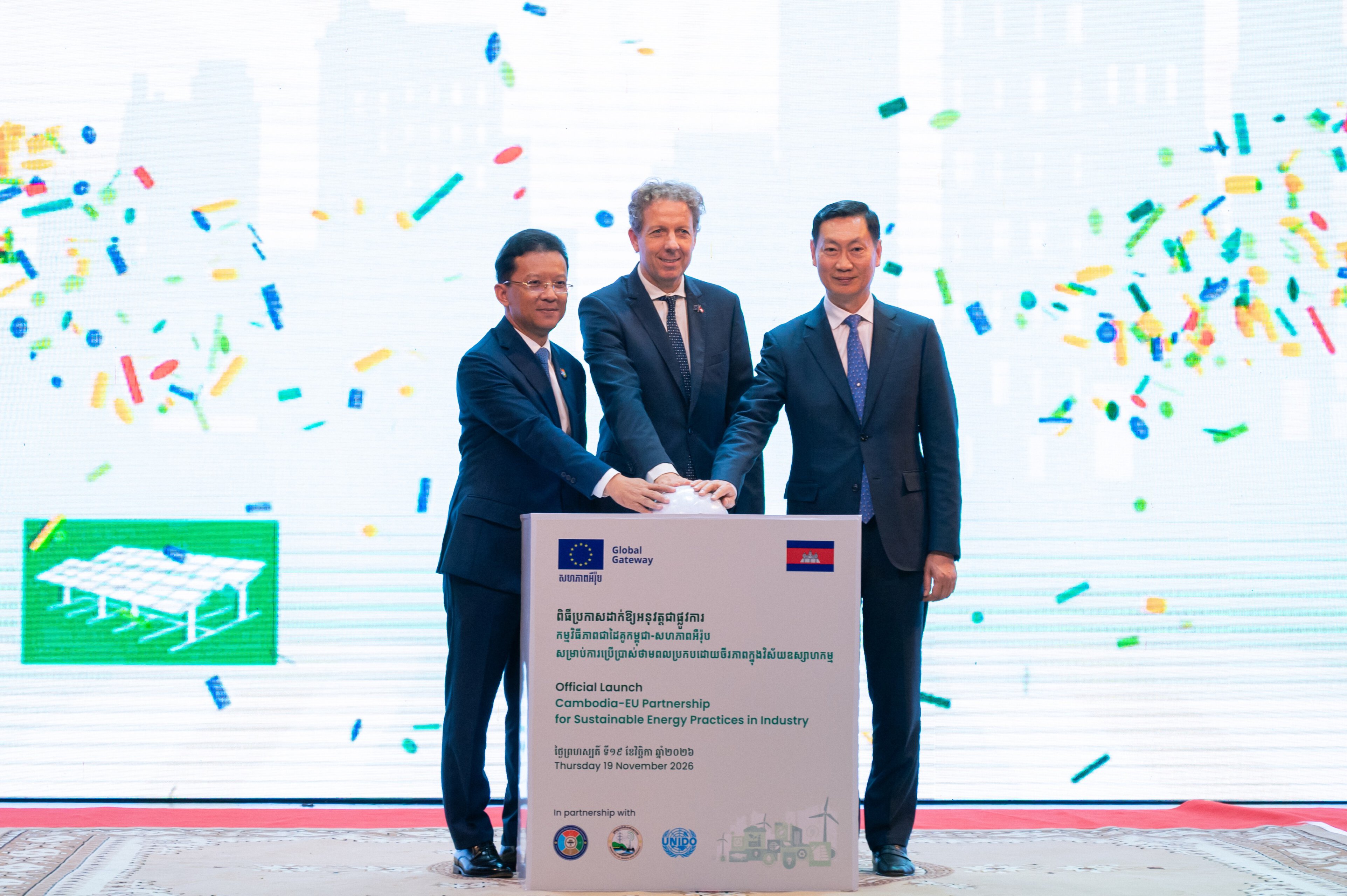
Cambodia and the European Union have launched a programme to fund 210 energy audits at garment, footwear and travel goods factories. The aim is to help manufacturers reduce their energy bills while tackling workplace problems such as extreme heat and poor airflow.
The partnership was launched in Phnom Penh on 19 November. It will help factories act on the audit findings and train staff to manage energy use. It will also support new energy performance standards for industrial equipment and help manufacturers secure financing for upgrades.
According to a joint press release, the garment, footwear and travel goods sector accounts for roughly two-thirds of Cambodia’s merchandise exports and employs large numbers of women. The initiative comes as Cambodia prepares to graduate from least developed country (LDC) status, and as overseas buyers place growing demands on how products are made.
Minister of Mines and Energy Keo Rottanak said that managing industrial energy use will matter more as demand grows. “Often, the most valuable energy is the energy we never have to use,” he said.
“Cambodia sees this ‘hidden fuel’ as a core pillar of our national energy strategy,” he added.
At the factory level, the work will focus on pinpointing where energy can be saved and helping managers carry out the recommendations. The programme will also tackle heat stress, poor lighting, noise and inadequate ventilation, with working conditions designed around the needs of both women and men.
Minister of Industry, Science, Technology and Innovation Hem Vanndy said better energy management is part of modernising Cambodia’s manufacturing base and keeping it competitive. “This partnership will help factories build technical capacity, adopt cleaner and more efficient production methods, and raise productivity,” he noted.
The programme will work with industry associations to help factories shape investment projects and gain access to green financing. It will also help build a market for energy service companies, which can carry out energy-saving measures for manufacturers. The wider initiative aims to attract investment in renewable energy and develop a sustainable biomass supply chain.
Policy Support
On the policy side, the partnership will help Cambodia draft an industrial energy efficiency action plan under its National Energy Efficiency Policy. The plan will set out a framework for energy management and introduce an online portal for reporting. The programme will also support minimum energy performance requirements and efficiency labelling for selected industrial equipment.
EU Ambassador to Cambodia Igor Driesmans linked the effort to the country’s preparations for LDC graduation. “As Cambodia prepares for LDC graduation, a more sustainable and energy-efficient industrial sector can help businesses reduce costs, strengthen productivity and respond to changing market expectations,” he said.
The partnership will be carried out by an EU technical assistance team, working alongside the UN Industrial Development Organization and Cambodia’s energy and industry ministries.