 Mekong Monitor
Cambodia Aims for Higher-Value Food Exports as Singapore Diversifies Its Supply
Cambodia is pushing to sell more high-value food products to Singapore, with officials calling for better processing, testing and certification. A seminar on Singapore's import rules outlined the steps exporters need to take to enter the market.
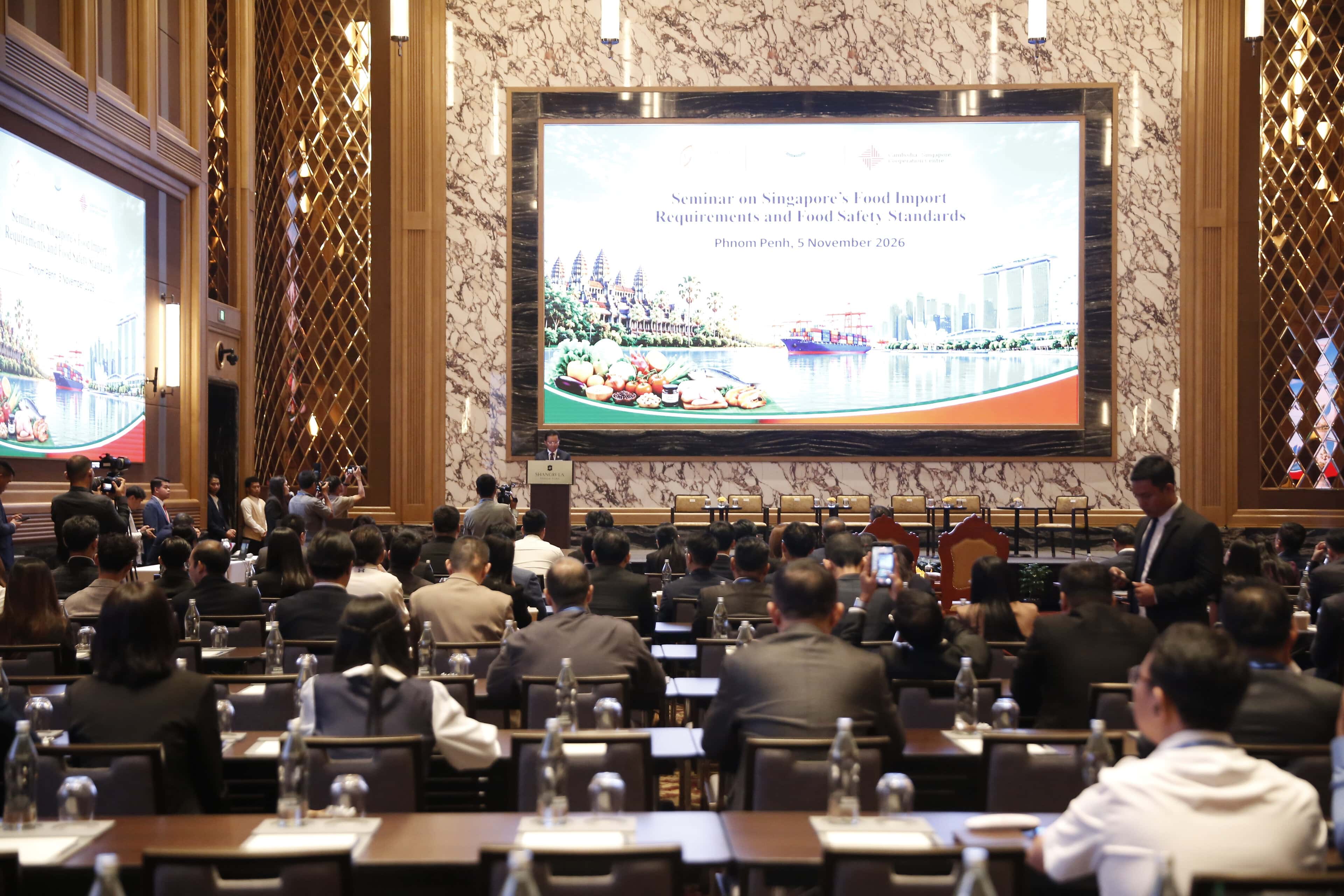
Cambodia wants to expand its sales of high-value food products to Singapore. Minister of Industry, Science, Technology and Innovation Hem Vanndy says local businesses need stronger processing, testing and certification capabilities to meet the requirements of that market.
Speaking at a seminar on Singapore's food import rules and food safety standards, Vanndy urged companies to invest in processing technology and quality controls so that Cambodia's farm output is worth more.
"Our goal should not stop at growing more food or exporting more raw commodities," he said.
"Instead, Cambodia has to gradually shift toward making higher-value food products, using better processing technology, modern manufacturing methods, quality assurance, effective packaging, proper storage and internationally recognised food safety management systems," he added.
The seminar brought together Cambodian government agencies, the Singapore Food Agency (SFA) and businesses from the agri-food and logistics sectors. Participants discussed market requirements and ways to build commercial ties.
Diversification at the core
Singapore's ambassador to Cambodia, Steven Pang Chee Wee, said that expanded food trade would benefit both countries. It would strengthen Singapore's supply resilience while opening doors for Cambodian producers and exporters.
Vanndy said a competitive food processing sector was becoming increasingly important for Cambodia's economic diversification and industrial modernisation. Food safety, he noted, underpins public health, consumer confidence and access to international markets.
He called for upgrades to Cambodia's national quality infrastructure, including standards, measurement systems, accredited testing laboratories, inspection and certification.
Cambodian products, he said, must be safe, traceable and consistent, as well as competitive on price and quality. He stressed that affordable testing, certification and technical support would be especially important for small and medium-sized enterprises.
"International standards should help businesses reach markets, not become barriers that hit smaller companies hardest," Vanndy said.
He also encouraged wider use of modern processing equipment, suitable packaging, cold chains, digital traceability and better storage. These measures, he said, would cut post-harvest losses and add value.
High standards must be met
Pang said Singapore's limited farmland and heavy reliance on imported food make diversification essential, particularly given climate change, supply chain disruptions and an unpredictable global environment. He said Cambodia's agricultural base offers a complementary opportunity.
"Closer cooperation would strengthen Singapore's food supply resilience, while creating new opportunities for Cambodia's producers and exporters and supporting the growth of Cambodia's agri-food industry," Pang said.
He called on both governments to turn their shared commitments into higher imports of Cambodian products and stronger business relationships.
Pang acknowledged that Singapore enforces strict food safety standards. He added that learning the rules of a new market can be difficult, especially for first-time exporters. The seminar was designed to help Cambodian businesses understand those requirements and prepare to enter the market.
"Ultimately, the success of our cooperation will depend on how well we turn shared commitments into real benefits for businesses and consumers in both countries," Pang said.
Victor Li, director of the International Cooperation and Trade Partnerships Division at the SFA, outlined practical steps for Cambodian exporters. These include identifying their product category and finding a Singaporean importing partner.
"The most important thing to remember is to work with a trader or importer who knows Singapore's import requirements," he said.
Li explained that the Singaporean importer handles import permit applications, while exporters are responsible for understanding the rules that apply to their own products.
Singapore's food import controls rely on science-based risk assessment, with the level of oversight depending on the food category. Processed foods such as biscuits, instant noodles and processed nuts generally fall into a lower-risk group. For fresh fruit and vegetables, pesticide residues are a key concern.
Higher-risk products, including meat and eggs, face far more extensive assessments. These cover the exporting country's oversight systems and individual production facilities. Some seafood, including oysters meant to be eaten raw and pufferfish, also undergoes enhanced checks.
Cooperation on the way
Li said the SFA aims to help prospective suppliers understand and meet its requirements, since additional approved sources would also benefit Singapore.
"We try to act more as a teacher, one who also sets the tests, but who hopes you pass, because in the end it benefits Singapore to have more sources," he said.
Before formal assessments, preliminary document reviews and online evaluations can help identify areas that need work. Video assessments of facilities are another way to ease compliance and cut costs for businesses.
Li also described how Singapore inspects products at the border and after they reach the market. Higher-risk shipments, or supplies from new sources, may be held until laboratory results are available. Other products can be sampled and released for sale. If a product is found to be problematic, it can be recalled through the importer.
Monitoring continues at retail outlets, where the agency buys products for testing, Li said.
Beyond regulatory compliance, Li encouraged Cambodian exporters to build relationships with Singaporean food importers, retailers and trade associations to explore business opportunities.
Vanndy said his ministry is ready to work with the SFA and Cambodian partners on laboratory capacity, technical training, food safety management systems and technological innovation.
He also called for stronger coordination among government bodies and closer links between Cambodian exporters and Singaporean importers and distributors.
The gains from better food processing and export capacity should reach the whole supply chain, including farmers, he said.
"Let us use this opportunity to move from dialogue to implementation, from compliance to competitiveness, and from agricultural production to higher-value agro-industrial development," he added.