 Mekong Monitor
Beijing Official Cites External Interference as Main Threat to China-ASEAN Partnership
A Chinese foreign ministry official warns that interference from powers outside the region poses the greatest challenge to China-ASEAN relations, urging stronger cooperation and strategic independence.
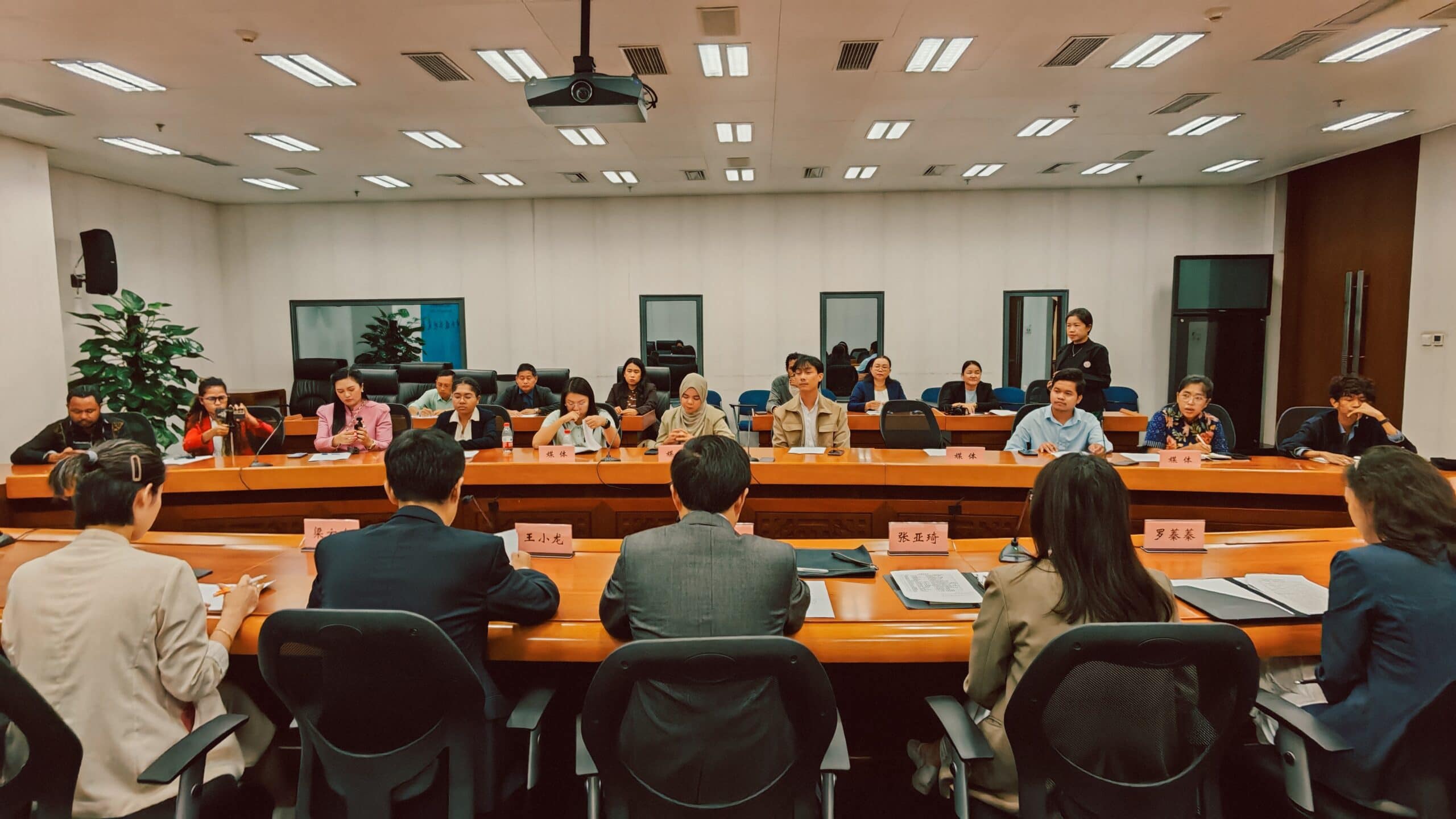
A high-ranking Chinese foreign ministry official has identified meddling by non-regional powers as the primary obstacle confronting relations between China and the Association of Southeast Asian Nations.
Speaking at a gathering with ASEAN media representatives in Beijing on September 28, Wang Xiaolong—a counsellor within the ministry's Department of Asian Affairs—cautioned that rivalry over cutting-edge technologies threatens to force Southeast Asian nations into taking sides.
When asked what he believed would present the most significant threat to mutual confidence between China and ASEAN during the coming five years, Wang pointed to outside intervention.
"In my personal view, the biggest challenge currently facing China–ASEAN relations is interference and disruption by external forces," he stated.
Wang criticized certain non-regional nations for creating closed groupings and attempting to transform East Asia into a battleground for strategic competition.
He noted that ASEAN member states encounter pressure to align themselves on matters such as artificial intelligence development, though he refrained from identifying particular countries or providing concrete examples.
The diplomat emphasized the need for China and ASEAN to deepen their partnership and preserve what he termed "strategic independence." He stressed that dialogue and mutual consultation must remain at the heart of their relationship.
Addressing a separate question regarding how major powers should interact, Wang argued that strategic rivalry must not interfere with regional collaboration.
"China and ASEAN countries are neighbours that cannot be moved," he observed, adding that no external actor has a greater stake in the region's advancement, prosperity and peace than those who call it home.
Wang reaffirmed China's backing for ASEAN's leadership position in regional frameworks and advocated for sustained confidence-building through high-level exchanges between the two sides.
He called on both parties to resist efforts to establish exclusive alliances or stoke tensions, while promoting deeper economic ties, enhanced food and energy security, and collaboration on artificial intelligence, renewable energy and climate initiatives.
When questioned about whether China's AI capabilities could lead to collaborative ventures, training programs and technology transfer with ASEAN—rather than merely exporting finished products—Wang highlighted that artificial intelligence already represents a key domain of China-ASEAN cooperation.
He referenced existing mechanisms designed to facilitate policy coordination, commercial connections, real-world applications, technical standards and workforce development in the field.