 Mekong Monitor
Azerbaijan Becomes First Eastern European Partner to Sign Double Taxation Pact with Cambodia
Azerbaijan has signed a double taxation agreement with Cambodia, becoming the first Eastern European country to do so. The pact aims to stop income from being taxed twice and to curb tax evasion, bringing Cambodia's total number of DTAs to 15.
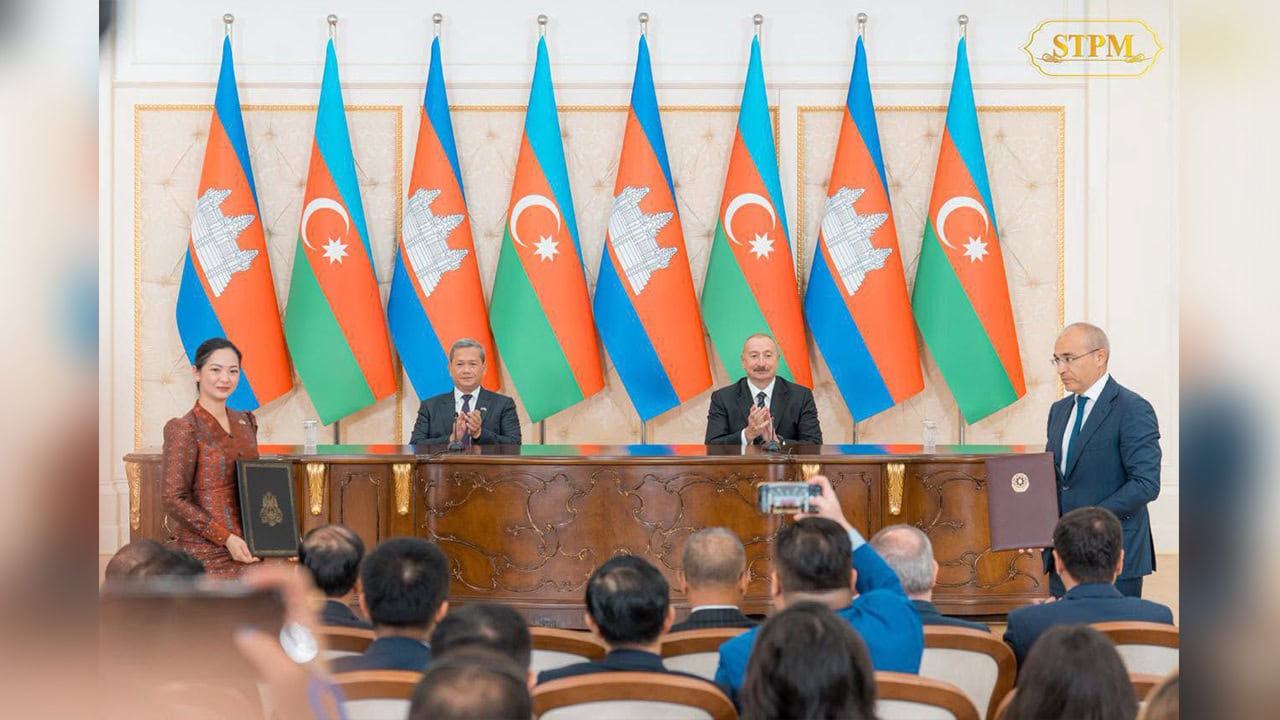
Azerbaijan has become the first Eastern European country to sign a double taxation agreement (DTA) with Cambodia. The pact is designed to stop income from being taxed twice and to curb tax evasion and avoidance. With this deal, Cambodia now has DTAs with 15 countries and jurisdictions.
The agreement was signed on October 12 at the Presidential Palace in Baku. Cambodian Minister of Commerce Cham Nimul and Azerbaijani Minister of Economy Mikayil Jabbarov put their names to it, and the ceremony was attended by Prime Minister Hun Manet and Azerbaijani President Ilham Aliyev.
The General Department of Taxation (GDT) called the signing a major accomplishment for the seventh-mandate government. It said the deal would deepen and broaden tax cooperation between Cambodia and Azerbaijan, benefiting both sides.
The GDT also outlined what DTAs do for the countries that sign them. They strengthen bilateral ties, give each side more clarity over which country has the right to tax particular income, and widen the tax base by attracting foreign direct investment, capital flows, technology transfers and overseas expertise. They also shield residents from unfair tax treatment and help protect domestic revenue by enabling the two countries to work together against tax evasion.
Cambodia already has DTAs in force with Singapore, China, Thailand, Brunei, Vietnam, Indonesia, Hong Kong, Malaysia, South Korea, Macao and Turkey, among others. It is also negotiating or has ongoing talks on agreements with several more countries, including France, Japan, the United Arab Emirates, Morocco and Qatar.
Hong Vanak, an economist at the Royal Academy of Cambodia, said trade agreements of this kind are meant to benefit both parties. Because negotiations tend to be long and detailed, he noted, the terms are usually carefully weighed before anything is signed.
He acknowledged that a DTA could reduce government tax revenue in the short term, but said it would also encourage investors from each country to put money into the other’s market. “Tax breaks or lower rates are among the main things investors are looking for,” he said. “Removing double taxation can also bring down the cost of goods, which makes it easier for exporters to compete in international markets.”
Speaking at a GDT seminar on ‘Recent Developments in International Taxation’ held on August 14, Seng Cheasith, director of the department’s Legislation, Tax Policy and International Tax Cooperation unit, explained that a DTA divides taxing rights between the two signatory countries. He said Cambodia negotiates these agreements with its key investment partners to draw in investment, support international trade, and prevent and fight tax evasion at both the national and international levels.
“DTAs play an important role in encouraging investors by removing double taxation and offering greater certainty,” he said.
Cheasith added that the agreements also include information-exchange provisions. Under these, the countries commit to gathering, sharing and exchanging taxpayer information. This increases transparency, helps catch tax fraud, encourages compliance, and gives tax auditors the comprehensive data they need to support higher tax revenue.