 Mekong Monitor
ASEAN-China Centre widens training for small firms as trade gap persists
The ASEAN-China Centre is expanding training for small businesses to help them enter China's market, even as an official acknowledges trade between the two sides remains uneven.
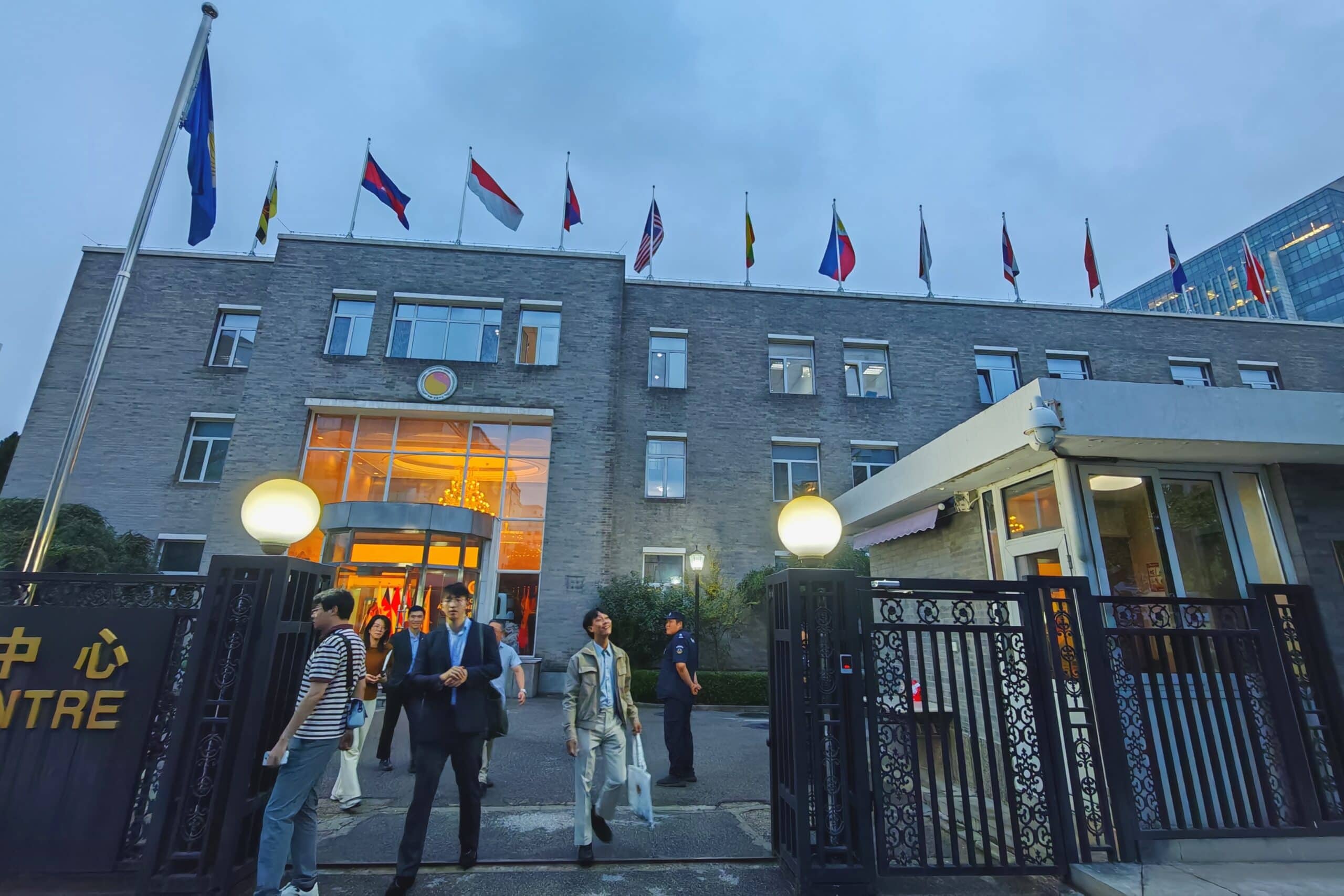
The ASEAN-China Centre is rolling out more training for small and medium-sized enterprises looking to break into the Chinese market, while an official conceded that trade between the two sides remains uneven.
Pichayapat Benjasiriroj, deputy director of the centre's Trade and Investment Division, said many smaller companies simply lack the information and resources needed to navigate customs rules and take advantage of free trade agreements.
"We also see that trade between ASEAN and China is quite imbalanced. That is why we developed the programme to support ASEAN SMEs," he told journalists at an ACC Open Day in Beijing on September 24.
Programme reaches Thailand and Laos
The centre launched the training programme last year with a two-day session in Beijing covering customs procedures, free trade agreements, cross-border e-commerce and marketing.
This year it ran a session in Hefei, in China's Anhui province, and brought the programme to Thailand and Laos for the first time to make it easier for local businesses to take part.
Pichayapat said the centre plans to continue the training next year and is looking for partners that could help it reach SMEs in other ASEAN countries.
He did not announce a session in Cambodia or give figures for how many businesses had participated.
The issue of market access matters to Cambodian exporters hoping to sell more products to China. While Pichayapat's remarks suggest practical support may be on the way, the centre has not yet set out a Cambodia-specific programme.
Wider economic cooperation
In welcome remarks to visiting ASEAN journalists, ACC secretary-general Zhang Lizhong pointed to workshops on trade and investment facilitation for SMEs as part of the centre's work to deepen economic ties.
He said the ACC also organises business visits and trade promotion activities, as well as an ASEAN-China forum focused on emerging industries and innovation.
Pichayapat noted that the forum brought Chinese companies to Malaysia in 2024 to discuss advanced industries, and to Thailand last year for a conference on renewable energy and carbon reduction technologies.
This year, the centre took about 50 Chinese entrepreneurs to Vietnam for meetings with local businesses and a visit to Hoa Lac High-Tech Park.
The ACC also brings ASEAN commercial officials and business associations to Chinese provinces for exhibitions and investment promotion events, he said.
Napasorn Bhuvaborirak, director of the centre's Information and Public Relations Division, outlined its work across trade, investment, education, culture, tourism and media.
Milestones in 2026
The ACC was established in 2011 by China and the 10 ASEAN member states to promote cooperation between the two sides.
Zhang said 2026 marks 35 years of ASEAN-China dialogue relations, the fifth anniversary of their comprehensive strategic partnership and the centre's 15th anniversary.
Speaking at the Open Day, he said the ACC has carried out more than 200 flagship projects and organised or taken part in over 4,000 activities since it was founded.
He put ASEAN-China trade in the first half of 2026 at $470 billion, up 10.5 per cent from a year earlier.
For smaller ASEAN exporters, though, the training effort underscores a persistent challenge: turning the region's growing trade with China into opportunities they can actually use.