 Mekong Monitor
ASEAN-China Centre launches training initiative to address trade gap for smaller businesses
The ASEAN-China Centre is expanding training programs for small businesses to help them access the Chinese market, addressing a recognized trade imbalance between the regions.
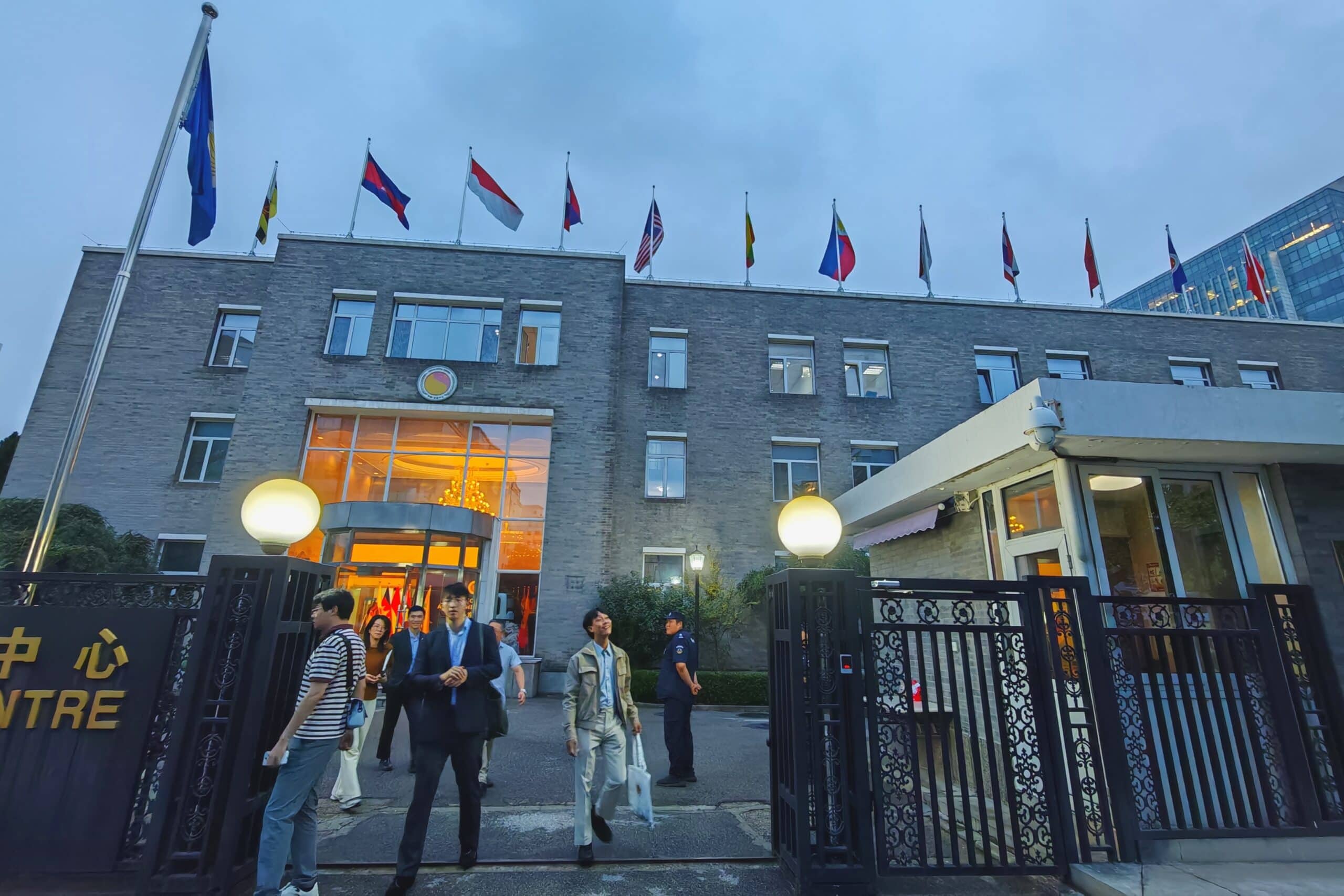
The ASEAN-China Centre is rolling out expanded training programs designed to help small and medium-sized businesses from Southeast Asia break into the Chinese market, a move that comes as officials recognize the persistent trade imbalance between the two regions.
According to Pichayapat Benjasiriroj, who serves as deputy director of the centre's Trade and Investment Division, many smaller companies struggle with insufficient knowledge and limited resources when it comes to understanding customs regulations and leveraging free trade agreements.
Speaking to reporters at an open day event held in Beijing on September 24, Pichayapat acknowledged the uneven nature of current trade flows. "We also realise that trade is quite imbalanced between ASEAN and China. That's why we came up with the programme to support ASEAN SMEs," he explained.
The initiative kicked off last year with a two-day workshop in Beijing that covered essential topics including customs processes, free trade agreement utilization, cross-border digital commerce, and marketing strategies.
This year saw the program expand geographically, with a session delivered in Hefei, located in Anhui province, along with inaugural workshops in Thailand and Laos aimed at bringing the training closer to regional businesses.
Pichayapat indicated that the centre intends to maintain the training program through next year and is actively looking for partnerships that could extend its reach to small businesses across other ASEAN nations. He did not provide specific details about plans for Cambodia or participation statistics.
The market access issue is particularly relevant for Cambodian exporters who are working to increase their sales to China. While Pichayapat's remarks suggest practical assistance may be available, the centre has not yet outlined any Cambodia-specific initiatives.
During his opening address to the visiting Southeast Asian journalists, ACC secretary-general Zhang Lizhong highlighted the training workshops for small and medium enterprises as a key component of efforts to deepen economic connections between the regions.
Zhang noted that the centre also coordinates business delegations and trade promotion activities, in addition to hosting an ASEAN-China forum centered on emerging sectors and innovation.
Pichayapat described how the forum had brought Chinese businesses to Malaysia in 2024 for discussions on cutting-edge industries, and to Thailand the previous year for a conference focused on renewable energy and carbon reduction technologies.
This year, the centre facilitated a visit by approximately 50 Chinese entrepreneurs to Vietnam, where they met with local companies and toured Hoa Lac High-Tech Park.
The centre also organizes visits for ASEAN trade officials and business groups to various Chinese provinces for exhibitions and investment promotion events, according to Pichayapat.
Napasorn Bhuvaborirak, who directs the centre's Information and Public Relations Division, outlined the organization's work spanning trade, investment, education, culture, tourism, and media sectors.
Established in 2011 through collaboration between China and the ten ASEAN member states, the centre serves as a platform to foster cooperation between the two sides.
Zhang pointed out that 2026 represents a milestone year, marking 35 years of ASEAN-China dialogue relations, five years of their comprehensive strategic partnership, and the centre's 15th anniversary.
At the open day event, he reported that the centre had completed over 200 flagship projects and been involved in more than 4,000 activities since its founding.
He cited trade figures showing ASEAN-China commerce reached $470 billion in the first half of 2026, representing a 10.5 percent increase compared to the same period a year earlier.
For smaller exporters across Southeast Asia, however, the training program underscores an ongoing challenge: converting the region's expanding trade relationship with China into tangible opportunities they can actually capitalize on.