What Migratory Birds Teach Us About Growth and Resilience
A new approach to protecting wetlands along migratory bird routes links biodiversity, water management and sustainable livelihoods across borders.
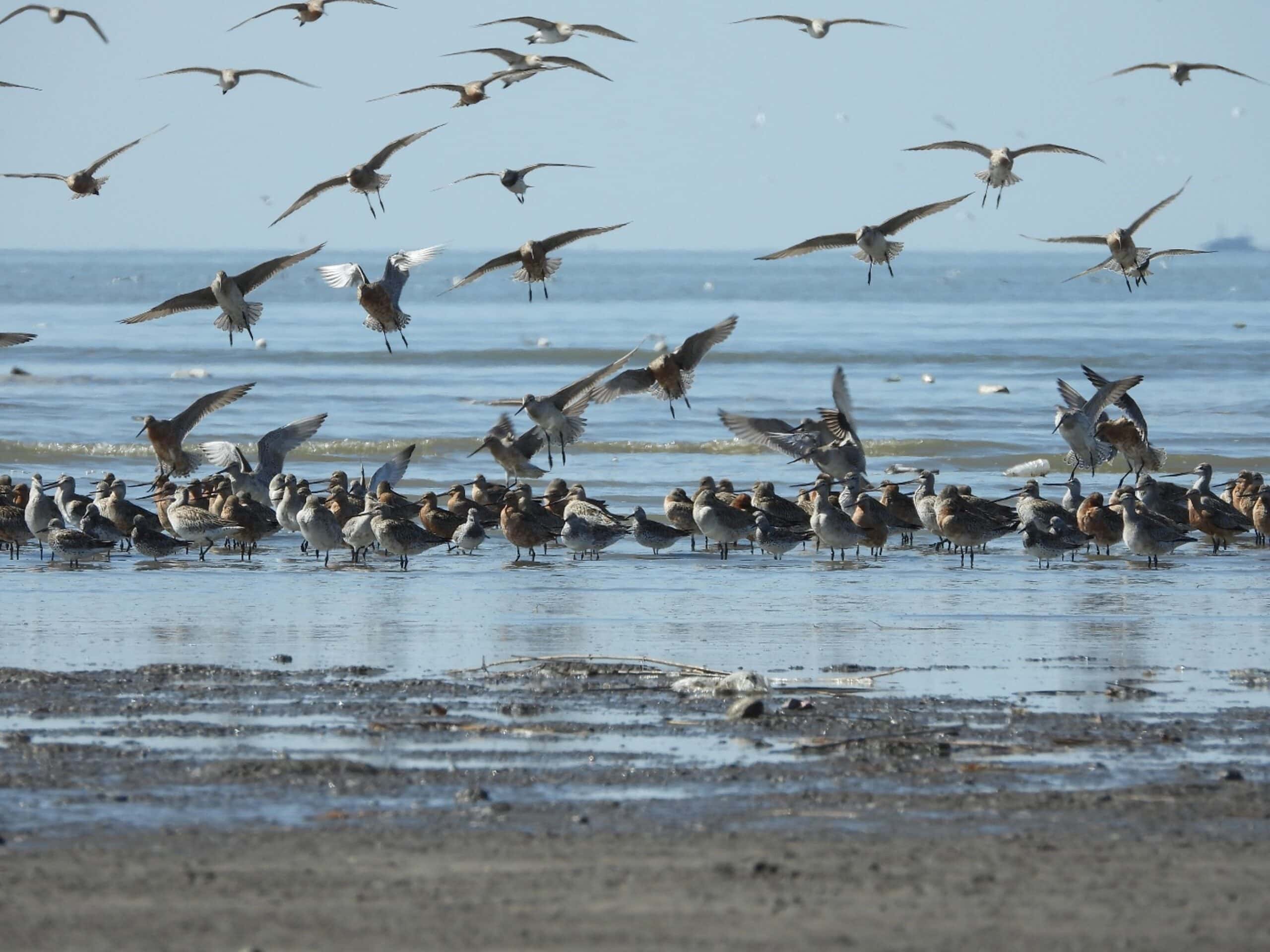
Some of the world’s most essential infrastructure is invisible to many people. It has no single owner, crosses no customs line and is rarely celebrated by name: the wetlands that allow migratory birds to complete journeys spanning continents.
Take the eastern bar-tailed godwit. This shorebird is known for undertaking the longest continuous flight recorded among birds. Its roughly 11,000-kilometre journey is possible only because a chain of wetlands supplies rest, food and recovery. That story links wildlife protection with human wellbeing, because millions of people also depend on healthy marshes, lakes and coasts.
A flyway made of stopovers
The godwit is one of countless birds using the East Asian–Australasian Flyway, a route connecting Arctic and northern Asian breeding grounds with distant regions. No bird can sustain such travel without pausing. Across Alaska, New Zealand, China and other points along the path, wetlands act as refuelling stations. When one site is degraded or destroyed, the burden moves to the remaining sites, making the whole ecological network less resilient.
The lesson extends beyond a single species. The 1971 Convention on Wetlands, the oldest multilateral environmental treaty, highlights the broad value of these ecosystems. Sites recognized as Wetlands of International Importance support hundreds of millions of people. They supply water and food, maintain fisheries and farming, lower flood risk and buffer coastlines. In many places they provide services that would require expensive engineered alternatives. In that sense, wetlands are among the most cost-effective natural assets available.
The cost of seeing wetlands as local
Too often, wetlands are managed as local amenities even though their value is regional or global. Damage at one site does not remain contained. It shifts stress to nearby habitats, and the people and businesses that rely on those habitats eventually pay. Strong economies cannot rest on weakened ecosystems.
The pressure is severe. About 22% of the world’s wetlands have disappeared since 1970—an area comparable to more than half a billion football pitches. Roughly one in four remaining wetlands is in poor ecological condition. Asia and the Pacific are experiencing losses especially sharply, as urban growth, infrastructure development, shifting weather and rising populations transform the landscape.
Financing at the scale of the flyway
Investment in natural infrastructure has lagged behind the rate of decline. Much of the existing support is piecemeal: small, site-by-site projects that protect one wetland while leaving wider system-level pressures unresolved. Closing the gap requires funding that operates across borders, at the scale of the migratory route itself.
The Regional Flyway Initiative, launched in 2021, reflects that logic. It brings together the Asian Development Bank, BirdLife International and the East Asian–Australasian Flyway Partnership to protect migratory birds while maintaining the services wetlands provide. Its scientific basis helps direct money to locations where it can have the greatest impact across the flyway. A study published in Scientific Reports, developed with the initiative, identified 147 priority sites in 10 participating countries, including coastal and inland habitats that support threatened species.
Further analysis is being used to build an investment case. The Asian Development Bank and partners are seeking to mobilise $3 billion over 10 years and support protection or sustainable management of at least 50 priority sites, many already designated under the Convention on Wetlands. The initiative, and its possible expansion to other regions, also supports the convention’s broader goal of effective management so that the number, area and ecological connections of protected wetlands can increase.
Early projects show the model can work
Initial funding demonstrates how this approach can combine ecology and development. In Hunan Province, China, the Asian Development Bank is supporting a $308 million project at South Dongting Lake, a Ramsar wetland of international importance and a major freshwater system. The plan aims to restore almost 12,000 hectares of wetland, improve water quality and strengthen the wider ecosystem. Thousands of local residents are expected to benefit through more sustainable agriculture, aquaculture and ecotourism.
Another effort is under way in the Philippines, where a $3 million project backed by the Global Environment Facility is working across three priority wetlands. It connects habitat restoration and better site management with livelihoods and natural resilience.
- These early investments are still developing.
- They show biodiversity action can move alongside water management, food security and job creation.
- The model treats ecological health as part of the development agenda, not a competing one.
The idea is spreading
The flyway approach is gaining momentum outside Asia and the Pacific. The Americas Flyways Initiative, created by BirdLife International, the National Audubon Society and the Development Bank of Latin America and the Caribbean, is applying a similar framework. In Africa and Eurasia, the African–Eurasian Flyway Initiative, established by the World Bank and BirdLife International, also shows growing recognition that protecting priority wetlands along bird migration routes can deliver broad sustainable-development benefits. These advantages extend beyond individual sites and national boundaries.
The Regional Flyway Initiative remains young, but it offers a useful lesson. Conservation and development can become more effective when they follow a shared plan rather than compete for limited resources.
Migratory birds survive not because of one perfect habitat, but because they can rely on a connected chain of healthy places. Investment must now follow the same path—linking borders, sectors and communities, the way the birds do.