 Mekong Monitor
Vivant's Portrayal of China as a Sadistic Enemy Sparks Diplomatic Backlash
The Japanese hit drama Vivant has sparked a diplomatic row with Beijing after casting Chinese intelligence officers as brutal torturers. Critics question whether the portrayal was necessary.
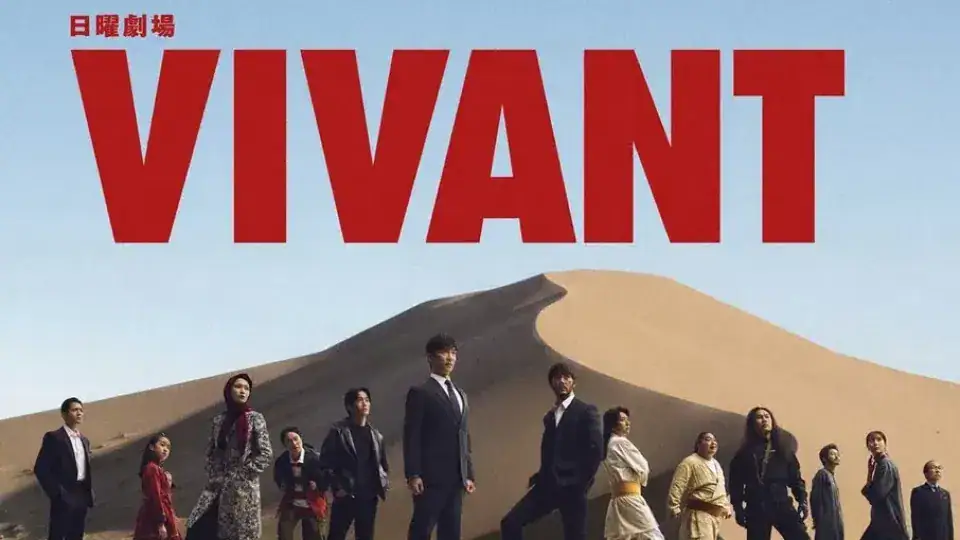
A fictional spy thriller has collided with real-world geopolitics, and the result is a diplomatic dispute that has touched raw nerves in Beijing.
The November 1 episode of Vivant, the Japanese TV blockbuster, opened with an unusual disclaimer meant to calm anger over its depiction of Chinese government agents as merciless, sadistic torturers. “We have no intention whatsoever of encouraging violence or conflict between nations,” said the on-screen message at the start of the penultimate instalment of the Tokyo Broadcasting System (TBS) Sunday flagship drama. It added that the story is entirely invented, has no link to real people, organisations, events or history, and that the countries and regions shown are fictional creations.
The high-octane thriller is barrelling toward its November 8 finale under a geopolitical storm that its own creators arguably brought on. The show has drawn sharp condemnation from Beijing, and Sanrio, the company behind Hello Kitty, has cancelled an official merchandise tie-in.
That is an unwelcome distraction for a big-budget series that has otherwise been highly entertaining. It features cinematic location shooting in places such as Mongolia and Azerbaijan, convoluted plot twists, and an ensemble of Japan’s most bankable actors. Tens of millions of viewers across Japan tune in every Sunday or catch up on domestic streaming services, and this writer is among them.
Vivant centres on Yusuke Nogi, played by Masato Sakai, a clumsy trading-house salaryman who secretly works as an elite operative for “Beppan,” a covert intelligence unit hidden inside the Japan Self-Defense Forces (JSDF). The show’s feverish popularity once prompted Defence Minister Shinjiro Koizumi to publicly deny that such a unit exists.
Nogi teams up with police inspector Mamoru Nozaki, played by Hiroshi Abe, and his foster brother Nokor, played by Kazunari Ninomiya of the now-disbanded boy band Arashi. Nokor is a key figure in Tent, a shadowy terrorist syndicate that operates out of the invented Central Asian “Republic of Balka.”
The first season, a ten-episode run that aired in 2023, is now streaming worldwide on Netflix. It kept a geopolitically neutral stance, with the fictional Balka serving as a make-believe setting.
The second season, which debuted in July and is not yet available on major international streaming platforms, made a decisive leap into present-day East Asian politics by casting China openly as the antagonist. Other real countries, including Azerbaijan and Thailand, appear in the story, but China is the only one portrayed as a hostile power.
Was the decision to name China driven by Tokyo’s habit of routinely labelling Beijing its top security threat? Even so, had the scriptwriters stopped at identifying China as a threat, the drama could still have passed as pure fiction.
The main point of contention is a series of interrogation scenes conducted by a fictional Chinese intelligence agency called “Xinxi,” in which captured Japanese agents endure graphic torture, including having their fingers severed and being stabbed in the abdomen. At least one scene hints at sexual abuse. It is not explicit, and viewers are left to interpret it.
Creative freedom deserves protection, but it should not be a blank cheque that ignores social sensitivities. On this point, Vivant crossed a line, so Beijing’s fury is hardly surprising. Chinese state media have branded the drama “cognitive poisoning” and “cognitive warfare.”
One central complaint is what critics call “historical inversion”: torture methods that the Imperial Japanese Army inflicted during the Second World War, not only in China but also on the Korean Peninsula and across Southeast Asia, are attributed to present-day Chinese characters.
That grievance has merit, given how Japanese history education often glosses over the country’s wartime atrocities, even while acknowledging that Japan was the aggressor and lost the war. Did the writers simply fail to realise how closely their fiction mirrors historical reality?
Many Japanese internet users, however, accuse Beijing of hypocrisy. China’s state-backed film industry regularly churns out patriotic blockbusters and anti-Japanese war epics, including Unit 731 (2025), which graphically depicted the Imperial Japanese Army’s biological experiments in Harbin.
Whatever one thinks of the history of World War II, dramatising a conflict that ended 81 years ago, with characters from a bygone era, is different from casting a contemporary neighbour as an active threat with no moral limits.
The diplomatic fallout prompted TBS president Masamine Ryuho to tell an October 28 press conference that Vivant is a “completely fictitious entertainment work” with no intention of disparaging any country or wounding national sentiment. He added that the broadcaster did not want to stoke international hostility.
Beijing was unconvinced. The next day, Foreign Ministry spokesman Guo Jiakun told a routine briefing that the drama “once again” revealed a force inside Japan seeking to use cultural products to vilify China and spread anti-Chinese sentiment.
Even an offhand remark by Prime Minister Sanae Takaichi became entangled in the dispute. Bilateral ties have cooled since her November 2025 parliamentary statement suggesting that the JSDF could be mobilised if China invaded the self-governed island of Taiwan.
On October 14, Takaichi told a parliamentary committee that she was recording the weekly episodes of Vivant and hoped to binge-watch them over the year-end holidays. Beijing seized on the remark as high-level endorsement of what it calls “anti-China propaganda.”
Corporate fallout followed. Sanrio scrapped its merchandise collaboration, and its Shanghai subsidiary apologised on Weibo, saying the drama contained content “inconsistent with our corporate philosophy” of harmony and peace.
It is easy to see Beijing’s outrage as calculated political theatre, given its own record of state-backed patriotic cinema.
Still, as Tsuyoshi Nojima, a professor at Daito Bunka University, noted on the news aggregator NewsPicks, Vivant’s portrayal of Chinese intelligence is hardly a masterclass in sinister propaganda. Naming a top-secret spy agency “Xinxi,” which is literally the Chinese word for “information,” is laughably heavy-handed.
Casting Japanese actors as elite Chinese spies who deliver heavily accented Mandarin also undermines any sense of realism. This writer found the dialogue hard to follow without subtitles.
Yet pop culture does not exist in a geopolitical vacuum. Former diplomat Masaru Sato warned in the Asahi Shimbun that even in fiction, “the impact of subculture on public perception of foreign affairs cannot be ignored.”
Espionage fiction thrives on high-stakes conflict, and every spy thriller needs an adversary. But portraying a close, real-life neighbour as a brutal torturer was entirely avoidable.
Had the villains remained in an imaginary realm, or at least been styled as a rogue criminal syndicate rather than a state-backed agency, Vivant could have delivered suspense without discarding basic geopolitical common sense.