 Mekong Monitor
Veal Veng Tourism Starts to Bounce Back After Border Clashes
Visitor numbers in Veal Veng district, Pursat, fell almost to zero after the Cambodia-Thailand border fighting, but tourists have been steadily returning since July. Local officials and vendors say recovery is underway, though roads and weekday trade remain challenges.
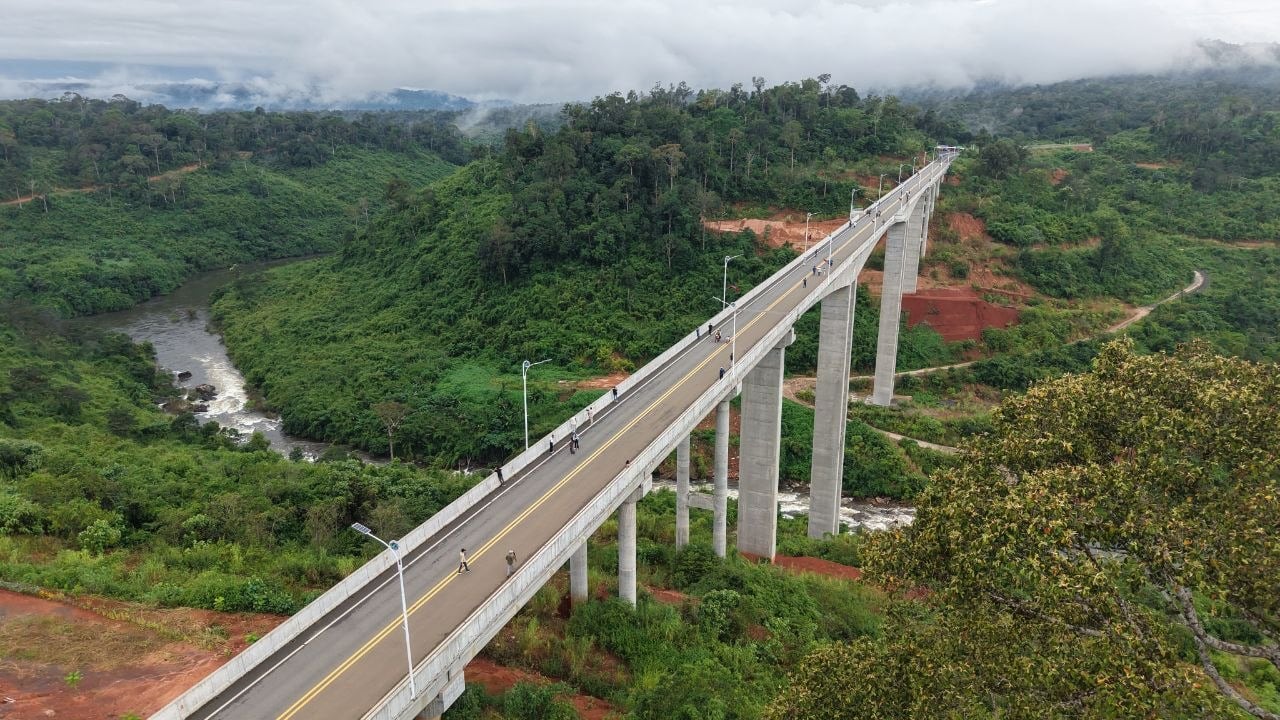
Tourism in Veal Veng district, in Pursat province, is slowly recovering after visitor numbers dropped to almost nothing following last year’s armed clashes between Cambodia and Thailand.
Local authorities report that tourists have been steadily returning since July 2026, and small businesses are starting to see more activity, especially on weekends and public holidays.
Theang Leng, governor of Veal Veng district, told reporters during a visit on October 23 that the fighting along the border in late 2025 had badly hurt tourism. Many people stayed away because the district sits near conflict-affected areas and they feared for their safety. Some of the district’s attractions are roughly 20 kilometres from where the fighting took place, which made potential visitors worried about renewed violence and the danger of explosive remnants of war (ERWs).
“The conflict of last year affected us. Residents and tourists were worried because they linked Veal Veng with the fighting on the Thai border. So they were reluctant to come, fearing explosives and other security risks,” he said.
According to Leng, tourism fell sharply as soon as the fighting ended in late December 2025, and in the early months of 2026 visitor numbers were close to zero.
Things began to improve in July, when tourists started to come back to the district’s natural sites, scenic lookouts and recreation spots.
“Right after the fighting stopped, there were practically no tourists. Visitor numbers fell by almost 100 per cent because we were so close to the conflict,” he said.
“Since July 2026, the number of visitors has steadily grown and is getting close to what we saw before the conflict,” he added.
Leng did not release figures for domestic or foreign visitors over the first ten months of 2026, and he did not offer comparisons with earlier years.
A vendor’s view from the roadside
Kit Phay, a vendor from Dei Kraham village in Lung Reab commune, has been selling goods in the Antong Ang tourist area for about three months. She said her income depends heavily on visitors who come on Saturdays, Sundays and traditional holidays, while weekday sales are often slow.
“Business is better on Saturdays and Sundays. On weekdays, my income is unpredictable. Sometimes I barely make enough to pay for petrol,” she said.
Phay said she can earn much more on busy weekends. During the Pchum Ben holiday, some days brought in around 200,000 riel. Other traditional celebrations also draw crowds, giving local traders more chances to sell.
Still, a busy crowd does not always mean good sales.
“There are quite a lot of visitors, but many just walk past without buying anything. When some of them stop and buy something, it helps us earn a little,” she said.
Phay added that rising prices for goods have squeezed her business, forcing her to change her prices.
Polishing the district’s potential
Although tourism is picking up, district authorities are working harder to improve infrastructure, public spaces and access to natural attractions. They hope these efforts will encourage visitors to stay longer and spend more money in Veal Veng.
Leng said the district has considerable natural tourism potential, but much of it remains undeveloped due to weak infrastructure and poor access to some sites. He likened the district’s natural assets to gemstones that need polishing before their true value can be realised.
“Even if we have a diamond, we cannot benefit from it unless we refine it,” he said.
According to the governor, local authorities have planted nearly 7,000 colourful trees along main roads, along with yellow-flowering ornamental trees, to make the town and its public spaces look more attractive.
The administration has also put up rubbish bins and signs urging visitors and residents to dispose of their waste properly. Leng described littering as a serious threat to tourism and said keeping the area clean is essential to protecting its appeal. Messages on the signs say littering brings bad luck and that rubbish is the enemy of tourism, with the aim of changing visitors’ habits.
Solar-powered streetlights have been installed to improve visibility and road safety at night. In the market area, authorities have built a tiled pedestrian walkway decorated with flowering plants. Leng said these upgrades are meant to create a more attractive and orderly town centre that complements the district’s natural scenery.
Improving access to waterfalls
Beyond the town centre, the administration is working to improve access to waterfalls and other natural sites that could help broaden the district’s tourism offer.
The governor named several waterfalls, including Phnom Tambor, Thma Chang and Khleum Thma Khmao, which already draw visitors but still need better roads.
He acknowledged that poor road conditions remain a barrier, especially for people trying to reach more remote waterfalls.
“Some of these waterfalls are already well known and attract visitors, but the roads are not good enough yet. The district and provincial administrations are continuing to improve access,” he said.
Leng said better infrastructure would benefit not only tourists from other provinces but also local residents looking for places to relax.
Green development at the mountain foot
Another major project focuses on the area at the base of a 1,500-metre mountain, a popular destination along National Road 55. The governor said authorities are turning the site into an organised green recreation area with gardens, seating and designated spots for taking photographs.
He said the project follows the government’s policy of developing the site as a green conservation and recreation zone.
Leng said the administration has finished arrangements to remove temporary and unauthorised structures that had previously been put up in the area. Some structures are still standing because their owners have not yet finished taking them down, and authorities are giving them more time to do so.
“We have resolved the issue completely. We did not simply demolish their buildings. Some residents have already left but have not finished dismantling their buildings. We are giving them time to do it,” he said.
He did not say how many households were affected or give details of the agreements reached with them.
Better roads, bigger plans
Leng said the official opening of National Road 55 in early 2022 greatly improved access to Veal Veng, opening new opportunities for tourism and economic growth in the mountainous district. The road makes the area easier to reach for visitors looking for scenery, mountain viewpoints and waterfalls, although some secondary roads still need work.
District and provincial authorities hope to make Veal Veng a major tourist destination in Cambodia by combining its natural landscapes with modern infrastructure, better public spaces and stronger environmental management.