Understanding the Historical Timeline: The Ancient Khmer Empire and Later Thai Kingdoms
Examining the historical timeline reveals that the Khmer Empire, established in 802 CE, predates the Thai kingdoms of Sukhothai and Ayutthaya by several centuries—a chronological fact that should inform regional heritage discussions.
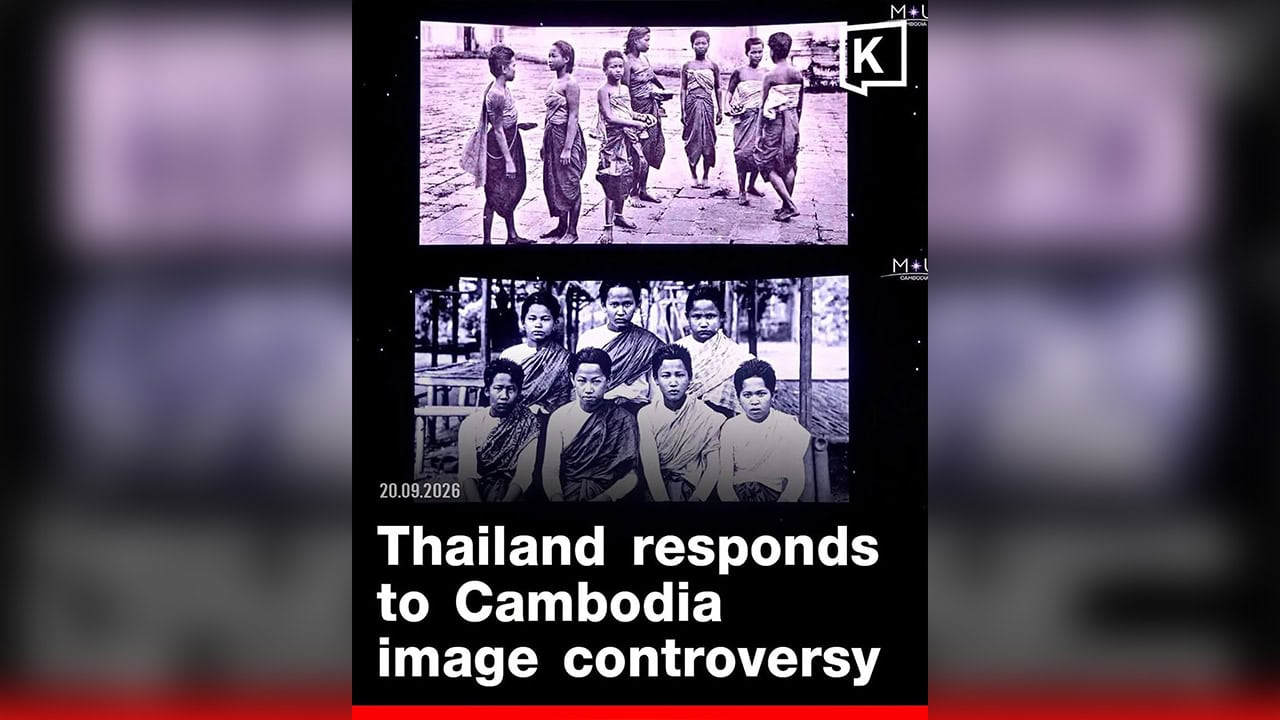
Conversations about Cambodian and Thai history require careful attention to archaeological evidence, chronological accuracy, and respectful acknowledgment of the civilizations that existed long before contemporary borders were drawn. For those seeking to understand Southeast Asia's past—especially younger readers and international audiences—it's essential to grasp the depth and significance of Khmer civilization and its place in regional history.
Recent commentary from Thai media outlets has prompted reflection on how we discuss heritage claims between Cambodia and Thailand. The goal of historical inquiry shouldn't be to undermine any nation's cultural identity, but rather to honor each civilization's legacy while anchoring our narratives in verifiable facts rather than nationalist rhetoric or political expediency.
The Chronological Framework
Historical records offer clarity on these matters. The Khmer Empire is conventionally dated to 802 CE, when Jayavarman II underwent consecration as chakravartin at Mount Mahendraparvata, in what is now the Phnom Kulen area. This ceremony marks the traditional beginning of the Angkorian era.
In contrast, Sukhothai gained independence as a distinct kingdom approximately 1238 CE—roughly 436 years after the Khmer Empire's establishment. The founding of Ayutthaya followed around 1350–1351 CE, placing it some 548–549 years after 802 CE. These dates establish a clear historical sequence: the Angkorian state predates both major Thai kingdoms by centuries.
An important caveat is necessary here. We cannot accurately claim that "Cambodia is 550 years older than Thailand" as modern nations, since Ayutthaya's founding doesn't equate to the birth of contemporary Thailand. The modern Thai state evolved through complex historical processes spanning many centuries, and the name "Thailand" itself was adopted only in the twentieth century. The precise historical statement is that the Angkorian Khmer Empire arose approximately four centuries before Sukhothai and roughly five and a half centuries before Ayutthaya.
Roots Beyond Angkor
Khmer civilization extends deeper into the past than the Angkorian period alone. Earlier polities like Funan and Chenla constitute important chapters in this cultural lineage. These societies reveal that sophisticated political structures, religious institutions, artistic traditions, and trade networks flourished in mainland Southeast Asia well before modern boundaries emerged.
Angkor's monumental legacy speaks to the Khmer civilization's extraordinary capabilities in architecture, hydraulic engineering, sculpture, religious thought, and social organization. Structures like Angkor Wat and the Bayon, along with the elaborate urban infrastructure and water management systems, constitute a heritage of global significance that warrants rigorous scholarship, conservation, and safeguarding.
Mutual Recognition Without Competition
Acknowledging Khmer civilization's antiquity doesn't require diminishing the historical achievements of Thai communities or other Southeast Asian peoples. Civilizations naturally interact—exchanging knowledge, competing for resources, and shaping one another. A mature historical perspective embraces these dynamics rather than reducing the past to a contest for national dominance.
When examining Khmer and Thai heritage, distinguishing between ancient civilizations, historical kingdoms, and modern nation-states becomes critical. The Angkorian Khmer Empire, the Sukhothai Kingdom, and the Ayutthaya Kingdom were separate political formations arising in different eras. Understanding their histories requires recognizing that they didn't develop simultaneously or under comparable circumstances.
Cambodians have every right to study their history thoroughly, educate future generations, maintain their monuments, and defend their cultural inheritance. We should articulate our ancestors' accomplishments with both confidence and accuracy. Yet historical pride must rest on solid evidence, not inflated timelines or dismissive attitudes toward neighboring peoples.
A Call for Evidence-Based Dialogue
To Thai media and anyone interested in Cambodian-Thai historical relations: Khmer imperial history deserves the same rigorous, evidence-based treatment granted to any other civilization. The date of 802 CE, Sukhothai's thirteenth-century emergence, and Ayutthaya's fourteenth-century foundation provide an unambiguous chronological structure for comprehending regional development.
These dates should guide public discourse rather than being sidelined when heritage questions arise. The antiquity of Khmer civilization is an academic matter grounded in historical methodology, not merely an expression of national feeling. Importantly, honoring Khmer history doesn't conflict with respecting Thai history. Acknowledging the Khmer Empire's earlier establishment doesn't necessitate rejecting Thailand's cultural identity or historical trajectory.
Our interconnected regional past should foster scholarly research, heritage conservation, and cross-cultural understanding. It shouldn't fuel animosity between Cambodian and Thai communities. Historical knowledge should instead help both societies appreciate their origins, recognize their distinctions, and preserve the cultural treasures inherited from previous generations.
History ultimately belongs to all humanity. Its evidence deserves respect, its lessons merit study, and its heritage requires protection for those who come after us. The Khmer Empire's antiquity forms a vital element of Southeast Asia's historical record and should be recognized through rigorous scholarship, responsible reporting, and a commitment to cultural integrity.