 Mekong Monitor
UN Rights Expert Urges Cambodia to Free Detained Activists Before Francophonie Summit
UN rights envoy Tom Andrews has urged Cambodia to release people he says were detained for exercising free expression, assembly and association, ahead of the Francophonie Summit in Phnom Penh. The government has rejected the claims, saying the cases involve criminal law rather than restrictions on rights.
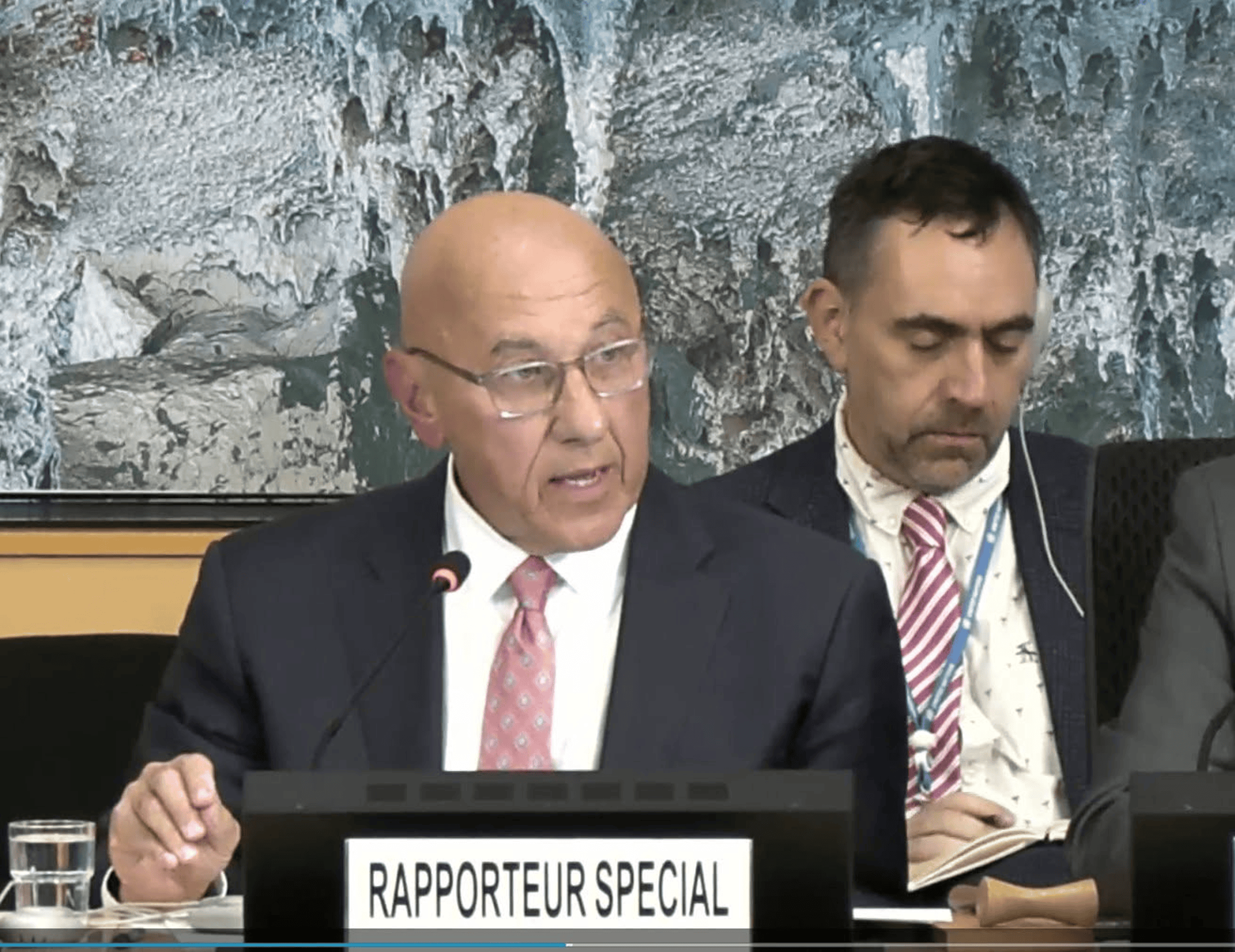
UN Special Rapporteur on the situation of human rights in Cambodia Tom Andrews has called on the Cambodian government to release people he says are being held for peacefully exercising their rights to free expression, assembly and association. He made the appeal ahead of the 20th Francophonie Summit, which will take place in Phnom Penh on November 15-16.
In a statement issued on November 9, Andrews asked heads of state and government attending the summit to work with Cambodian authorities to secure the release of those he considers wrongfully detained. He argued that freeing them would show Cambodia upholding the values of the International Organisation of La Francophonie (OIF) far more convincingly than any speech could.
Andrews stressed that promoting peace, democracy and human rights is central to the OIF's mission. In his view, the summit gives member states a chance to use their influence to address Cambodia's human rights concerns.
The gathering is expected to draw many heads of state and senior ministers, including French President Emmanuel Macron. Cambodia has said that hosting the event reflects its lasting commitment to Francophone ideals. Andrews noted that the summit also gives Cambodia a platform to showcase its cultural heritage, its achievements and its multilateral cooperation, while giving OIF leaders a chance to raise the detentions directly with the government.
The special rapporteur said he has begun reviewing reports of arbitrary arrests and detentions in Cambodia. He believes more than 100 people may be imprisoned for exercising their rights to free expression, assembly and association. He insisted that nobody should be jailed for defending human rights, reporting on matters of public concern or voicing critical opinions.
Findings on Specific Cases
Andrews also pointed to a finding by the UN Working Group on Arbitrary Detention. The group concluded that the continued detention of Cambodian-American lawyer Seng Theary, former Khmer Student Intellectual League Association president Koet Saray and five Mother Nature Cambodia activists was arbitrary and violated Cambodia's international human rights obligations.
His recent report to the UN Human Rights Council raised further concerns, including restrictions on civic space, alleged harassment of political opposition members, online scam networks, the treatment of human trafficking victims and the situation of Cambodians displaced by the border conflict with Thailand. Andrews added that if Cambodia and other OIF members engage constructively and secure the release of those unjustly held, it would highlight the values and potential of the Francophonie.
Government Response
Pa Ponnarada, spokesperson for the Cambodian Human Rights Committee (CHRC), responded that Andrews' concerns about the activists were not new, as he had already raised them in a recent address at the UN. Ponnarada maintained that the legal action against these individuals should not be seen as a restriction on press freedom, free speech or freedom of assembly.
He pointed out that Cambodia guarantees these rights under Article 41 of its constitution and has ratified eight conventions and treaties, including the International Covenant on Civil and Political Rights (ICCPR). Citing paragraph three of Article 19 of the ICCPR, he said press freedom cannot be exercised in ways that infringe on the rights or dignity of others, national security, or a country's culture and traditions.
According to Ponnarada, when conduct goes beyond the bounds of press freedom, it becomes a crime under Cambodia's criminal code and criminal procedure code. He acknowledged that the UN rapporteur can request releases, but argued that the state has every right to enforce its own laws. He said enforcement is meant to uphold the rule of law and protect people whose rights are affected by others who exceed the limits set by law. He urged those involved to defend themselves through the courts.