 Mekong Monitor
UN Report Finds Bangladeshis Among 29 Nationalities Trafficked into Russia's Army
A UN investigation has found that Bangladeshis are among nationals of 29 countries tricked or coerced into the Russian army, many after being promised civilian jobs. Families of those killed or missing are still struggling to learn their fate.
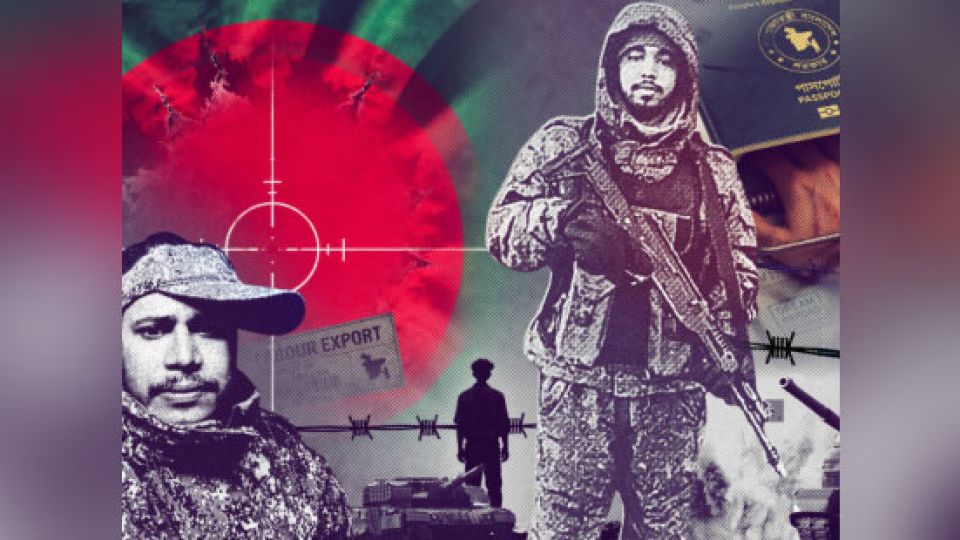
Bangladeshis are among the nationals of 29 countries who were tricked or coerced into serving in the Russian armed forces, according to a United Nations investigation. Many were drawn in by offers of well-paid civilian work, only to be sent to fight in Ukraine.
Recruits were often made to sign military contracts written entirely in Russian, a language most of them could not read. Many were killed or went missing, leaving families unable to learn what had happened to them.
The UN’s Independent International Commission of Inquiry on Ukraine obtained copies of business visas issued to Bangladeshi recruits. The visas showed that a Russian civilian company had invited them to the country.
The commission presented its findings to the UN General Assembly’s Third Committee. The report comes amid growing concern about Bangladeshis seeking work in Russia and reports that some have been forced into combat, killed or captured.
Despite these risks, figures from Bangladesh’s Bureau of Manpower, Employment and Training (BMET) show that 7,949 employment clearances were issued for Russia between January 1, 2025, and October 27, 2026.
In March, a joint investigation by Fortify Rights and Truth Hounds identified at least 104 Bangladeshis who had been recruited into the Russian military. At least 34 of them were reportedly killed, and the families of several victims are still trying to confirm their deaths or bring their bodies home.
The UN report did not say how many Bangladeshis had been trafficked, killed or reported missing.
The commission examined recruitment involving nationals of 48 countries. It found evidence of deceptive or coercive practices affecting people from 29 of them, including Bangladesh, India, Sri Lanka, the Philippines, Kenya, Nigeria and Uzbekistan.
The findings are based on 245 testimonies from recruits, their families and other sources. They also draw on documents such as job offers, visas, travel records and contracts with the Russian Ministry of Defence.
The commission concluded that Russian authorities, working with recruitment agents in several countries, had committed human trafficking and other human rights violations.
Agents marketed well-paid civilian jobs in Russia as security guards, drivers, mechanics, electricians, construction workers and technicians. Some also promised Russian citizenship, good accommodation, pensions and other benefits.
The offers seemed convincing, especially to people from poor economic backgrounds who had little or no military experience. Agents arranged visas, flights and lodging, and sometimes travelled with the recruits.
Once in Russia, however, the men were taken to temporary housing and handed over to the military. Many were pressured into signing one-year contracts with the Russian Ministry of Defence, written only in Russian.
Their passports and phones were often taken away, which limited their ability to communicate or try to escape. Some who refused to sign were threatened with violence.
Military training ranged from about 20 minutes to a few days, or sometimes up to a month, before deployment.
On the front lines in Ukraine, recruits were given dangerous tasks, including advancing toward enemy positions, digging trenches and collecting the bodies of fallen soldiers. The report says many were killed, wounded or went missing soon after being deployed.
In one case documented by the commission, a civilian company gave 30 recruits written guarantees that they would not be sent to the war between Russia and Ukraine. Even so, 17 were later killed on the front line, five went missing and one came back injured. The commission did not identify their nationalities.
The investigation also found that recruitment agents and military personnel sometimes withheld promised salaries and bonuses, leaving victims and their families in financial hardship.
Bangladeshis caught in the conflict
Bangladeshi media had already reported claims that people lured to Russia with promises of civilian jobs were forced into military service and sent to fight in Ukraine.
In April last year, the Criminal Investigation Department’s Human Trafficking Cell found that Dhaka-based Dream Home Travel had sent around 20 Bangladeshis to Russia on the promise of civilian jobs paying between Tk 2 lakh and Tk 2.5 lakh a month. At least three of them were reportedly killed after being forced into combat.
On October 14, the Special Response Battalion (SRB) said that 20 members of a group of 30 Bangladeshis, who had been sent to Russia with promises of construction work, had been killed in the war. Seventeen reportedly died in drone strikes on their first day at the front, and three more died later.
According to the SRB, the workers travelled to Russia on May 7 through three recruitment agencies, each paying an average of Tk 10 lakh. Instead of construction jobs, they were handed over to the Russian military and deployed after just 21 days of training.
The elite force arrested two alleged members of the trafficking network on October 13.
Shariful Islam Hasan, associate director of BRAC’s Migration Programme, said his organisation had published a report last year on Bangladeshi recruitment into the Russian military and had warned of the risks at the time. He said the government must act urgently to stop more Bangladeshis from getting caught up in the war.
“It is equally important to trace the whereabouts of around 8,500 Bangladeshis who travelled legally to Russia over the last two years. The government needs to find out how many are still working there, how many have become involved in the war and how many are still alive,” he said.
He also called for an investigation into Bangladeshis who went to Russia on tourist visas, in light of the UN commission’s findings.
What the UN is calling for
The commission said that recruiting foreign nationals through deception and coercion amounts to human trafficking. It urged Russia to immediately release victims still serving in its armed forces and recommended investigating and prosecuting those involved in the recruitment networks.
It stressed that people trafficked into the Russian military should not be treated as mercenaries. Those who were captured or surrendered, it added, are entitled to protection as prisoners of war under the Third Geneva Convention.