 Mekong Monitor
‘Two Cambodias’; UN rights envoy urges government to change course
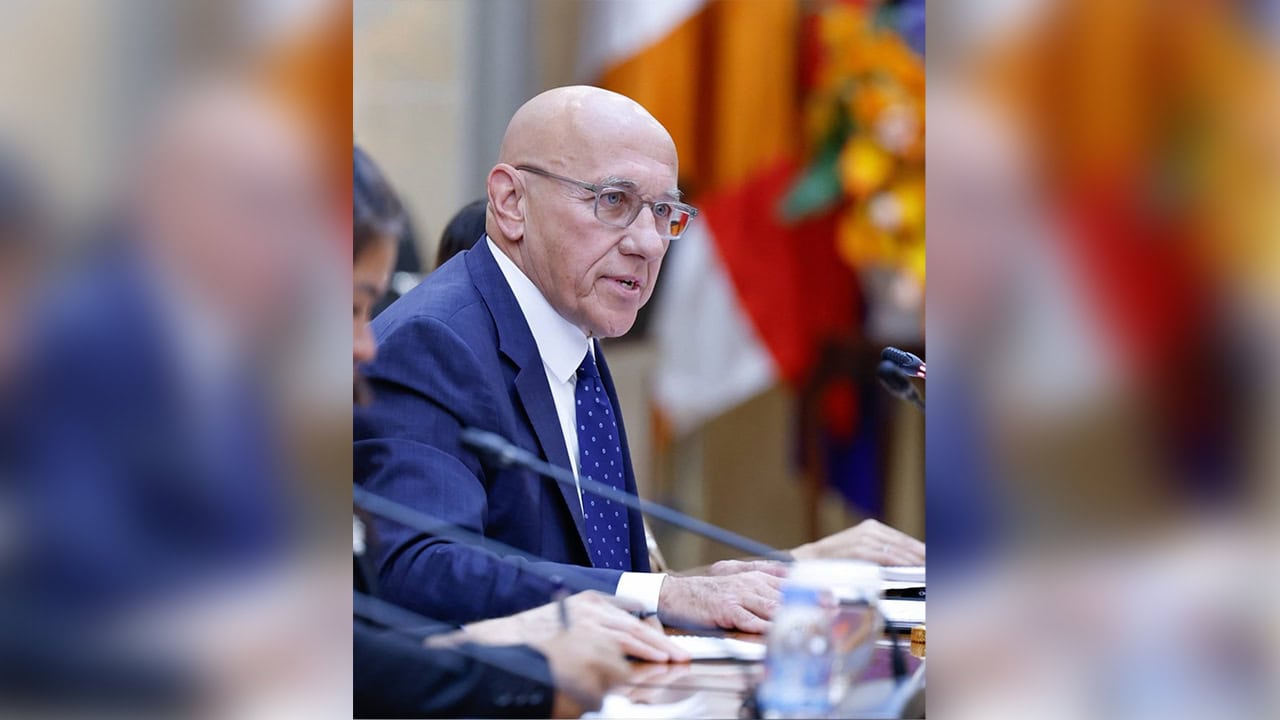
Thomas H. Andrews, the United Nations special rapporteur monitoring human rights conditions in Cambodia, has characterized the nation as existing in two parallel realities—one where authorities publicly embrace human rights principles and legal standards, while another persists where basic freedoms face significant curtailment and individuals are imprisoned for asserting their rights.
During his visit to Cambodia, Andrews traveled to multiple temporary shelters and met with displaced persons among the nearly 20,000 Cambodians forced from their homes due to last year's border hostilities. He emphasized the need for these civilians to be permitted to return, in accordance with the Joint Declaration that accompanied the ceasefire established on December 27, 2025.
Andrews also drew attention to what he described as severe limitations on essential liberties.
Two Contrasting Pictures
In his September 25 presentation to the UN Human Rights Council, Andrews acknowledged that Cambodia has consistently declared its dedication to human rights protections, having ratified eight of the nine principal human rights conventions and accepted 84 percent of the suggestions made during its most recent Universal Periodic Review.
He recognized the administration's willingness to work with UN human rights bodies and noted his own ability to meet with government officials, civil society representatives, and visit detention centers during his July mission.
However, Andrews cautioned that alongside this positive record exists an alternative reality where expression and public participation are sharply constrained, where repressive legislation is wielded against political adversaries, and where those defending human rights, activists, and members of the press face detention.
"When examined through the lens of human rights, two distinct Cambodias emerge," Andrews observed, drawing a sharp contrast between the country's international pledges and what he identified as persistent domestic violations.
Detention and Legal Concerns
The special rapporteur indicated that after reviewing instances of alleged unlawful arrest and imprisonment, he believes over 100 individuals may be held for exercising fundamental rights, with reliable independent sources suggesting this figure has approximately tripled since early 2024.
He expressed concern about judicial proceedings, noting that defendants have at times been found guilty without prosecutors presenting evidence for crucial components of the alleged crimes.
Andrews also pointed to constraints affecting nonprofit organizations, labor unions, and independent news outlets.
According to the report, apprehension about criminal charges or retaliation has fostered widespread self-censorship, while the Law on Associations and Non-Governmental Organizations has been applied in ways that limit civic engagement. Independent labor organizations have encountered extended delays or outright rejection when seeking registration, and journalists have described facing pressure, legal intimidation, and barriers that hinder their ability to report without interference.
A Critical Juncture
"Cambodia stands at a critical juncture," Andrews stated, cautioning that authorities must choose whether to strengthen respect for human rights or drift toward "increased repression."
Despite these criticisms, the report recognized Cambodia's economic and social advancement, highlighting substantial poverty reduction, gains in life expectancy, education access, and improvements in electricity, water, and sanitation infrastructure. Nevertheless, Andrews noted that significant challenges persist, including high levels of household debt, problematic lending practices, land seizures, forced removals, forest destruction, and climate-related threats.
Andrews urged the government to free those imprisoned for exercising their rights, lift post-release restrictions, and implement judicial reforms ensuring fair proceedings and an independent judiciary. His recommendations also referenced the situations of opposition leaders Kem Sokha and Rong Chhun.
Additional recommendations included reducing pretrial detention periods, expanding non-custodial sentencing options, and addressing prison overcrowding. The report suggested courts should publish written, publicly accessible rulings that clearly explain the factual and legal reasoning behind their verdicts.
Andrews called on Cambodia to amend or abolish laws he considers incompatible with international human rights norms. He also urged that pending cybercrime, cybersecurity, and so-called "fake news" legislation fully align with international standards.
"When political will exists, solutions follow," Andrews wrote, citing the government's recent intensive action against cybercrime syndicates as proof that substantial change is achievable when authorities commit to it.
He concluded by encouraging the government to transform its existing international human rights obligations into tangible action, arguing that genuine reform would enhance the rights, dignity, and living standards of Cambodia's population.
"Cambodia's hope lies with its people and the leaders and organizations dedicated to creating a future where human rights are honored," Andrews stated.
Government Response
Government spokesperson Pen Bona responded by asserting that the administration honors all pertinent human rights conventions.
"Concerning freedom of expression, I want to make clear that the Royal Government fully respects and implements Cambodia's Constitution and the International Covenant on Civil and Political Rights, along with the Universal Declaration of Human Rights," he said.
He referenced Article 41 of the constitution, which guarantees Cambodian citizens freedom of expression, press, publication, and assembly. However, he cautioned that no one should misuse these rights to damage others' reputations, undermine morality, disrupt public order, or threaten national security.
On press freedom specifically, he invoked Article 19(3) of the International Covenant on Civil and Political Rights, which recognizes that exercising such rights entails special responsibilities and duties.
"Consequently, certain restrictions may apply, but only those established by law and necessary for: (a) Respecting the rights or reputations of others; (b) Protecting national security, public order, public health, or morals," he stated, quoting the provision.
He also cited Article 29(2) of the Universal Declaration of Human Rights, which acknowledges that exercising rights and freedoms has limitations determined by law to ensure proper recognition and respect for others' rights and freedoms, as well as the legitimate demands of morality, public order, and the general welfare in a democratic society.
"In Cambodia, more than 17 million citizens express their opinions daily and extensively through various channels, particularly social media. They face no difficulties whatsoever, except for a small number who break the law and violate others' rights under the guise of freedom of expression," he maintained.
"What matters most is expressing views with dignity, in accordance with the law, and with respect for others' rights—this is the essence of democracy practiced worldwide," he added.
", "excerpt": "A UN human rights expert has described Cambodia as divided between its public commitment to rights and a reality of restricted freedoms and detained activists, urging the government to choose reform over repression.", "tags": ["Cambodia", "Human Rights", "United Nations", "Freedom of Expression", "Civil Society", "Thomas Andrews"], "category": "Politics" } ```