 Mekong Monitor
Trump's Midterm Setback Brings Little Relief for Southeast Asian Exporters
Democrats' takeover of Congress may add pressure on the White House, but Trump keeps broad authority over trade. Analysts say Southeast Asian exporters should expect little relief from US tariffs.
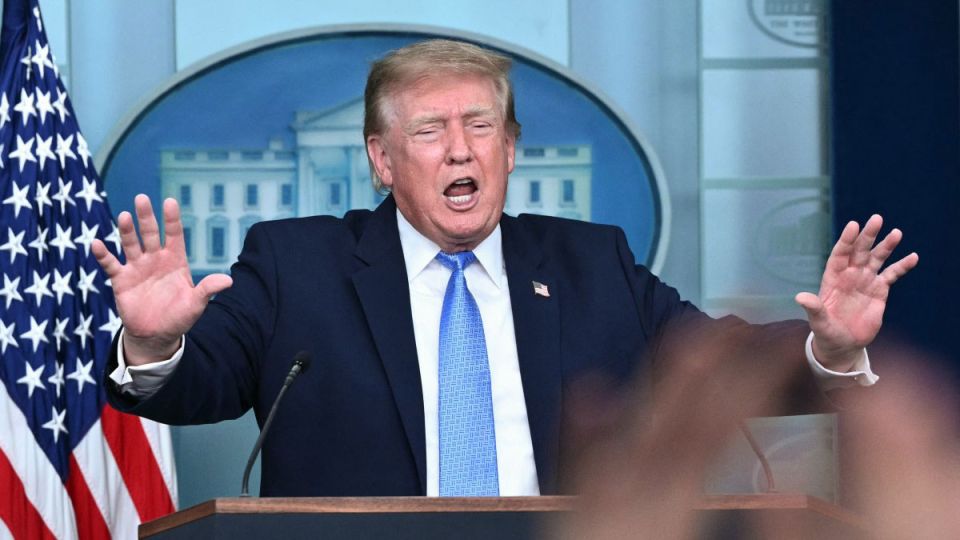
Democrats' decisive win in both chambers of the US Congress in last week's midterm elections has dealt a setback to President Donald Trump. That has prompted questions across Southeast Asia about whether Washington might ease its trade stance toward the region.
The shift in power could make it harder for Trump to push his agenda over the next two years. Analysts, however, see little room for Congress to curb his tariff campaign, and the wider consequences for trade and foreign policy remain unclear.
“I don't think it will make as much of a difference as people might expect,” said Deborah Elms, head of trade policy at the Asia-based Hinrich Foundation. “He loves tariffs. He thinks they will bring manufacturing jobs back to the US.”
In an interview on Thursday, Elms warned that Trump, who faces criticism at home, could double down on trade over the next two years. That is especially likely if congressional opposition stalls his domestic agenda or investigations add pressure on his administration.
The president can also veto bills passed by Congress. Because Democrats do not hold a two-thirds majority in both chambers, they cannot override such a veto, which makes it difficult to pass legislation that would strip Trump of his tariff powers.
Opposition to tariffs is not uniform within the Democratic Party, either. Some Democrats support protectionist measures but disagree with Trump over which countries or industries should be targeted.
“Trade and tariffs are his signature issue, so I'm not convinced enough Republicans will break with the president, or that Trump would accept anything short of a veto-proof outcome,” Elms said.
Trump's tariff program unsettled global markets last year when he imposed “reciprocal” duties of 10 to 50 percent on around 90 countries, aiming to shrink the US trade deficit. In February, the US Supreme Court ruled that emergency powers could not justify these “Liberation Day” levies. Washington then adopted a temporary global tariff and later announced duties of 10 to 12.5 percent on roughly 60 trading partners under Section 301. The justification was that those partners had failed to stop imports made with forced labor, and this route does not require a vote in Congress.
Stephen Olson, a visiting fellow at the Singapore-based ISEAS-Yusof Ishak Institute, wrote in an analysis published on November 1 that the results could offer Southeast Asian exporters only limited relief. Congress might push for tariff exemptions and carve-outs, but it is unlikely to halt new tariffs or reverse the administration's broader trade agenda.
Olson added that any deeper shift in US trade policy would have to wait until the 2028 presidential election.
Joshua Kurlantzick, a senior fellow for Southeast Asia and South Asia at the Council on Foreign Relations, sees some potential for the midterm results to soften the White House's approach. As more Americans link import duties to higher prices, the Democratic gains could push the administration to rethink tariffs, while Republican lawmakers face growing pressure to distance themselves from the policy.
“Trump's power at home is more limited now, and Republicans in Congress, including those who have always hated tariffs, will be much freer to speak their minds,” Kurlantzick told reporters on Thursday. “But I'd be more concerned that Trump will restart the Iran war, which would have major consequences for Asia.”
Southeast Asia relies heavily on energy shipments from the Gulf and faces mounting economic risks from that conflict. Iran's closure of the Strait of Hormuz, in response to US and Israeli strikes, has disrupted a vital shipping route. That threatens oil and gas supplies and drives up energy and freight costs, with knock-on effects on food and commodity prices across the region.
Indonesia is a net oil importer that buys roughly 1 million barrels of crude a day, so the disruption has added pressure to its import bill and foreign exchange reserves.
Pieter Pandie, a researcher at the Jakarta-based Centre for Strategic and International Studies (CSIS), said the Democrats' takeover of Congress could bring stronger oversight of Trump's foreign policy and tighter constraints on it, though how much would change is still uncertain. Speaking to reporters on Friday, he noted that the effects will take time to emerge, since newly elected lawmakers do not take office until next year.
The result is a setback for Trump, whose Republican Party had controlled both chambers until now. It gives Democrats more room to scrutinize and check the administration's foreign policy. Still, it does not automatically mean the president has lost much of his discretion. He can still act without prior approval from Congress, and any legislation aimed at limiting his policies can be blocked with a veto.
For Indonesia, Pandie said, the key questions are how Washington approaches the Middle East and the Indo-Pacific, particularly its relationship with China.
Trump is scheduled to make his first overseas trip since the midterms in mid-November, travelling to Manila for the ASEAN summit before heading to China for the APEC summit in Shenzhen. For Southeast Asian governments, these visits will offer an early sign of how the administration plans to manage regional relationships after the electoral setback, analysts said.
Elms expects the administration to raise the implementation of existing trade deals during those regional meetings, including the Agreement on Reciprocal Trade (ART) with Indonesia. However, she said it is still unclear how Washington would speed up implementation, as the White House needs more time to settle its position.