 Mekong Monitor
Trump Announces Three Major Energy Investment Projects as South Korea Fulfills $200 Billion US Commitment
President Trump unveiled three major energy projects funded by South Korea's $200 billion investment commitment, including a Texas power complex, eight nuclear reactors, and an Alaska liquefied natural gas pipeline.
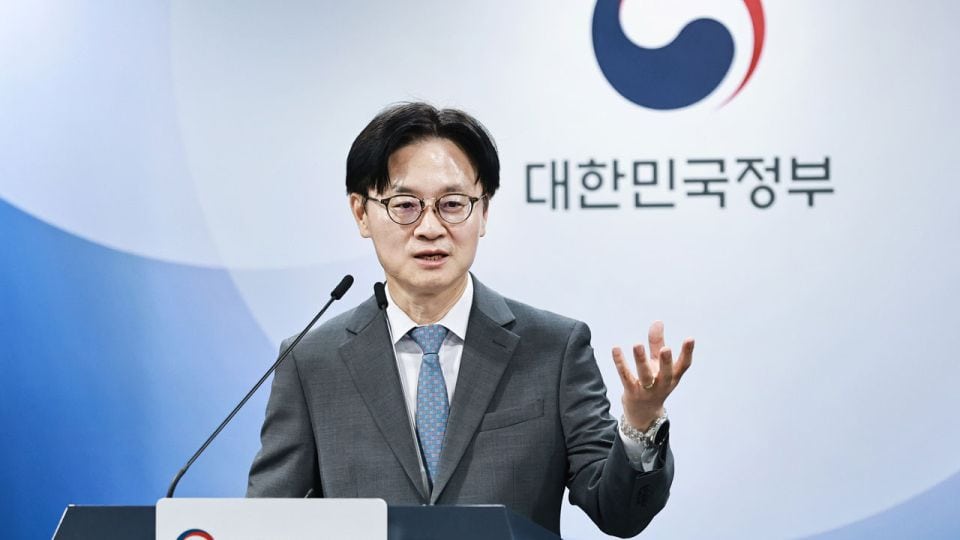
President Donald Trump on Wednesday revealed three flagship energy infrastructure projects that form part of South Korea's substantial $200 billion investment pledge to the United States. The initiative encompasses a natural gas power facility in Texas, a framework for constructing nuclear reactors, and a proposed liquefied natural gas pipeline project in Alaska.
These projects emerge from Seoul's broader $350 billion investment package negotiated as part of last year's bilateral trade agreement, which saw Washington reduce tariffs on most South Korean goods to 15 percent. Trump characterized the announcement as among the most significant energy infrastructure commitments in American history, emphasizing its role in strengthening energy security and the US-South Korea partnership.
Project Star: Texas Gas Power Complex
The first initiative, designated Project Star, involves constructing a $22.3 billion combined-cycle gas power facility near Encinal, Texas, with a capacity of 6,472 megawatts. The complex will supply electricity to nearby artificial intelligence data centers, with the initial phase expected to commence operations in 2029 and the full facility becoming operational by 2032.
The project will be developed by Related Companies and NextEra Energy, with Texas-based Lewis Energy Group providing the site and essential infrastructure. South Korea's Industry Minister Kim Jung-kwan highlighted the credibility of the participating companies and robust demand for power from data center operators as factors supporting the investment's viability.
Korean firms are anticipated to secure contracts across equipment supply, engineering, construction, and maintenance services, offering them entry into the American gas-power sector where they have maintained minimal presence. Minister Kim projected that the facility would generate returns exceeding twice the initial investment over its recovery period, ensuring Seoul can recover both principal and interest.
Project Power: Nuclear Reactor Framework
The second undertaking, Project Power, establishes a nuclear cooperation framework potentially allocating up to $120 billion for eight large reactors across the United States. The proposed portfolio includes two Korean-designed APR1400 units alongside six Westinghouse AP1000 reactors, constructed in three sequential phases.
Notably, this agreement marks the first opportunity for Korean-designed commercial reactors to be built domestically in America, following a previous settlement that had prevented such development. The framework involves Korea Electric Power Corp., Korea Hydro & Nuclear Power, Westinghouse, and both governments as signatories.
The arrangement is projected to require approximately $100 billion in construction expenditure with $20 billion allocated for contingencies, capped at $30 billion per two-reactor cluster. The nations have additionally agreed to a potential $10 billion advance payment by year-end to secure components with extended lead times, subject to commercial evaluation and South Korean parliamentary approval.
Korean investors, encompassing private enterprises and state-owned entities Kepco and KHNP, intend to acquire a combined stake of at least 5 percent but below 10 percent in Westinghouse, with pricing and conditions still under negotiation. Each individual reactor project will require separate commercial assessment and domestic authorization before proceeding.
Project North: Alaska Liquefied Natural Gas
The third initiative, Project North, addresses South Korean involvement in an Alaska LNG development. The proposal encompasses a 1,250-kilometer pipeline transporting natural gas from Alaska's North Slope to a liquefaction and export facility in Nikiski, capable of delivering approximately 4 billion cubic feet daily.
Trump indicated the project would support America's position as the world's foremost natural gas producer and exporter while generating substantial employment, including up to 12,000 construction positions and 100 permanent operational roles. Commerce Secretary Howard Lutnick estimated that over $50 billion would be directed toward the Alaska LNG initiative, with potential tariff advantages and favorable contracting terms offered to Korean participants.
Minister Kim acknowledged that the Alaska project presents a weaker commercial case compared to the other two initiatives, yet Seoul remains open to evaluation given South Korea's strategic energy vulnerabilities. The nation's gas supply routes traverse several geopolitical chokepoints, including the Strait of Hormuz, Strait of Malacca, Taiwan Strait, and Panama Canal, while facing uncertainties regarding Australian and Russian supply stability.
Both governments have committed to proceeding only if the project demonstrates genuine commercial viability. Should Seoul decide to participate, the arrangement offers tariff reductions on materials including steel, favorable positioning for Korean suppliers, commercially reasonable long-term purchase agreements, and priority LNG access.