 Mekong Monitor
Thailand’s Neighbourhood Diplomacy and the Question of Consistency
Thailand’s regional role is tested by whether it applies the same diplomatic principles to Cambodia that it applies to larger or more strategically important neighbours. Equal sovereignty, restraint and international law should guide all border disputes.
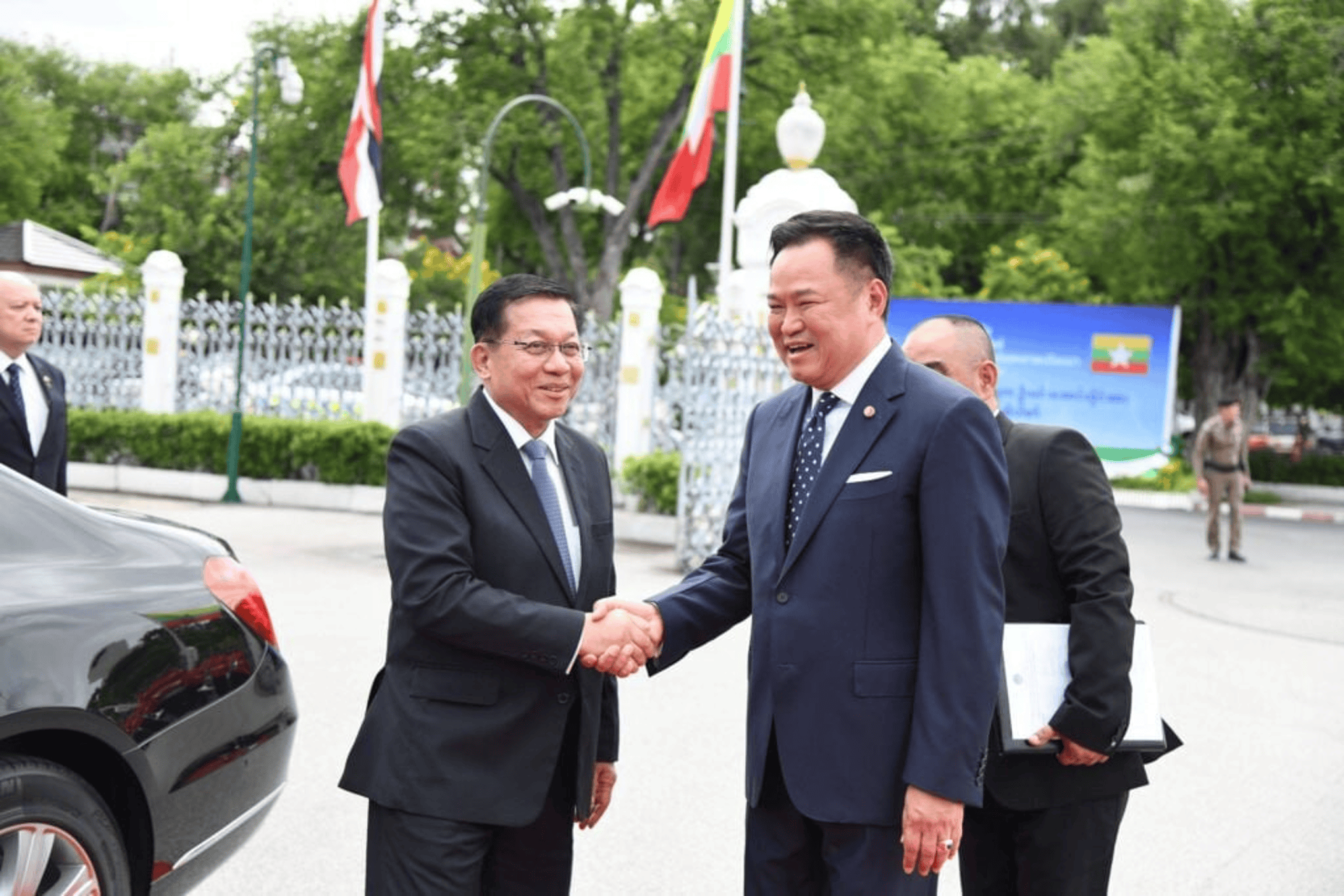
Thailand faces a difficult but important question: does it apply the same diplomatic standards to all neighbouring countries, or does its approach shift according to a neighbour’s size, power and economic value?
This question is raised from a Cambodian perspective, not out of hostility toward the Thai people, but from long observation of relations between Cambodia and Thailand.
Thailand often presents itself as a leading regional actor and an influential voice within ASEAN. That role carries obligations. A country that seeks regional leadership should show the same respect for sovereignty, territorial integrity and peaceful dispute settlement toward smaller neighbours that it expects from others.
Thailand’s conduct toward different neighbours therefore deserves careful scrutiny.
Malaysia: cooperation, trade and accommodation
Thailand’s relationship with Malaysia offers one example.
The Thai government has described Malaysia as its top trading partner in ASEAN. In July 2026, Prime Minister Anutin Charnvirakul visited Malaysia and highlighted cooperation in trade, investment, tourism, border links, security and broader economic development. The two countries also set a target of raising bilateral trade to $30 billion and portrayed the shared border as a zone of opportunity.
Thailand has also stressed that working with Malaysia is strategically important for the development of its southern provinces.
There is nothing objectionable about that approach. Dialogue, trade and practical cooperation are exactly what neighbouring states should pursue.
But it leads to a fair question: why should dialogue and accommodation appear less available when the neighbour is Cambodia?
If shared economic interests and strategic priorities encourage Thailand to negotiate and cooperate with Malaysia, why do disputes with Cambodia so often risk turning into confrontation, pressure or nationalist language?
Myanmar: a separate measure of restraint
Myanmar provides another useful comparison.
When violence and military operations inside Myanmar affected areas near Thailand, including an April 2026 incident in which a bomb landed in Thai territory in Mae Hong Son province, Thailand responded with evacuations and tighter border security rather than launching a direct military attack on Myanmar.
That was a valid decision by a government seeking to avoid escalation. It also showed something important: Thailand can act with restraint when it decides restraint is necessary.
The issue, then, is not whether Thailand knows how to avoid escalation. The issue is when, and toward whom, it chooses to do so.
Cambodia should not be treated as the convenient target
Many Cambodians therefore have legitimate concerns.
Cambodia is Thailand’s neighbour, not its enemy. Cambodian workers, traders, students, families and businesses maintain deep links with Thailand. The two countries are tied by geography, history, culture and daily human contact.
Yet when disagreements emerge between Cambodia and Thailand, public rhetoric can quickly become much sharper and more confrontational.
This creates the impression, intended or not, that Thailand’s threshold for applying pressure may be lower when dealing with a smaller neighbour than when dealing with a country considered more economically or strategically important.
That is the point Thailand should confront.
This does not mean every Thai government action is the same, or that every dispute has identical facts. They do not.
The simpler question is whether the principles of international relations should vary according to the strength and size of the country across the border.
If the answer is no, those principles should be applied consistently.
Power should not become intimidation
Military strength does not give one state greater sovereignty than another. A larger economy does not grant broader ownership of international law.
A smaller population does not make a country’s territorial rights less valid. Nor should Cambodia’s status as a smaller neighbour require it to stay silent when its interests are challenged.
Cambodia has increasingly turned to diplomatic and legal processes. On September 15, 2026, Cambodia and Thailand began a UN-backed compulsory conciliation process over their maritime boundary dispute, with the opening meeting held in Singapore.
That is the kind of mechanism ASEAN should support: present the evidence, apply the law and allow diplomacy to work before force is considered.
Consistency is Thailand’s real test
Thailand cannot credibly call for regional peace while appearing to apply different diplomatic temperatures to different neighbours. It cannot ask smaller states to respect Thai sovereignty while expecting them to accept pressure when Thailand’s own interests are at stake.
Nor can it celebrate cooperation with one neighbour while allowing disputes with another to feed nationalist sentiment.
The measure of a country’s foreign policy is not how forcefully it speaks. It is whether its principles remain intact when it deals with a weaker state.
That is why Thailand should examine its own record.
If Malaysia can be treated as a vital economic and strategic partner, and if Myanmar can be approached with restraint and border security measures despite serious incidents near Thai territory, then Cambodia should also be engaged through diplomacy, evidence, international law and mutual respect.
There should not be one standard for stronger neighbours and another for smaller ones.
There should be one standard.
An appeal to Thailand
Thai leaders and policymakers should not mistake Cambodia’s desire for peace for weakness. They should not confuse Cambodia’s smaller economy with lesser sovereignty.
They should not treat Cambodian calls for international law as hostility, and they should not allow political rhetoric to turn ordinary Cambodians and Thais against each other.
Thailand is an important ASEAN country. Because of that position, it has a chance to show what responsible regional leadership looks like.
True strength does not mean threatening a weaker neighbour. It means having the confidence to treat that neighbour with the same dignity and respect given to a stronger one.
Cambodia does not need hostility with Thailand. It does not need a culture war with Thailand.
What Cambodia needs is a relationship grounded in equal sovereignty, evidence, international law, mutual respect and peaceful coexistence.
Ordinary Thai people deserve the same.
Governments negotiate borders, but ordinary people are the ones who live with peace, or with its absence.