 Mekong Monitor
South China Sea Code of Conduct Remains Unfinished as Philippines Hands Over ASEAN Chair
Manila will hand the ASEAN chair to Singapore without finalizing the South China Sea Code of Conduct, despite claiming the talks are 80 percent complete. Key disputes over scope, definitions and legal status remain unresolved.
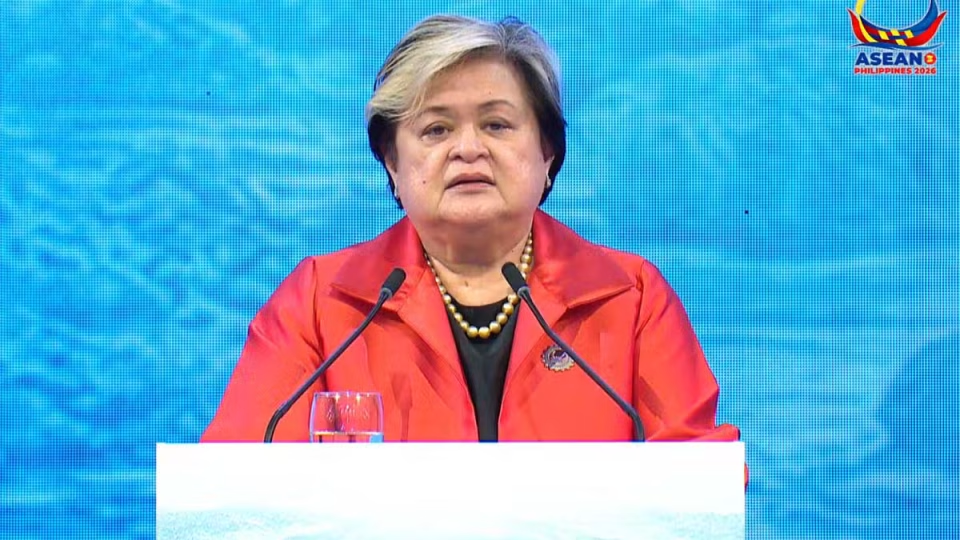
The Philippines will pass the ASEAN chairmanship to Singapore without finalizing the Code of Conduct (COC) for the South China Sea, leaving the most contentious provisions for the next chair to resolve. Manila has said the talks are about 80 percent complete.
Foreign Secretary Ma. Theresa Lazaro told reporters on Sunday that negotiators had made significant headway but still disagreed on core questions, including the code's geographic reach, the meaning of key terms, and whether the document should be legally binding.
Lazaro said at a briefing on the first day of the three-day 49th ASEAN Summit in Pasay City that no conclusion has been reached yet.
She said the parties had provisionally agreed on roughly 80 percent of the draft, a sharp rise from about 50 percent when the Philippines took over the chairmanship. However, the remaining gaps mean the code will not be concluded and signed before Manila hands leadership to Singapore in 2027, the year the bloc marks its 60th anniversary.
Sticking points
The unresolved issues go to the heart of a pact that has been under discussion since 1992 and is meant to guide the behavior of claimant states and prevent incidents from escalating. Until negotiators agree on the code's scope, legal status and terminology, the text cannot be finalized, and it remains unclear how its commitments would apply in practice.
Lazaro noted that some members are wary of a legally binding instrument, mainly because it could require each country to go through its own domestic ratification process.
She added that five to six more months might have been enough to finish the talks, but a final agreement will not come before the chairmanship moves to Singapore. Thailand will chair in 2028 and Timor-Leste in 2029.
Lazaro praised the delegations for their constructive engagement and thanked Malaysia and China, the COC's co-chairs, for steering the complex process. Negotiators also reached a provisional understanding on how the proposed code would relate to the non-binding 2002 Declaration on the Conduct of Parties in the South China Sea.
The code is meant to serve as a guide to conduct and a framework for voluntary maritime cooperation under the UN Convention on the Law of the Sea (UNCLOS). Lazaro stressed that its purpose is to manage differences at sea constructively, not to settle territorial and maritime disputes.
Myanmar crisis
The summit also urged the forces in Myanmar to scale back violence and stop attacks on civilians, while pressing for faster progress on the Five-Point Consensus. Lazaro said leaders emphasized the need to protect civilians as hostilities continue and the humanitarian situation worsens following the 2021 military takeover.
The Five-Point Consensus calls for an immediate end to violence, dialogue among all concerned parties, the appointment of a special envoy, humanitarian assistance, and a visit by the envoy to meet every party. Fighting has continued despite these efforts, and the crisis has exposed divisions within ASEAN over how to respond.
The bloc has faced criticism for failing to halt the violence or secure steady access for aid. It maintains that the Five-Point Consensus remains its main framework, although implementation has been limited and the crisis continues to test regional unity.
Milestones and digital push
The formal opening ceremony featured two milestones that highlighted the bloc's expansion and its drive for deeper integration. The updated ASEAN emblem and flag were unveiled, now including an additional stalk representing Timor-Leste's entry into the organization.
The ASEAN Digital Economy Framework Agreement (DEFA) was also handed over. Lazaro described it as the world's first region-wide digital economy pact. It aims to expand digital trade and cross-border transactions and to set common rules for digital services and businesses, with the goal of opening new opportunities for regional enterprises and consumers, especially small and medium-sized businesses.
Lazaro called the agreement a major achievement of the Philippine chairmanship.
Maritime center and call for unity
Manila is also pushing for an ASEAN maritime center in Manila to improve coordination and information sharing on maritime concerns. The facility would help members address shared challenges as tensions and competing South China Sea claims persist. It complements the Philippines' broader push for adherence to international law, particularly UNCLOS, and a rules-based regional order.
In formally opening the summit, President Marcos urged members to stay united and pursue common goals despite their differences and the challenges facing the region, saying that moving forward with a shared purpose is the core of what it means to belong to ASEAN.
The Philippines has placed regional unity, maritime security and economic resilience at the center of its 2026 chairmanship.