 Mekong Monitor
Singapore Calls on All Parties to Honour Gas Contracts After Indonesia Cuts Supply
Singapore's prime minister says all parties must honour their gas contracts after Indonesia announced cuts to natural gas exports. He also outlined plans to diversify energy supply and study nuclear power.
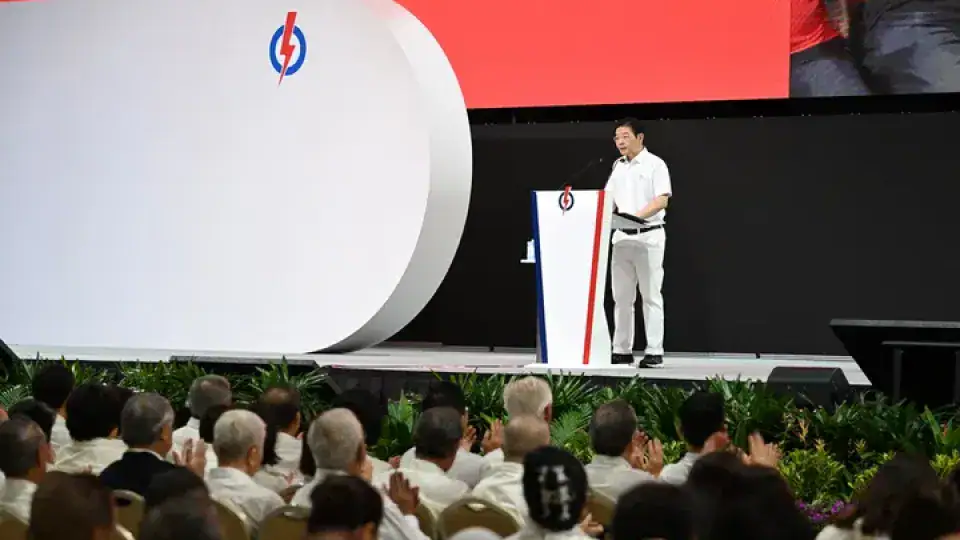
Singapore expects every party to meet its obligations under commercial gas contracts, and the city-state's gas importer will act to defend its rights and interests, Prime Minister Lawrence Wong said.
Speaking at the People's Action Party (PAP) conference on October 25, Wong was referring to Indonesia's announcement the previous day that it would reduce natural gas exports to Singapore.
Natural gas currently produces most of Singapore's electricity, and a large share of that gas arrives by pipeline from Indonesia, Wong noted.
“We expect all parties to honour their commitments, and Singapore's gas importer will take the necessary steps to protect its rights and interests under these contracts,” he said.
What Indonesia has changed
Indonesia plans to cut its natural gas exports to Singapore by 31 billion British thermal units per day (BBTUD), starting October 24. Indonesian media linked the move to President Prabowo Subianto's effort to put domestic energy needs first, amid mounting worries about energy security.
The reduction applies to gas flowing through pipelines from the Natuna and Sumatra fields. Indonesia's upstream oil and gas regulator, SKK Migas, said only Singapore would be affected, since the relevant export pipelines run directly to the city-state.
Singapore's response
The Energy Market Authority (EMA) said the reduction would account for less than 2% of Singapore's total daily gas demand. Based on figures from local gas importers, the EMA's spokesperson said the total shortfall comes to 17 BBTUD spread over 18 days. Daily demand in Singapore exceeds 1,000 BBTUD.
Minister for Energy, Trade and Industry (Energy and Industry) Tan See Leng said Gas Supply, a major local importer and a wholly owned subsidiary of Temasek, would contact its suppliers to determine whether a breach had occurred and would pursue commercial remedies if necessary. He told reporters that Singapore's gas supplies are backed by commercial contracts that must be respected.
Tan did not give a timeline for reaching a conclusion, saying he would leave it to Gas Supply to examine the remedies available under its contracts.
Building a more diverse energy supply
Wong said Singapore had been preparing for this kind of risk. The country has built liquefied natural gas terminals that allow it to bring in gas from several countries rather than relying solely on pipelines. “This gives us more options to manage any disruptions to our gas supply,” he said.
He added that Singapore must look beyond natural gas and find cleaner sources to deliver dependable power around the clock. For that reason, the government is seriously evaluating nuclear energy.
Wong acknowledged public concern about nuclear safety, given Singapore's small land area and dense population. “We take the concerns very seriously. Safety must come first. But we should not rule out an option simply because it is difficult or controversial,” he said.
“We must assess the risks and trade-offs carefully, engage Singaporeans, and eventually make the right decision to secure our energy future,” he added.
In 2027, Singapore will be assessed by the International Atomic Energy Agency to determine whether it is ready to make an informed decision on nuclear power. The review will cover 19 key areas, including nuclear safety, radioactive waste management and emergency preparedness.
Cross-border challenges
Wong said some problems are harder to solve because they span national borders. He pointed to online scams and the haze that has affected Singapore for several weeks.
“We cannot solve these problems through our own efforts alone. We need cooperation from other countries. But that does not mean we stand by and do nothing,” Wong said.
“We are doing everything we can within our power to protect Singaporeans, strengthen our own response, and work with our partners to tackle these problems at source,” he said.