 Mekong Monitor
Seoul Scales Back Aegis Destroyer Patrols in East Sea, Raising Questions Over Missile Data
South Korea has paused the continuous deployment of its Aegis destroyers in the East Sea, sparking debate over whether the military can still collect enough detailed data on North Korea's increasingly varied missile tests.
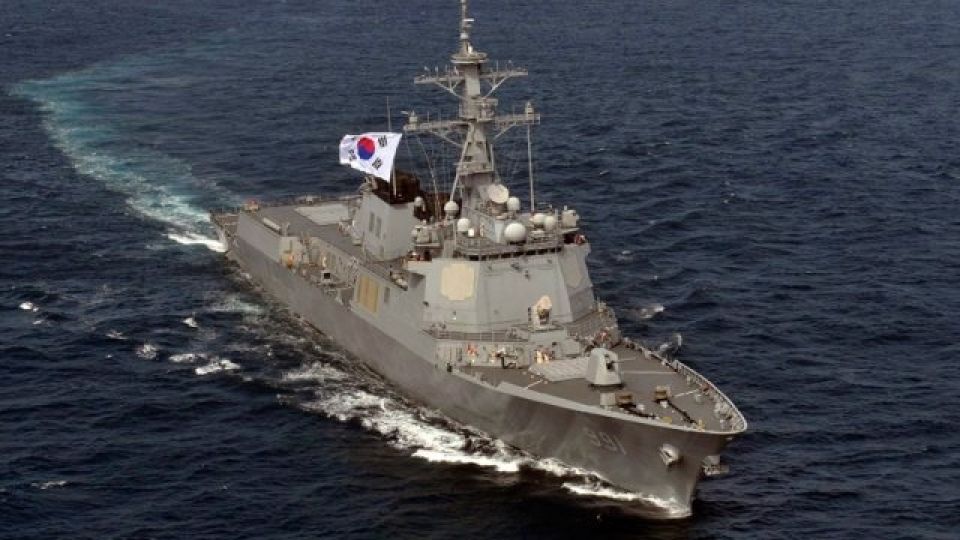
South Korea halted the continuous deployment of its Aegis destroyers in the East Sea in September last year. The move has raised fears that the military may have fewer chances to collect detailed flight data on North Korean missiles, even as Pyongyang keeps testing a wider range of weapons.
The armed forces say their existing surveillance assets are enough to maintain missile detection, tracking and defense readiness. Some officials, however, argue that the capabilities needed for missile defense are different from those needed to assess how North Korean missiles perform, and that the second task has become harder.
According to several military sources, the Navy asked the Joint Chiefs of Staff in September 2025 to end continuous Aegis deployments in the East Sea. The reasons cited were a shortage of personnel and the strain of keeping warships at sea for long periods. The JCS approved the request.
At that time, the JCS was led by Gen. Kim Myung-soo, a naval officer. On Sept. 30, 2025, he was succeeded by Air Force Gen. Jin Yong-sung.
South Korea operates four Aegis destroyers, whose advanced radar can detect and track ballistic missiles across long distances, making them central to its maritime surveillance. When the continuous deployment plan was proposed, the Navy had three.
Under the revised approach, the Navy was expected to send destroyers out only when signs of an imminent North Korean launch emerged, rather than keeping them stationed in the East Sea.
“As I understand it, the original idea was to dispatch the destroyers once we saw signs of an upcoming North Korean launch,” one military official said on condition of anonymity. “But the North has been firing missiles more and more without any clear warning beforehand.”
North Korea’s changing arsenal complicates monitoring
North Korea has recently run a series of tests on different missile systems, which makes gathering flight data more important for judging how these weapons perform.
On Oct. 29, Pyongyang fired several rounds from its 600 mm super-large multiple rocket launchers. On Oct. 31, it said it had tested a tactical ballistic missile with a cluster warhead. On Nov. 2, it reported trials assessing the effectiveness of a cluster warhead on a strategic cruise missile, along with that missile’s vertical-strike flight characteristics.
On Wednesday, North Korea launched several missiles toward the East Sea from the Sondok area in South Hamgyong Province. In its first statement, the JCS referred to them only as “missiles” and did not identify them as ballistic. It said South Korean and US authorities were examining their specifications and considering possibilities including short-range ballistic missiles, surface-to-air missiles and cruise missiles.
The following day, the state-run Korean Central News Agency reported that the country had test-fired a new surface-to-air missile and carried out a live-fire drill involving long-range strategic cruise missiles.
Another military official noted that radar data alone can make it hard to identify a projectile, because short-range ballistic missiles and surface-to-air missiles can overlap in range and flight behavior. “Depending on launch angles and altitudes, their trajectories can vary, so it is difficult to tell the two apart using radar data alone,” the official said. The official added, however, that it remains unclear whether continuously deployed Aegis destroyers would have allowed the military to identify Wednesday’s launches immediately.
Military sees no surveillance gap, but intelligence concerns persist
The JCS maintains that suspending continuous Aegis patrols has not left a gap in the country’s missile surveillance. According to the JCS, ground-based radars can detect missiles heading toward South Korean territory and track much of the flight of those fired into the East Sea.
Any shortfalls in tracking can be offset by the real-time missile warning data-sharing system linking South Korea, the United States and Japan, as well as intelligence cooperation with Washington and Tokyo, the JCS said.
Some officials, though, argue that being able to detect and track missiles threatening South Korean territory is not the same as gathering detailed intelligence on North Korean missiles and assessing their capabilities.
A senior military official explained that ground-based radars offer stable operation and precise tracking, while maritime radars have the advantage of mobility, since ships can reposition to improve coverage. “Because ground radars are fixed in place, the curvature of the Earth and other factors can limit their ability to follow missiles in the later stages of flight as they move farther away,” the official said. “Maritime assets can change position, which could let them collect additional flight data.”
The same official said these differences do not necessarily mean weaker missile defense. South Korea can still obtain the information it needs to respond to missiles aimed at its territory without tracking them over the entire flight across the East Sea.
Other personnel who analyze missile data directly, however, have voiced concern about what the suspension means for gathering detailed intelligence on North Korean weapons. An official at a land-based unit that analyzes Aegis radar data said it has become harder to consistently obtain the maritime surveillance data needed to assess the characteristics of North Korean missiles.
“It is true that without Aegis destroyers deployed continuously in the East Sea, there are real limits on our ability to analyze the detailed characteristics of North Korean missiles,” the official said. “We need to keep building up data on their ranges, flight paths and other traits so we are ready for future threats.”
Intelligence gains come with operational costs
The debate ultimately comes down to how the military should balance the intelligence benefits of continuous Aegis deployments against the financial and personnel resources needed to sustain them.
Although Aegis destroyers offer advanced maritime surveillance, staying at sea for long stretches carries substantial operating costs and places heavy demands on crews.
The senior official who compared ground and maritime radars also stressed the need to account for the operational burden of prolonged deployments. “Keeping Aegis destroyers on continuous deployment would give us more intelligence on North Korean missiles, but it also means substantial operating costs and personnel demands,” the official said. “In the end, we have to weigh the value of collecting that extra intelligence against the resources required to do it.”