 Mekong Monitor
Seoul Put Front-Line Units on Alert to Return Fire After DMZ Mine Blasts
South Korea kept front-line Army units ready to return fire at short notice after two mine blasts in the DMZ, as a precaution against possible North Korean action. The alert stayed in place until the military finished removing a North Korean minefield found south of the military demarcation line.
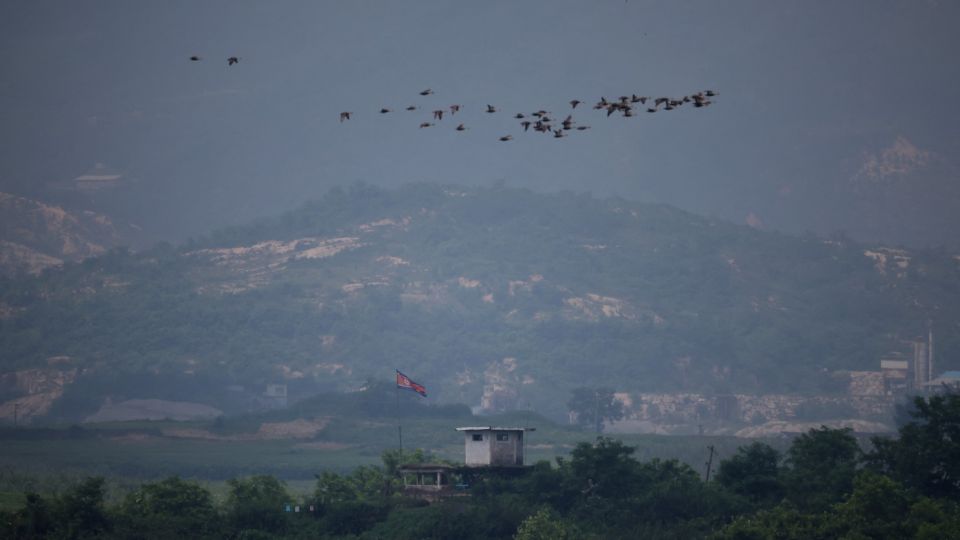
South Korea kept front-line Army units ready to open fire on short notice after two mine explosions in the Demilitarized Zone on Sept. 21. The move was a precaution against any sudden North Korean military action, military sources said Tuesday.
According to the sources, the Joint Chiefs of Staff raised the corps-level fire readiness posture shortly after the blasts, which wounded three South Korean soldiers near the Military Demarcation Line (MDL).
The heightened alert stayed in place through Monday, when the military finished removing a North Korean minefield found south of the MDL. It was the first time South Korean forces had physically cleared a North Korean minefield on that side of the line, according to the Ministry of National Defense.
A military official said the higher alert reflected concern that explosions and mine clearing so close to the MDL could provoke an unpredictable response from Pyongyang.
“To us, detonating mines may not look like a major step, but from the North's point of view, explosions were happening right in front of what it considers its border,” the official said on condition of anonymity.
The official added that there was a risk of casualties and that the blasts could have looked threatening. Because the outcome was uncertain, the posture was raised to prepare for any scenario.
Defense Minister Kang Shin-chul was also informed of the measure.
What the Alert Means
Fire readiness is designed to shorten the time front-line units need to strike back if an enemy acts. Raising the posture generally puts personnel and weapons systems at a higher state of preparedness, so units can carry out fire missions quickly.
Similar steps have been taken during earlier periods of heightened tension. These include 2022, when North Korea fired a ballistic missile south of the Northern Limit Line, and 2024, when Pyongyang ordered its front-line artillery units to prepare for possible fire missions.
The Joint Chiefs declined to confirm whether the posture had been raised or which Army corps had been placed on alert, citing operational security.
Criticism and the Government's Response
The disclosure comes amid criticism that Seoul has taken few visible steps against the North, even after the military concluded that Pyongyang planted the mines south of the MDL and said it would take corresponding measures in response.
On Tuesday, Kang rejected claims that the government's response had been overly passive or defensive. He pointed to Monday's mine-clearing operation, calling it the first such case in the history of the DMZ and a firm response, and spoke to reporters before a Cabinet meeting.
Loudspeakers Ruled Out
In 2015, South Korea resumed loudspeaker broadcasts toward the North after two soldiers were badly wounded by wooden-box mines inside the DMZ. Restarting the broadcasts was also considered after the latest mine incident, but the government ultimately did not adopt the idea.
On Monday, after the Joint Chiefs concluded the mines had been deliberately planted more than 12 months earlier, a Defense Ministry official said loudspeakers were not among the measures Seoul had decided to take. The official said the government judged how well such broadcasts would work and viewed their effectiveness differently than many people might assume. The noise and other burdens they would place on residents living near the border also weighed on the decision.