 Mekong Monitor
Pyongyang Claims Success in Testing Long-Range Guided Rocket System
North Korea reports successful testing of an upgraded rocket system with 115-kilometer range and precision guidance, calling for deployment of its most powerful weapons along the inter-Korean border.
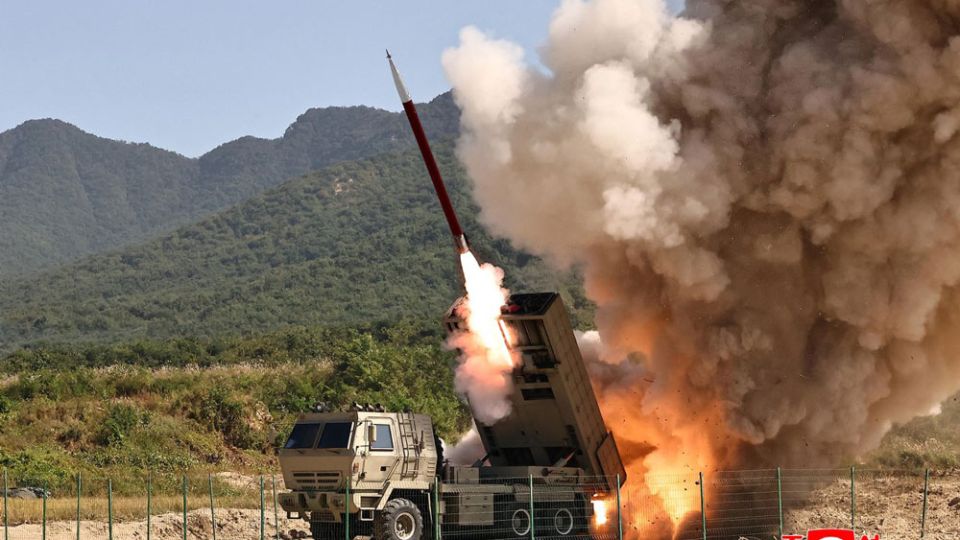
North Korea announced on Thursday that it has completed trials of an advanced multiple-launch rocket system featuring extended range and improved accuracy, while simultaneously advocating for the concentration of its most powerful weaponry near the demarcation line separating the two Koreas.
According to a statement from the Korean Central News Agency, Tuesday's test involved newly engineered guided munitions capable of reaching distances up to 115 kilometers, potentially expanding the threat radius of North Korean artillery positioned near the frontier.
The enhanced rockets incorporate what Pyongyang describes as an autonomous precision guidance mechanism. KCNA reported that these weapons can hit targets at 100 kilometers when following a ballistic path, with their maximum range extending to 115 kilometers through a combined glide flight approach.
Military commanders present at the test indicated that the development of these extended-range munitions would produce a substantial transformation in combat readiness along what the North characterizes as its southern frontier.
Pak Jong-chon, who serves as vice chairman of the Central Military Commission within the ruling Workers' Party, emphasized the importance of positioning the nation's most lethal offensive capabilities along the border with South Korea. He also highlighted the need to demonstrate to adversaries that North Korea has been rapidly replacing older long-range strike systems with more advanced weaponry.
Yang Moo-jin, a distinguished professor at the University of North Korean Studies, characterized the new system as a substantial improvement over previous 240mm rocket variants, noting gains in both operational range and precision targeting.
The earlier generation of these weapons had an effective range of approximately 70 kilometers and were primarily viewed as a danger to the Seoul metropolitan region. The upgraded system's 115-kilometer reach could potentially threaten significant American military facilities in Pyeongtaek and Osan, as well as portions of northern Chungcheong Province, according to Yang.
Yang described the integration of extended range, precision guidance, and maneuvering glide trajectories as representing a shift from traditional artillery rockets toward more advanced precision-strike weapons. He noted that the glide functionality might be designed to challenge South Korea's layered missile defense architecture protecting the capital area.
The relatively modest production costs compared to ballistic missiles could enable North Korea to manufacture these rockets in large quantities and expedite their deployment to forward positions, Yang observed. If their performance proves convincing, Pyongyang might also pursue export opportunities for these guided rockets as an affordable weapons platform to earn foreign currency.
This weapons advancement occurs amid North Korea's growing efforts to enhance its strike potential against South Korea following its declaration in late 2023 that inter-Korean relations constitute those between two antagonistic nations.
Yang suggested that Pyongyang's focus on maintaining continuous military pressure on its adversaries signals a move toward a more aggressive and coercive deterrence strategy. The accumulation of increasingly sophisticated firepower along the border could intensify military competition between the two nations and heighten the possibility that even minor incidents could spiral into localized armed clashes.
South Korean military officials confirmed they had monitored several projectiles launched by the North toward the Yellow Sea on Tuesday and were analyzing the launches to assess their characteristics. Seoul stated it remains ready to respond to any North Korean provocation while maintaining close surveillance of Pyongyang's military activities in partnership with the United States.