 Mekong Monitor
Pursat Tightens Irrigation Controls as Drought Fears Mount
Pursat's governor has tightened irrigation controls as the province prepares for a possible prolonged drought linked to El Niño. Farmers who have finished harvesting will be asked to hold off on planting another crop.
Pursat provincial governor Khoy Rida has announced stricter controls on irrigation water as local officials prepare for a possible long drought linked to the El Niño weather pattern. The concern is whether there will be enough water during the coming dry season.
Rida has instructed local authorities to reach agreements with farmers who have already brought in their rice harvest, asking them to pause any new planting. The aim is to save water in the province's reservoirs for households, livestock, and the hundreds of families whose crops have already been hit by shortages.
Speaking to reporters, Rida said the provincial government has drawn up contingency plans for both floods and drought, based on the province's terrain, irrigation network, and reservoirs.
He said recent government investment in dams and major reservoirs has improved Pursat's ability to supply water for household use, livestock, and farming. Still, he acknowledged that the province's two main reservoirs are uneven. One is full, while the other is still short of capacity because water has been collecting unusually slowly this year.
“Water has been coming in very slowly this year,” he said.
Authorities are therefore focusing on essential needs first, especially drinking and household water, along with emergency help for farmers whose crops have already been damaged.
Rida explained that farmers who have finished harvesting will have to hold off on planting again, so that enough reserves remain to get through a possibly extended dry spell.
“Those who have already finished harvesting must first agree to suspend further planting. They will not be allowed to sow another crop. If they go ahead and plant without sufficient water, I will not release irrigation water for them,” he said.
He stressed that saving water for people and animals to survive is a necessary precaution in the event of a prolonged drought.
“This water must be reserved for a long period of drought. We need to preserve it for the lives of people and animals,” he said.
Even as new rice planting is restricted, the province will keep releasing water to help farmers in certain areas where crops have already been lost. Rida said this support will target the Svay Angkeo, Ou Sandan, Me Tuek, and Boeung Khnar communes, where some households have been struggling with inadequate irrigation.
He clarified that the damage does not cover every farm plot in those communes. It is limited to specific areas where several hundred families need water to save their crops.
According to Rida, one of the biggest challenges is making sure water reaches downstream communities instead of being taken by farmers near the head of the canal system.
Authorities plan to patrol irrigation canals to stop unauthorized pumping for newly planted crops, particularly in upstream areas.
“If upstream farmers also start another crop, the water will not reach the lower areas. That is why we must prevent unauthorised pumping,” he added.
To enforce the new rules, Rida has directed village, commune, district, and municipal officials to work directly with farmers who have completed their harvests, secure commitments to pause planting, and explain why conserving water matters.
He also asked the public for understanding. He warned that changing weather and limited reservoir supplies could make it impossible for farmers to grow rice back to back, as they have done in past years.
“I appeal to all residents to understand that, if conditions change in this way this year, we cannot continue growing one crop after another as we normally do,” he said.
Pursat is a major farming province, with large rice fields, a range of other crops, and irrigation systems that depend partly on water flowing from the Cardamom Mountains and stored in reservoirs. Managing dry-season water well is vital to the local farm economy, especially when many farmers need irrigation at the same time and reserves are running low.
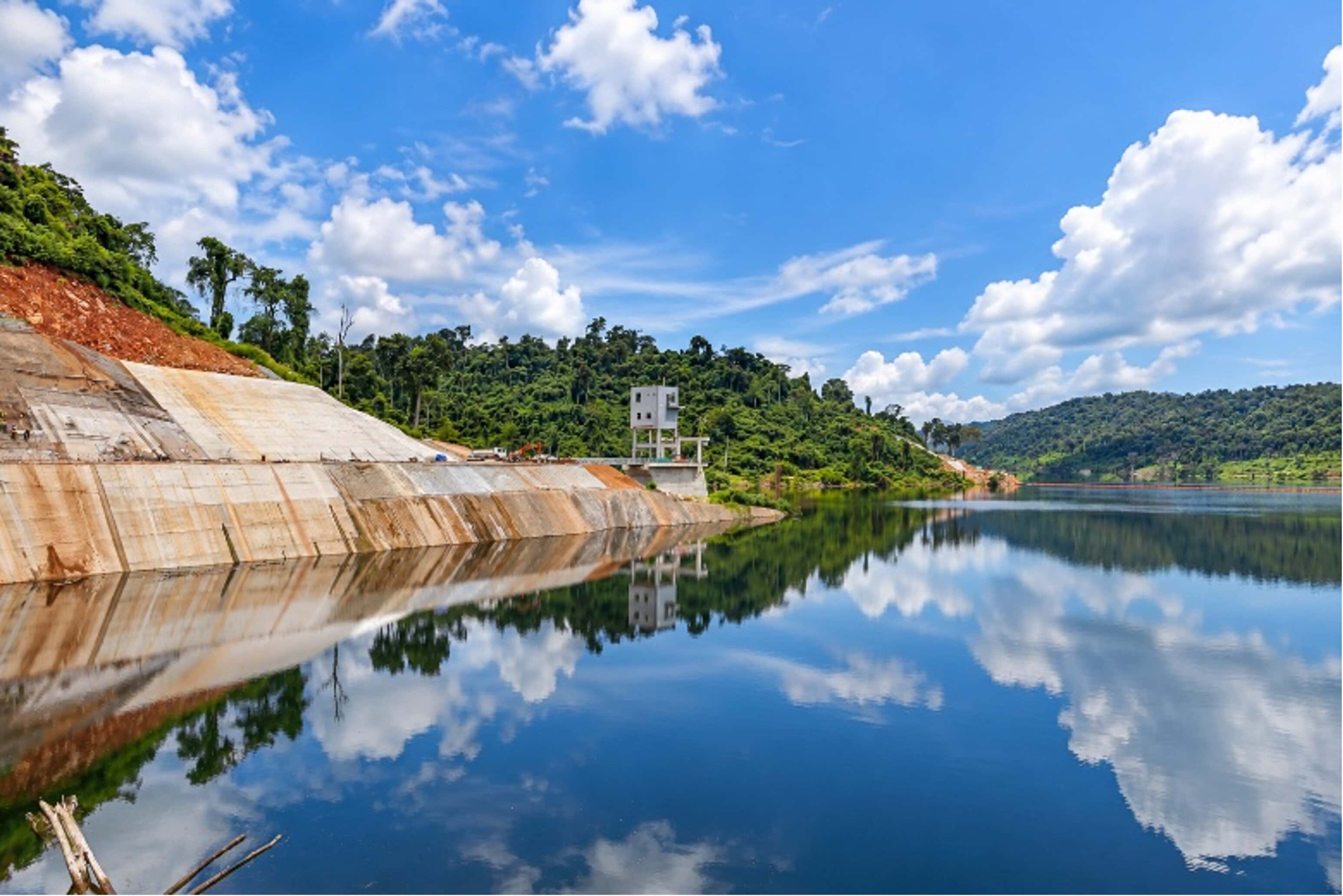
Rida also said he hopes the Stung Pursat 1 Hydropower Project, expected to start operating in November, will help with emergency water management as well as electricity generation.
“Once the dam starts operating, we will obtain electricity, but we will also have some water available for emergency intervention,” he said.
Located in Veal Veng district, the Stung Pursat 1 Hydropower Project has an installed capacity of 80 megawatts and is part of wider efforts to develop energy and water infrastructure in the Cardamom Mountains region.
Rida cautioned that even with extra water sources, irrigation may not be able to support farming at the same scale as in years with plentiful rain.
El Niño can shift rainfall patterns and raise drought risks in parts of Southeast Asia, which is why conserving water ahead of the dry season is so important.
Rida urged farmers to work with local authorities so that available water reaches the communities facing the most urgent shortages, while enough reserves are kept for the months ahead.