 Mekong Monitor
Peace Requires More Than Words — It Demands Respect for International Law
Lasting peace between Cambodia and Thailand requires more than declarations — it demands mutual respect for international law, verified facts, and equal treatment under shared global rules.
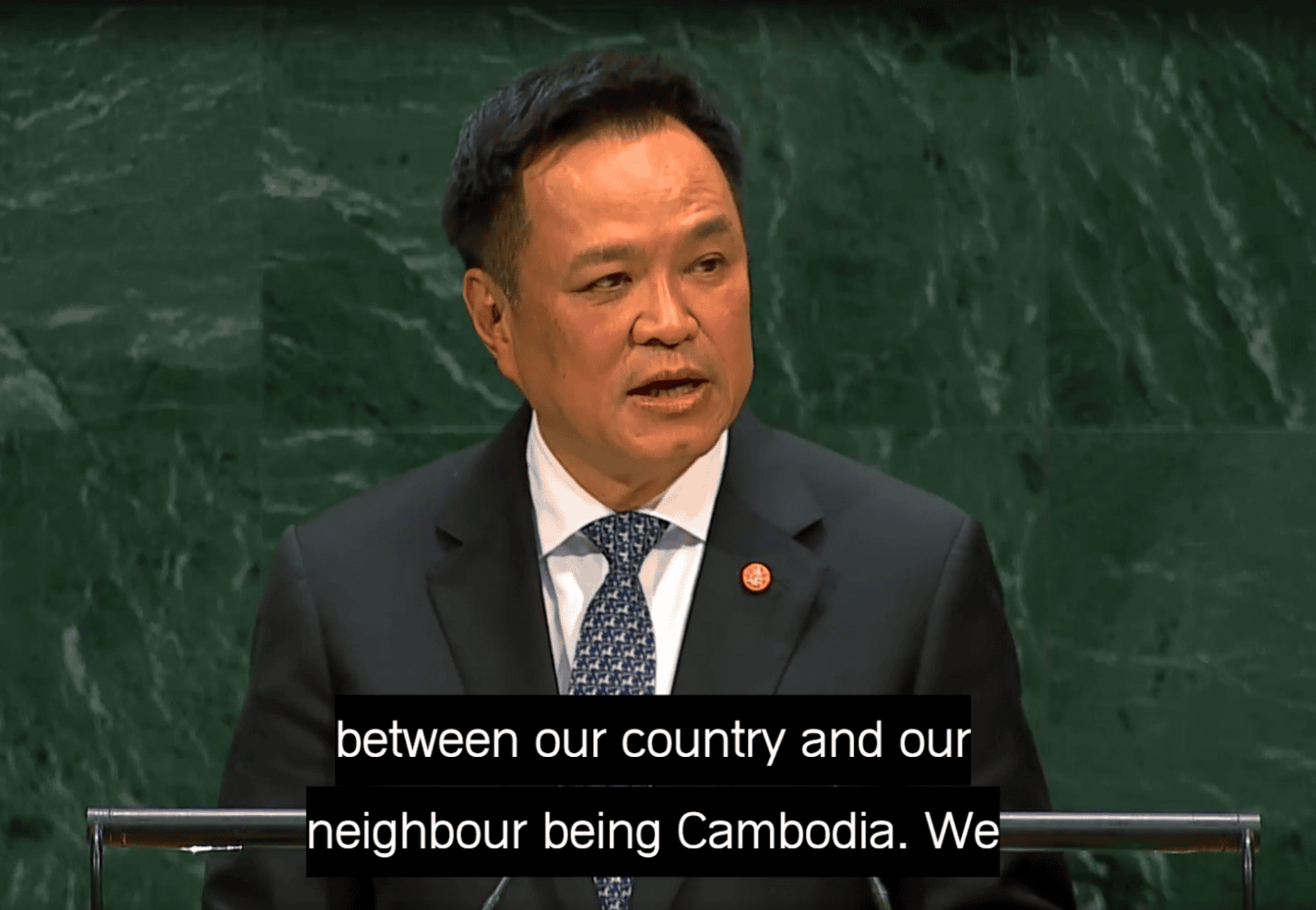
At the 81st UN General Assembly on September 24, Thai Prime Minister Anutin Charnvirakul stated that Thailand has never sought conflict and urged Cambodia to join in genuine efforts toward peace. As a citizen of Cambodia, I support any sincere appeal for peace — no one in Cambodia desires war. But enduring peace cannot rest solely on declarations. It demands mutual respect for sovereignty, adherence to international law, fulfillment of existing commitments, reliance on credible evidence, and equal standing for all nations.
When differences arise, the appropriate path is dialogue backed by impartial fact-checking and legal processes — not intimidation through military posturing or competing political stories.
Separating Organized Crime from Territorial Disputes
Thailand certainly has the right to highlight the serious issue of online fraud and cross-border crime on the global stage. Cambodia should cooperate fully in dismantling criminal networks, safeguarding victims, and improving joint law enforcement efforts.
Yet crimes committed online and disputes over land are fundamentally different. One relates to criminal networks operating across borders; the other involves sovereignty, historical treaties, mapped boundaries, and binding international legal principles. Neither should be used to sidestep or silence the other.
I’m not suggesting, without proof, that Thailand is deliberately shifting focus away from border concerns. Intent must be proven, not guessed. Still, the international community must evaluate both matters separately and fairly.
If Thailand expects the world to take its anti-crime stance seriously, Cambodia must be equally entitled to present its concerns about borders and national integrity — not as an act of aggression, but as a demand for equal treatment under international law.
The Need for Verified Facts
Nations far from Southeast Asia may lack firsthand knowledge of conditions along the Cambodia-Thailand frontier. Their perspective often depends on official statements, reporting, archives, cartographic records, and data provided by the two sides.
That makes it all the more vital that international bodies examine historical accords, prior legal rulings, verified evidence, and input from local communities affected by these tensions. No government deserves blanket acceptance of its version of events.
Cambodia, like Thailand, should be open to independent scrutiny of its positions — but only if that same scrutiny is applied equally.
A Shared Commitment to Peace
Prime Minister Anutin’s appeal offers a moment to reinforce truly peaceful frameworks between the two nations. That means:
- Firm respect for international law and long-standing agreements
- Open dialogue and de-escalation
- Transparent, independent assessment of contested facts
- Protection of civilians living near the border
- Use of proper bilateral and multilateral dispute resolution tools
Peace should not be awarded to the strongest nation or the most persuasive diplomat. It should be anchored in shared adherence to rules that govern conduct, not power.
If Thailand truly hasn’t sought conflict, then actions must match words — with concrete steps to reduce tensions and advance peaceful solutions.
What the People Deserve
Neither Cambodians nor Thais want to suffer the consequences of another war. Border communities deserve safety, dignity, opportunity, and the ability to live without fear.
Diplomatic disputes over history or legal interpretation shouldn’t fracture ties between ordinary people. Fighting cybercrime and addressing border questions can — and must — happen at the same time, through the right channels.
The UN must hear both voices, evaluate facts without bias, and apply international law consistently — whether the subject is a major power or a smaller state.
As a Cambodian who longs for stability, I’m not calling for confrontation. I’m urging clarity, proof, discussion, responsibility, and fairness under the law.
I hold respect for the Thai people, and expect the same in return. Peace built on ignoring hard truths — or letting one issue eclipse another — will never last.
If Thailand genuinely wants peace, Cambodia is ready to respond. But words alone are not enough. Conduct matters more than rhetoric.
Let’s invest in mechanisms that sustain peace. Let facts be independently verified. Let sovereignty be honored. Let international law be applied without bias. True peace isn’t silent. It’s just. And justice starts with equal respect for the rules that bind us all.