 Mekong Monitor
Peace Must Be Grounded in International Law: A Cambodian Perspective on Thailand's UN Remarks
A Cambodian response to Thailand's UN remarks argues that peace must be supported by evidence, dialogue and equal respect for international law.
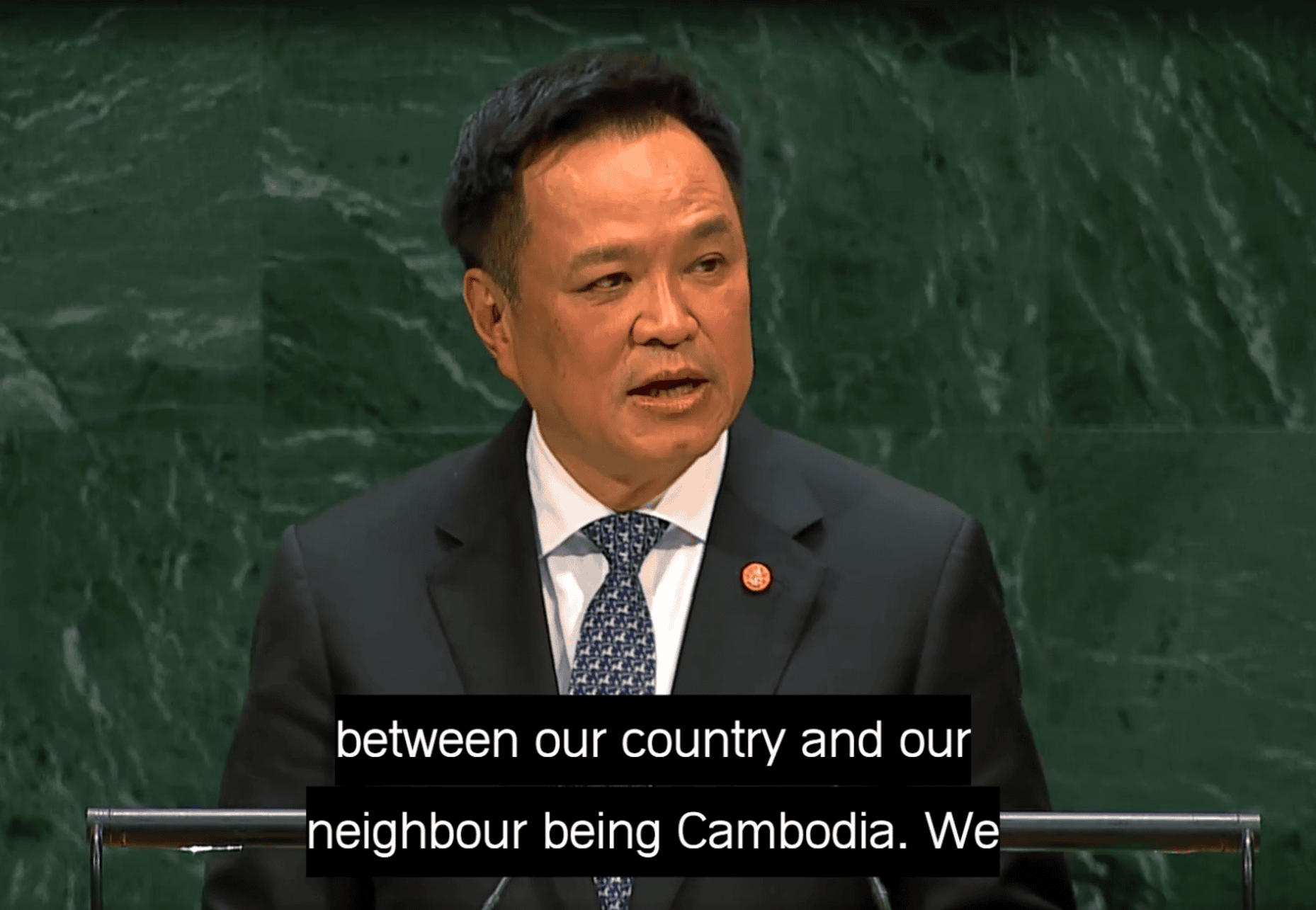
At the 81st United Nations General Assembly on September 24, Thailand's Prime Minister Anutin Charnvirakul said his country had never wanted conflict and appealed for Cambodia to make real progress toward peace. Any honest appeal to end tension is welcome, especially from a Cambodian viewpoint. Cambodia has no wish to fight. But stable peace cannot be achieved through declarations alone. It needs respect for sovereignty, compliance with international law and existing accords, reliable evidence and equal treatment for every state.
Crime and territory are distinct concerns
Thailand may legitimately discuss online scams and cross-border criminal networks at the international level. Cambodia also has a duty to help counter those networks, protect victims and improve law enforcement cooperation. Still, criminal activity is not the same as a territorial dispute. Online scams concern transnational crime, while border tensions involve sovereignty, historical agreements, maps and legal principles.
Neither subject should be permitted to blur the other. It would be unfair to say, without proof, that Thailand is using crime concerns to draw attention away from territory. Motives must be shown with evidence, not inferred. The international community should examine both matters separately and fairly.
Thailand can ask institutions to weigh its crime concerns, but Cambodia should also be allowed to set out its concerns about sovereignty and territorial integrity. That is not antagonism toward Thailand. It is a plea for equal treatment under international law.
Peace needs scrutiny, not just speeches
Countries far from the Cambodian-Thai frontier may not grasp the local reality. Their views can be shaped by government statements, media reports, historical records, maps and other information provided by the parties.
International bodies should therefore assess treaties, earlier agreements, settled legal rulings, independently confirmed facts and the conditions faced by affected communities. No government should assume its version will be accepted without testing, and Cambodia should also submit its own claims and actions to review. International justice means all relevant evidence matters, no matter which side offers it.
Shared duties to reduce tension
The Thai prime minister's peace message creates a chance to improve peaceful channels. That should include respect for international law and existing accords, substantive dialogue, restraint, independent checking of disputed facts, safeguarding border communities and resorting to proper bilateral and international legal processes.
Peace should not rest on military force, economic leverage or diplomatic dominance. It should rest on rules both sides follow. If Thailand has truly not sought conflict, its commitment must be visible in actions that calm tensions and support lawful solutions.
Ordinary people deserve peace
Cambodians do not need another war, and neither do Thais. Communities on both sides of the frontier deserve safety, dignity, economic opportunity and a life free from fear.
Government disagreements over history, territory and legal meaning should not make ordinary Cambodians and Thais enemies. Cambodia and Thailand can cooperate against online crime while still pursuing territorial questions through legal and diplomatic avenues. Those responsibilities can go together.
The United Nations should listen to both countries, assess the evidence impartially and make sure international law is applied equally to strong and weak states.
A plea for truth, not confrontation
This is not a call to fight Thailand. It is a call for truth, evidence, dialogue, accountability and respect for international law. The Thai people deserve respect, just as Cambodians expect respect for themselves. Lasting peace cannot come from avoiding difficult questions or allowing one issue to eclipse another.
If Thailand genuinely wants peace, Cambodia should welcome that. But peace must be proved through conduct, not words. Both countries should strengthen peaceful mechanisms, allow disputed facts to be independently examined, respect sovereignty and let international law operate equally.
Peace should not be treated as silence. It must be tied to justice, and justice starts with equal respect for international law.