 Mekong Monitor
Peace Beyond Declarations: Cambodia's Francophonie Summit and the Duty to Protect Peace, Sovereignty and Heritage
Cambodia uses the 20th Francophonie Summit in Phnom Penh to argue that lasting peace depends on respect for sovereignty, international law and the implementation of existing commitments. The article also spotlights displaced families and the protection of cultural heritage.
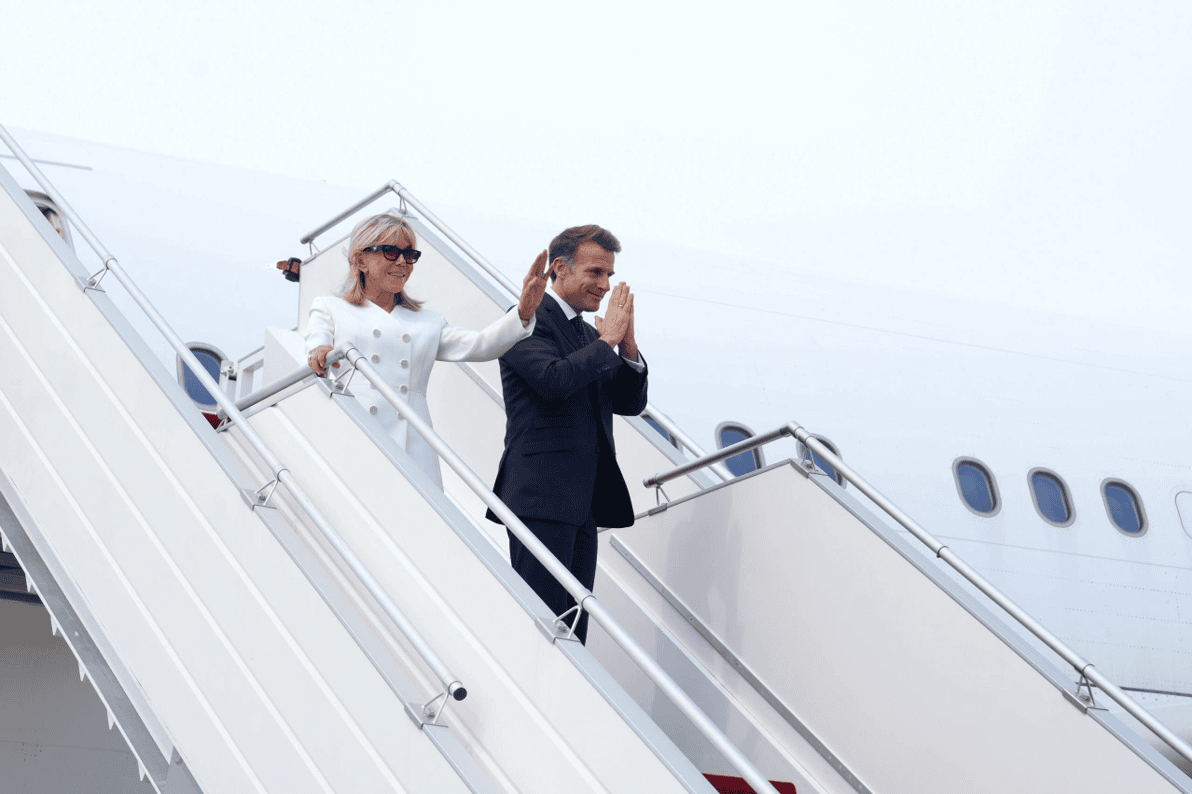
The 20th Francophonie Summit, held in Phnom Penh from November 15 to 26 under the theme “Reinvest in Peace for Shared Prosperity and Lasting Stability,” arrives at a pivotal moment for Cambodia and the wider international community.
For Cambodia, the summit is a chance to press a message shaped by its own history: peace must be protected, sovereignty must be respected, international law must be upheld, and promises must be turned into action.
Cambodia knows what it costs to lose peace. Decades of war damaged its institutions, its communities and its cultural heritage. The 1991 Paris Peace Agreements paved the way for national reconciliation and rebuilding, showing that lasting stability depends on dialogue, cooperation and political will. Peace cannot be assumed. It rests on respect for the rules that govern relations between states.
Prime Minister Hun Manet was direct at the summit: no border should be altered by force or through faits accomplis. He called for the resumption of joint surveys and demarcation with Thailand, for adherence to international law, and for the safe return of Cambodian citizens displaced by the border conflict. He also proposed a Francophone network for conflict prevention and mediation, reflecting a wish for the organisation to do more to stop disputes from turning violent.
Peace is more than the absence of fighting. It requires security, dignity, respect for sovereignty and confidence that agreements will be kept.
Three documents, one shared responsibility
The summit’s outcome documents provide a framework for turning this vision into practice.
- The Phnom Penh Declaration restates the Francophone community’s commitment to peace, peaceful coexistence, solidarity and sustainable social and cultural development. It holds that peace and prosperity go hand in hand, and that cooperation, inclusion and cultural diversity are vital to lasting stability.
- The Resolution on Crisis Situations, Post-Crisis Recovery and Peacebuilding addresses the practical duties that arise when peace is threatened or broken. It stresses prevention, international coordination, crisis resolution, recovery and peacebuilding. The key lesson is that the international community must act before violence escalates, and keep up mediation, humanitarian protection and reconstruction.
- The Phnom Penh Appeal, put forward by Cambodia, aims to strengthen the protection of cultural heritage and promote cultural diversity. Drawing on Cambodia’s experience of damage to its cultural sites, it argues that heritage must be protected even when political relations sour.
All three texts were finalised at the 48th Session of the Francophonie Ministerial Conference and submitted to heads of state and government for approval at the summit. Their real weight will depend on member states putting the principles into practical cooperation.
Taken together, the initiatives send a consistent message: peace must be prevented from collapsing, restored after conflict and sustained by respect for people’s identity, dignity and heritage. The Francophonie, in this view, should strengthen dialogue, prevention and concrete cooperation.
Cambodia and Thailand: commitments must be carried out
These principles bear directly on Cambodia and Thailand.
Cambodia holds that unresolved boundary questions should be settled peacefully, through established bilateral mechanisms and in line with international law. The Kuala Lumpur Joint Declaration of October 26, 2025, provided an important political framework for easing tensions. It reaffirmed commitments on sovereignty, territorial integrity and non-use of force, and it called for using existing mechanisms: the Regional Border Committee, the General Border Committee (GBC) and the Joint Boundary Commission (JBC), with the ASEAN Observer Team in a supporting role.
The Joint Statement from the Third Special Meeting of the GBC, issued on December 27, 2025, set out further ceasefire arrangements. Together, these commitments offer a way out of confrontation and back toward normal relations.
But agreements achieve nothing if they are only partly implemented. A ceasefire has to create the conditions for civilians to return, for confidence to be rebuilt and for negotiations to resume.
Thailand therefore needs to engage constructively and without further delay in carrying out the Kuala Lumpur Joint Declaration and the ceasefire commitments that followed. That means refraining from actions that erode trust, supporting the effective functioning of existing bilateral mechanisms, and resuming substantive JBC work, including technical surveys and boundary demarcation under the relevant agreements and international law. Cambodia, for its part, says it remains ready to negotiate in good faith.
The two countries may read the border situation and the roots of the conflict differently. That is exactly why established mechanisms and international law matter. Neither unilateral action nor rival narratives can substitute for a peaceful, mutually recognised process.
Cambodia is not asking the Francophonie to rule on the border dispute, back its territorial claims or take sides. Those questions belong in the proper legal and bilateral channels. The Francophone community can still affirm the principles that underpin peaceful relations: respect for sovereignty, rejection of force as a way to settle borders, and fulfilment of commitments.
Thailand’s role in the Francophonie as an observer does not create any extra legal obligations regarding the bilateral dispute. It does, however, give Thailand a chance to show constructive engagement with the organisation’s values of dialogue, peaceful coexistence and cooperation, and to contribute to peaceful resolution of the dispute.
The immediate goals should be clear: implementation of existing commitments, meaningful resumption of boundary talks, a stable and peaceful border, and the safe, voluntary and dignified return of displaced Cambodian families.
Displaced families: the real test of peace
For displaced families, peace is not an abstraction. It means going home, reopening shops, farming land, sending children to school and rebuilding ordinary lives.
At the summit, Prime Minister Hun Manet said that roughly 20,000 Cambodian citizens still could not return safely and with dignity. In July, UN Special Rapporteur on human rights in Cambodia Tom Andrews reported a similar figure and urged both governments to speed up returns. These numbers point to the continuing humanitarian toll of the conflict, and to the gap between a declared ceasefire and normal life.
The safe, voluntary and dignified return of displaced families should therefore be treated as an essential part of carrying out the ceasefire. That calls for practical cooperation, credible security arrangements and the removal of obstacles that stop civilians from resuming their lives.
Civilian displacement should not be pushed aside until political talks are concluded. Human dignity and civilian protection are central to peace. The Francophonie cannot force a settlement, but it can encourage compliance, support dialogue and insist that civilians should not keep paying the price of political and military tensions.
Cultural heritage: a responsibility beyond borders
Cambodia’s Phnom Penh Appeal deserves international attention. Cultural heritage is not just a national possession. It is part of humanity’s shared memory.
Cambodia has voiced concern about damage to the Preah Vihear and Ta Krabei temples during the 2025 border conflict. The episode underlines how vulnerable cultural sites are in armed conflict. Their protection must not depend on political circumstances or territorial disputes.