 Mekong Monitor
Pakistan's First Astronaut Set for China Space Mission on November 25
Pakistan's first astronaut will fly a mission from a Chinese space centre on November 25, Planning Minister Ahsan Iqbal has announced. The chosen pilot will be one of two Pakistani candidates now training in Beijing.
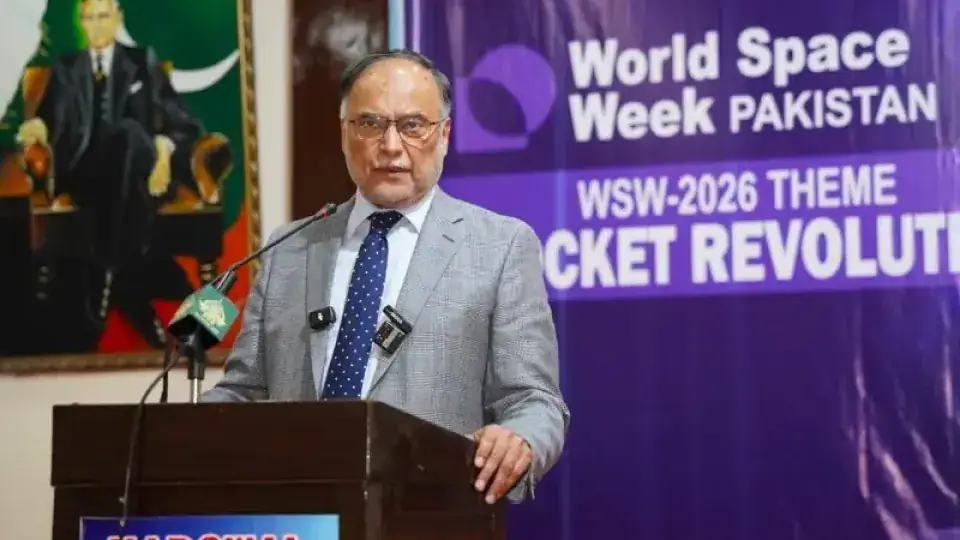
Pakistan's first astronaut will head into space from a Chinese launch centre on November 25, Planning Minister Ahsan Iqbal announced on Sunday.
Iqbal made the remarks at the closing ceremony of World Space Week in Narowal, held with the Pakistan Space and Upper Atmosphere Research Commission (SUPARCO), according to a statement from the planning ministry. He also said Pakistan aims to land on the Moon by 2035 and expressed hope that its cooperation with China would help it “reach new heights in space exploration.”
In his address, Iqbal pointed to the role of space technology in agriculture, communications, climate monitoring, education and national security. He stressed that scientific research and space exploration are vital to technological progress, and noted that Muslim scholars once made major contributions to astronomy and scientific discovery. He called for renewed efforts to restore Pakistan's leadership in knowledge and research.
Two candidates in training
The astronaut will be one of two pilots, Zeeshan Ali and Khurram Daud, whom China selected in April as candidates for its crewed space programme. Both have been undergoing intensive training in Beijing. China has not said which of the two will fly or when. However, Amer Gilani, who oversees human spaceflight cooperation at SUPARCO, told Reuters last month that a final selection decision was expected in mid-to-late October.
A SUPARCO official told Reuters that once in orbit, the chosen pilot will hold the title of “payload specialist.” That role centres on running Pakistan's science experiments rather than flying the spacecraft.
The astronaut will travel aboard a Chinese-built spacecraft launched from a Chinese site, be trained by Chinese instructors, and communicate in Mandarin while in orbit.